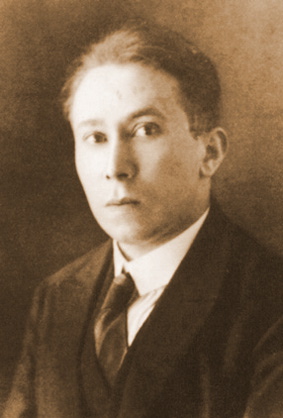
What a relief to read something sane about the great philosopher, Leo Strauss. I was taught by a "Straussian," have known many and read more, and I could never understand the idea how the great man could be reduced to some kind of secret guru to "neoconservatism". There’s a section in my forthcoming book that makes this point about the inherent skepticism, mischief and seriousness of Strauss as a thinker – qualities that make him particularly ill-suited for being a secret mastermind to anything, let alone a total transformation of American conservatism into something like its opposite. So it’s good to see a review about a book that seems to be based on the actual reality of his fascinating, dense, precise, often funny, and always curious study of the greatest texts in our civilization. Money quote:
Liberal democracy lies at the core of Strauss’s political views, and its basis is the concept of skepticism. Since there are no certainties in the realm of politics, perhaps not in any realm, politics must be the arena for negotiation between different perspectives, with cautious moderation likely to be the best policy. At one point, Smith, the Alfred Cowles professor of political science at Yale, describes Strauss’s position as "liberalism without illusions." All this may sound a little antiquated, and Smith is right to associate Strauss with cold war liberals like Raymond Aron, Isaiah Berlin, Walter Lippmann and Lionel Trilling. But it’s a view from the middle of the past century that might profitably be fostered in our own moment of political polarization, when a self-righteous sense of possessing assured truths is prevalent on both the right and the left.
Last year, I sat down and read (or re-read) several of Strauss’s longer works and saw in him not a rival to my own inspiration, Michael Oakeshott, but a very different, yet somehow kindred, spirit. Between them, they represent a skeptical conservatism that certainly doesn’t amount to anything like a defense of what conservatism or neoconservatism has morphed into in the last decade or so. In fact, it’s my contention that Oakeshott and Strauss are the best guides to where current conservatism has gone deeply, horribly wrong. (I’m sending off the final galley-proofs tomorrow. You can pre-order here, if you like.)
 The Dish