[Clive]
Sorry about the length of this post, but having missed yesterday’s instalment, I’m rounding off the blogger series with a longer than usual set of recommendations.
Madame Arcati, mischievous media/arts commentator and gossip-monger, eavesdrops on political intrigues in imperial Rome:
 Robert Graves’ wonderful novel "I, Claudius" was published in 1934. Among other things it anticipates the research methodology of Kitty Kelley which is to cherry-pick all the spicy bits of a life story and then pack them into what I call a meta-faction ‚Äì a hyper soap that‚Äôs far too interesting to be life as it’s lived. Graves plucked a lot of juicy gossip from Roman historian Suetonius (Tiberius‚Äôs reputation never recovered). It‚Äôs a thrilling read, and often a funny one ‚Äì people forget that this novel is essentially high camp inhabited by straight people (excepting Caligula). Shockingly, women feature prominently. Ancient sources barely acknowledge their existence.
That thoughtful New York diarist, Anne Cunningham, indulges in some post-modern deconstruction:
 I have a bad habit of breaking books down into parts I like and parts I don’t. On re-readings, I seem to turn "War and Peace" into a slimmer, flightier, largely Napoleon-free volume called "Peace". A.S. Byatt’s "Babel Tower" contains a novel within a novel, which I barely read the first time, and which I always ignore when I go back to it. However, the outer framing story is so good, so gripping a re-telling of the Persephone myth, that had it been released on its own, it would be my favourite book of all time. As it is, I can’t recommend it with a completely clear conscience. And yet, the fact that it contains what is for me a massive flaw makes it strangely inspiring‚Äîincomplete, gesturing at some mythical better story, like a map of hidden treasure found on a deserted beach.
Peter Whittle, director of the right-of-centre New Culture Forum, writes in praise of an untamed polemicist:
 This year we lost a great writer and journalist when Oriana Fallaci died, aged 77, in her native Florence. I have just re-read "The Rage and The Pride", the short book (originally a series of articles) which she wrote after the 9/11 attacks. Her criticism of the tenets of Islam, and her exasperation at the lack of European will in countering Islamic fundamentalist threats to Western liberal democracy, led to calls for the book to be banned, for Fallaci to be prosecuted as an ‘Islamophobe’, and for a ‘health warning’ caution to be printed on the cover. These responses perfectly proved her point. The need for Fallaci’s brand of fearlessness has increased, not diminished, in the years since.
Quirky Damian Counsell, better known to his readers as PooterGeek, goes back to the future
 Frederik Pohl and C.M.Kornbluth’s "Wolfbane" meets the requirements of readable speculative fiction: it depicts immense strangeness, populated with just-about-plausible human beings. The novel was published in 1959, but, perhaps because it’s more political satire than space opera, it hasn’t dated as seriously as some other science fiction of that period.
I was worried the story was going to become a monotonous Randian hymn to individual heroism, but it’s subtler and more interesting than that. "Wolfbane" isn’t a great work of literature, but it’s better written than much of the output of, for example, Philip K. Dick. It’s also to the book’s credit that it reminded me more of the dystopian fiction that followed it – "Logan’s Run", "The Matrix" – than the literature that preceded it – "Brave New World", "Lord Of The Flies". Fifty years after it was published, there’s much in it for the non-geek to enjoy. I think it’s out of print, but it shouldn’t be difficult to get hold of a copy.
And finally, David T., co-author on that tireless left-wing group blog, Harry’s Place, reveals a romantic streak:
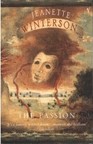 "I’m telling you stories. Trust me." I first read Jeanette Winterson’s "The Passion" while I was in the stages of breaking up with my first love. Well, I say I was in love with her: but in fact, I only came to think that way after we’d gone our separate ways. Funny how being dumped can do that to you.
The melancholy autumn which followed, in which I completed little work, fitted me for Winterson’s tale of love and loss. I read it three times in as many months; following the journey of Henri, the farmer’s lad who runs away to fight with Napoleon but ends up merely slaughtering his chickens, and Villanelle, the cross-dressing Venetian boatman’s daughter with webbed feet, on the journey back from defeat and disaster in Moscow. Villanelle gambles, finds, and then loses the love of her life. Henri’s own passion for Napoleon is similarly confounded. They survive and struggle on.
Adolescent heartbreak is something to be cherished and celebrated, I think. The older I get, the more I miss the ache.


 The Dish