Sandra Steingraber puts fracking in perspective:
In 2009, the last year for which data are available, 6.5 million tons of U.S. sand were mined, washed, processed, loaded onto trucks and trains, carried to wellheads, and shot into the center of the earth. Six and a half million tons is the approximate weight of the Great Pyramid of Giza. According to commodities analysts, that figure probably doubled in 2010 and likely doubled again last year. … Generations from now, long after the fracked wells are exhausted of oil and gas, the zombie sand will go on, eternally holding open geological passageways. The question remains: what manner of subterranean stuff—methane, benzene, toluene, radon—will thereby find escape routes?
John Horgan thinks the controversial practice is the least bad option:
[W]e have to get our energy from somewhere, and renewables such as solar and wind—even when combined with vigorous conservation efforts—cannot meet our immediate needs. Two years ago, I reluctantly came out in favor of nuclear power, hoping that it could help us end our dependence on fossil fuels. But even disregarding post-Fukushima political opposition to nuclear power, we can’t build reactors fast enough to fulfill near-term energy demands. If we ban fracking in the U.S., we will be even more reliant on coal, which most experts seem to think is far more damaging to the environment and human health than natural gas.
Alex Tabarrok finds the economics intriguing:
A back of the envelope cost-benefit calculation from a Yale-associated group estimates that recent increases in shale gas production have been worth just over $100 billion annually to US consumers. In comparison, the authors estimates that groundwater contamination costs $250 million per year, a 400 to 1 benefit to cost ratio.
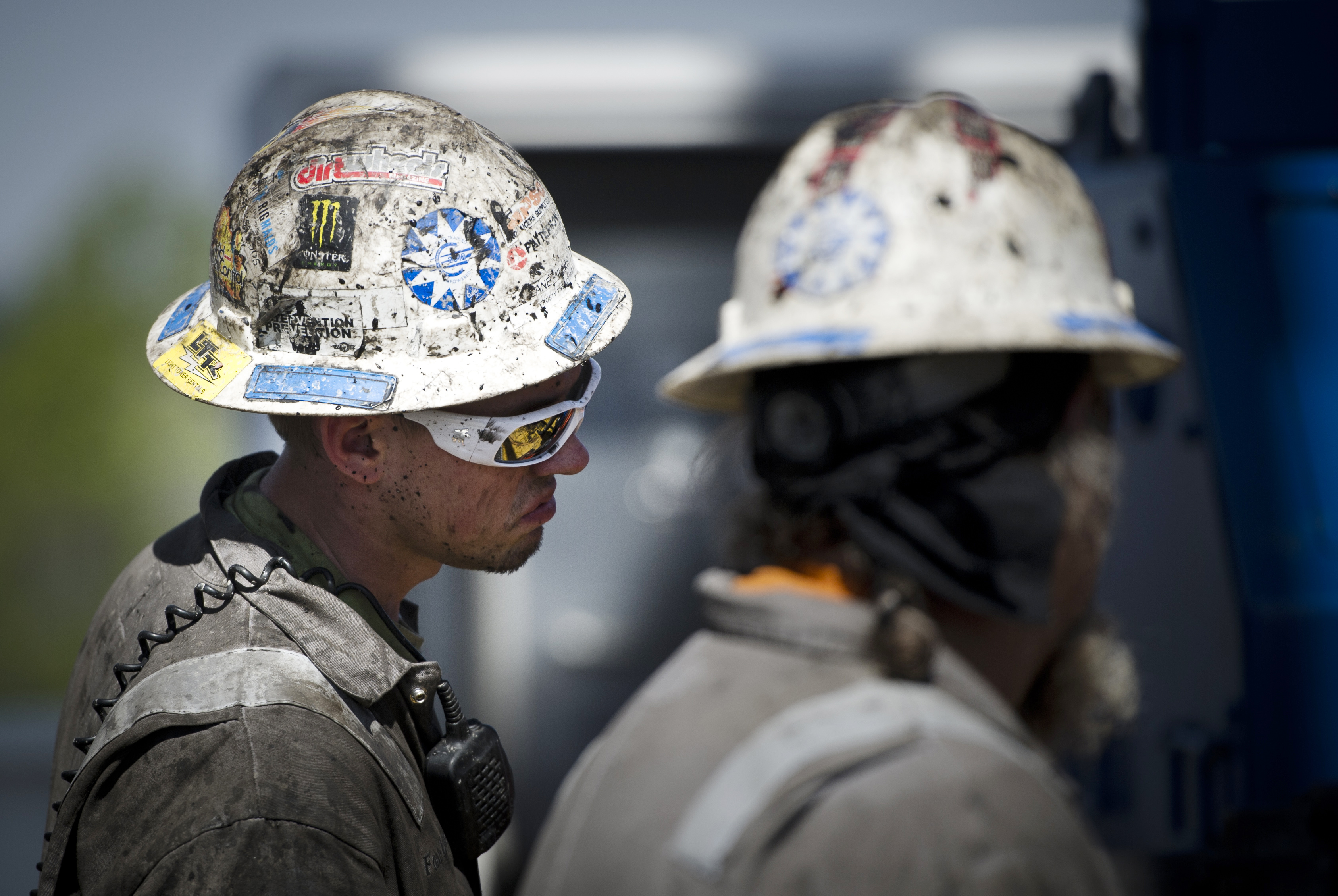
(Photo: US-Energy-Gas-Environment Workers chat at Consol Energy Horizontal Gas Drilling Rig exploring the Marcellus Shale outside the town of Waynesburg, PA on April 13, 2012. It is estimated that more than 500 trillion cubic feet of shale gas is contained in this stretch of rock that runs through parts of Pennsylvania, New York, Ohio and West Virginia. Shale gas is natural gas stored deep underground in fine-grained sedimentary rocks. It can be extracted using a process known as hydraulic fracturing – or 'fracking' – which involves drilling long horizontal wells in shale rocks more than a kilometre below the surface. Massive quantities of water, sand and chemicals are pumped into the wells at high pressure. This opens up fissures in the shale, which are held open by the sand, enabling the trapped gas to escape to the surface for collection. By Mladen Antonov/AFP/Getty Images)
 The Dish