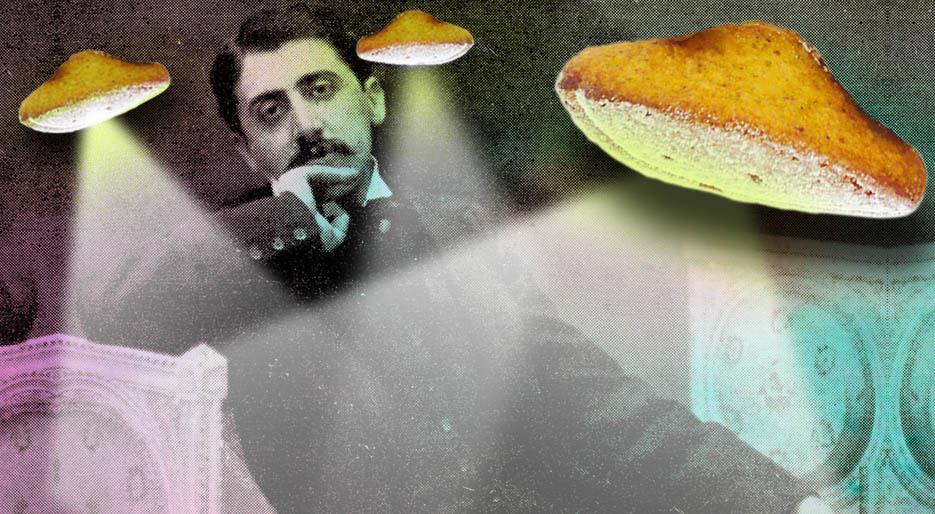
A shocking revelation:
The thing is: There’s not a lot of evidence to suggest that Proust really ate madeleines. Although his vivid memories of the delicate cookies from In Search of Lost Time have become iconic, early versions of the novel actually don’t include madeleines at all. Instead, we see Marcel biting into humble biscotte – a piece of dry toast.
What Proust really ate:
[A]s his illness worsened, his need to write began to subsume his desire to eat, and breakfast became Proust’s meal of choice. Instead of the madeleines and tea we known from his fiction, the real Marcel demanded croissants and cafe au lait, brought to him in bed while he read the paper and began his work. He would dunk his croissant in the coffee (just as his fictional self would mimic with a cup of tea) and ate little else for the rest of the day.
Cécile Albaret, Proust’s trusted servant, would later marvel at the writer’s ability to live on so little, after years of hedonistic eating. “The most extraordinary thing was how he could survive and work, ill as he was, … by living on the shadows of foods he’d known and loved in the past.” In the absence of beef and beer, Proust’s writing (and those morning croissants) was all that remained, evoking those tantalizing sense memories of meals gone by—his own personal madeleine moments.
(Image via James Brennan’s piece on Proust and madeleines)
 The Dish