This Congress has been among the least productive ever:
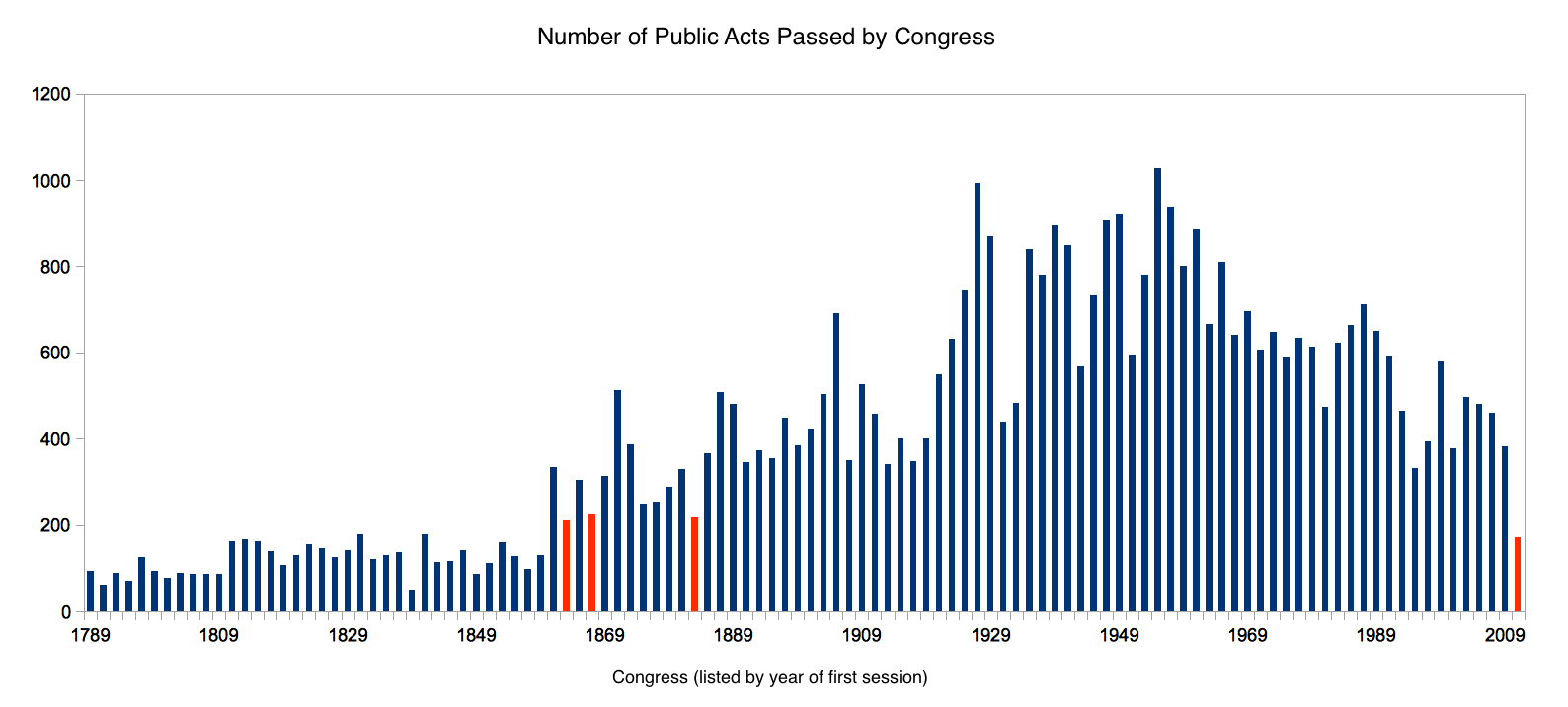
Why this has happened:
Polarization is important but I would argue that it should take a back seat to another explanation: inter-chamber disagreement. Research has shown that House and Senate ideological differences are probably the most important indicators of gridlock. Even in instances of unified congressional control policy differences between the chambers can significant increase gridlock. In Binder’s book, Stalemate, she illustrates that bipartisan context is the largest substantive indicator of gridlock and productivity – outperforming both polarization and traditional divided government. The further the chambers are from one another, the more difficult it is for Congress to pass bills.
The state level is a very different story:
[S]tatehouses are the place to watch the battles that will be dominating the country’s political discussions in the coming years. Health care reform, campaign finance laws, gun ownership rules and other contentious political issues all started at the state level before they became subjects of national debate. This is why state governments have often been referred to as laboratories of democracy: They are the testing grounds for new ideas.
One of the main reasons those laboratories have been so busy lately is that the 2012 elections produced a record number of state governments under single-party control. As The New York Times reported, there are now the fewest states with mixed-party governments (split-chamber control or a governor of one party and a legislature of another) since 1952. According to Governing magazine, which reports on state governments, one party controls both legislative chambers in 43 states — the most since 1944.
Why this is important:
One consequence of all this activity is that life in one state is starting to look really different from life in the next state over. If you are considering moving to another state for a job, you need to pay attention to the public-policy climate of that state more than you used to. If you want access to Medicaid to help pay for your health care, if you are gay and want to enjoy marriage and parenthood, if you are Latino and are concerned about being harassed as a possible undocumented immigrant, if you want your teenage daughter to have full access to reproductive health services — or not — politics is not just a distant Capitol Hill exercise. It is something that will materially and directly affect your life.
 The Dish