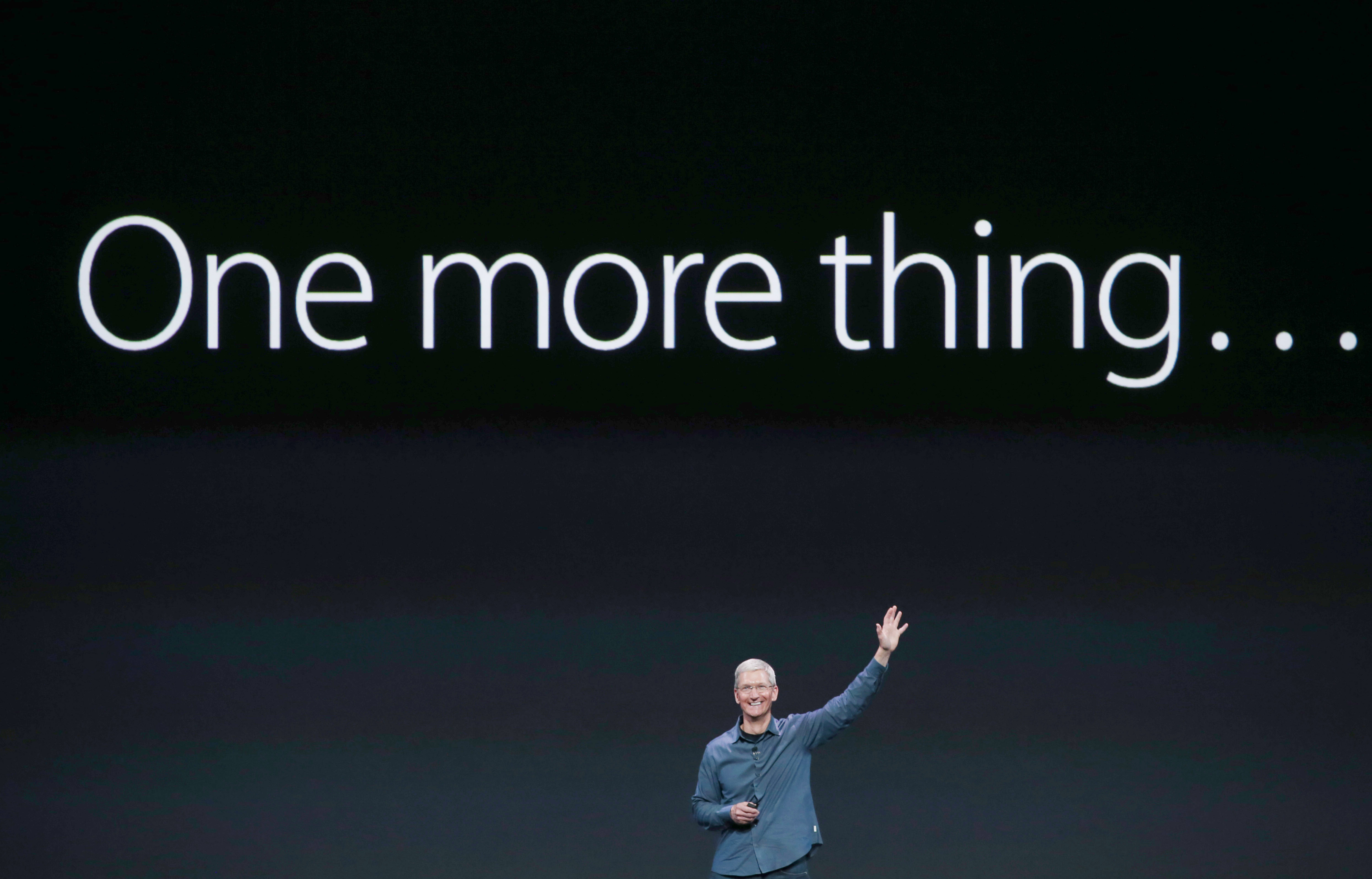
Apple CEO Tim Cook officially exited the closet yesterday:
For years, I’ve been open with many people about my sexual orientation. Plenty of colleagues at Apple know I’m gay, and it doesn’t seem to make a difference in the way they treat me. Of course, I’ve had the good fortune to work at a company that loves creativity and innovation and knows it can only flourish when you embrace people’s differences. Not everyone is so lucky.
While I have never denied my sexuality, I haven’t publicly acknowledged it either, until now. So let me be clear: I’m proud to be gay, and I consider being gay among the greatest gifts God has given me.
Leonid Bershidsky points out that “Cook is the first chief executive of a Fortune 500 company to come out in public”:
Members of this exclusive club are still unsure whether that’s wise, and just a few years ago, it wasn’t. In 2007, John Browne resigned as chief executive of BP after being outed by a British tabloid. He has since written a book about being a closeted gay in big business. “To a headhunter I would have been seen as ‘controversial,’ too hot to handle,” Browne wrote. “Sadly, there were some people, mostly from the business world, who never again displayed any warmth to me.”
Browne regretted choosing to live a double life rather than setting himself up as a role model for other gay executives — something Cook has done now with his candid, touching essay. Still, he had strong motives for staying in the closet — stronger ones than an inclination toward privacy, which Cook, no publicity hound either, has successfully overcome. As head of a large corporation, one has to deal with important people from cultures where homophobia is a way of life. Under Browne, BP had a major joint venture in Russia, where President Vladimir Putin has approved laws against the “propaganda of non-traditional sexual orientation.”
Along those lines, one Russian lawmaker has already proposed banning Cook from the country. And Chinese social media users widely ridiculed the announcement:
Crude puns and derogatory remarks relating Cook’s orientation to Apple products often seemed to drown out praise for his courage and support for his company’s wares. One particular joke, repeated so often in the hours immediately following the release of Cook’s article that the state-run Guangming Daily reported it as a typical netizen reaction, played on the Chinese term “bent man,” slang for gay man. “No wonder the iPhone 6 bends so easily!” wrote user after user. (Tales of the ultra-slim iPhone 6 bending under light pressure have circulated both in the United States and abroad since the iPhone’s release in September.)
Tim Teeman wonders how Cook will deal with such intolerance:
His most radical statement of intent, and one which will be fascinating to see if he holds true to—and if so how practically and volubly, comes at the end: “We’ll continue to fight for our values, and I believe that any CEO of this incredible company, regardless of race, gender, or sexual orientation, would do the same. And I will personally continue to advocate for equality for all people until my toes point up.”
If Cook is serious, then arguably he has just become—indeed made himself—the single most powerful and highest-profile advocate for gay equality globally. How he intends to practically parlay that will be fascinating to watch.
Apple, for example, is in talks to sell the iPhone in Iran, a country where homosexuality is a crime punishable by death. Incidences of gay men being hanged in public have been graphically reported upon. If Cook is to be taken at his word, one would expect him to make some public statement about Iran’s record, as he prepares to do business with the country. His stirring essay makes clear his desire to be an advocate and activist, but it does not specifically lay out how he intends Apple to do business with deeply homophobic countries like Iran.
Issie Lapowsky hopes that Cook’s announcement will help other business managers and employees to come out:
The problem is more acute than you might think. With a recent study, Deloitte University’s Leadership Center for Inclusion examined a phenomenon that sociologists refer to as “covering,” where people will attempt to mask part of their identity in the workplace, and it revealed just how pervasive—and potentially damaging—the practice is among members of the LGB community.
The study surveyed more than 3,000 employees at businesses across the country to determine what percentage of them admit to covering at work, and why they feel the need to do it. The study included people of a variety of races, genders, and sexual orientations, and found that while 61 percent of all respondents said they had covered, a whopping 83 percent of gay respondents said they had. That’s more than black respondents, female respondents, and any other minority group surveyed (the transgender sample size was too small to be included).
Claire Cain Miller makes clear why Cook’s statement matters:
Though there have been chief executives at the upper tiers of corporate America who are gay, they have consistently declined to be identified as such. That sent a similarly strong message to young people, said Sam Altman, president of Y Combinator, a prominent Silicon Valley start-up investment firm and incubator.
“Shame is the wrong word, but there’s some sense of lack of comfort when it goes widely acknowledged and not said,” said Mr. Altman, who is 29 and gay. He said he remembers thinking in high school that as a gay person, he could never become a venture capitalist because the industry was too much of a traditional old boys’ club for him to be included. Mr. Cook has become “an incredibly important role model, and I think people underestimate how important that is in what people think they can do with their lives,” Mr. Altman said.
And Casey Newton savors the moment:
There was a time when I struggled to come to terms with myself; when I felt alone; when I scanned the horizon looking for someone to point the way forward for me. There was a time when the only other gay men I knew were the ones I saw in TV and movies, and they seemed nothing like me. It feels embarrassing to say now that what I wanted back then was a role model — someone confident in himself, powerful, a real leader — to give me permission to be myself. But I very much did.
And many still do, particularly younger people, and particularly younger people growing up in the more rural and religious parts of America. Someday, maybe someday soon, we’ll hear about how Cook’s essay today helped someone there through a difficult time. And then we’ll hear it again, and again, and again.
Update from a reader:
I guess I’m all alone here. To me, Tim Cook is the Jodie Foster of corporate America. Unlike Ricky Martin who said something to the effect of “If I knew back then how good telling the truth feels, I would have done it a long time ago,” Cook and Apple are spinning their message for maximum exposure and publicity. Despite last June’s “outing” on CNBC, Cook and Apple remained coy, and even yesterday’s announcement proclaimed that Cook has never denied who he is. The whole thing seems fishy to me. We have a wealthy and powerful leader of an adored company making a safe announcement once he’s in a comfortable position. Rather than showing that Apple is an open and tolerant organization what this seems to say is that like Jodie’s path to stardom and success, the closet can be a useful career strategy if you play it right.
We should all be glad that Cook is now feeling safe, open, and proud about who he is and let the homophobes know they need to get over themselves, but as a role model, Cook‘s credentials are somewhat weak. He played it safe on the way up, and now he wants to play the hero and get the admiration. Until his role moves beyond symbolism, I am withholding my praise.
(Photo: Apple CEO Tim Cook announces the Apple Watch during an Apple special event at the Flint Center for the Performing Arts in Cupertino, California on September 9, 2014. By Justin Sullivan/Getty Images)
 The Dish