Quote For Thanksgiving Day

“I have been thinking about existence lately. In fact, I have been so full of admiration for existence that I have hardly been able to enjoy it properly. As I was walking up to the church this morning, I passed that row of big oaks by the war memorial — if you remember them — and I thought of another morning, fall a year or two ago, when they were dropping their acorns thick as hail almost. There was all sorts of thrashing in the leaves and there were acorns hitting the pavement so hard they’d fly past my head. All this in the dark, of course. I remember a slice of moon, no more than that. It was a very clear night, or morning, very still, and then there was such energy in the things transpiring among those trees, like a storm, like travail. I stood there a little out of range, and I thought, it is all still new to me. I have lived my life on the prairie and a line of oak trees still can astonish me.

I feel sometimes as if I were a child who opens its eyes on the world once and sees amazing things it will never know any names for and then has to close its eyes again. I know this is all mere apparition compared to what awaits us, but it is only lovelier for that. There is a human beauty in it. And I can’t believe that, when we have all been changed and put on incorruptibility, we will forget our fantastic condition of mortality and impermanence, the great bright dream of procreating and perishing that meant the whole world to us. In eternity this world will be Troy, I believe, and all that has passed here will be the epic of the universe, the ballad they sing in the streets. Because I don’t imagine any reality putting this one in the shade entirely, and I think piety forbids me to try,” – Marilynne Robinson, Gilead.

Divided We Thank

Kenneth C. Davis credits Lincoln with issuing “the first two in an unbroken string of presidential Thanksgiving proclamations,” but notes that “the elevation of Thanksgiving to a true national holiday [was] a feat accomplished by Franklin D. Roosevelt.” He reminds us that Americans initially found Roosevelt’s holiday politically polarizing:

In 1939, with the nation still struggling out of the Great Depression, the traditional Thanksgiving Day fell on the last day of the month – a fifth Thursday. Worried retailers, for whom the holiday had already become the kickoff to the Christmas shopping season, feared this late date. Roosevelt agreed to move his holiday proclamation up one week to the fourth Thursday, thereby extending the critical shopping season.

Some states stuck to the traditional last Thursday date, and other Thanksgiving traditions, such as high school and college football championships, had already been scheduled. This led to Roosevelt critics deriding the earlier date as “Franksgiving.” With 32 states joining Roosevelt’s “Democratic Thanksgiving, ” 16 others stuck with the traditional date, or “Republican Thanksgiving.” After some congressional wrangling, in December 1941, Roosevelt signed the legislation making Thanksgiving a legal holiday on the fourth Thursday in November. And there it has remained.

Josh Zeitz elaborates:

Though Republicans were louder in articulating their opposition, the split between Thanksgiving and “Franksgiving” states was not strictly partisan; rather, it was ideological.

Among those states that shunned Roosevelt’s designated holiday were Alabama, Arkansas, Florida, Kentucky, North Carolina, Oklahoma and Tennessee. Texas, home of Vice President John Nance Garner, split the baby and recognized both dates as a holiday. While Georgia did adhere to FDR’s decree, the editor of the Warm Springs Mirror—effectively FDR’s hometown paper when he wasn’t in Washington—echoed the criticism of conservative Democrats when he suggested that the president move his birthday “up a few months until June, maybe … I don’t believe it would be any more trouble than the Thanksgiving shift.”

Were people angry, as some editorialists suggested, that the president was ruining collegiate football (after all, most of the big rivals had long before scheduled their Thanksgiving games, and for many schools, the season ended entirely the Saturday following the holiday)? Perhaps that was part of it. But mostly, it was a shifting political ground that gave conservative opponents of the New Deal from both parties greater confidence to criticize and ridicule a widely popular president.

Meanwhile, Stephen L. Carter surveys a history of political friction during the holiday. Citing James Madison’s Thanksgiving Proclamation of 1814 – delivered during the War of 1812 – he urges Americans to “put aside our divisions and to approach our blessings with gratitude and humility”:

We’re a divided nation in so many ways. In our responses to everything from the Affordable Care Act to Ferguson to climate change, we’re constantly at one another’s throats, treating those who disagree as enemies to be derided rather than fellow citizens who are part of a common project. College students are being taught to ban speakers whose messages discomfit them. Political parties, egged on by talk show hosts, are raising money through raising fears of diabolical conspiracies. …

We’re an imperfect country, and always will be. The “distinguished favors” and “precious advantages” of which Madison spoke may not always be equally distributed, but they are what mark the nation as distinctive. We can do no greater honor to our forebears than adopting an attitude of respect and humility across our differences, as we give thanks for the remarkable project that is America.

The Best Of The Dish Today

As bad as your wintry travels might get this Thanksgiving, be grateful you’re not these guys:

What you’re seeing:

A UTair flight froze to the ground at Igarka airport in Siberia on Tuesday, and passengers had to get out and push the 30-ton aircraft to get it moving again. One of the men in the video is heard saying: “Real men can plant a tree, build a house, and push a plane,” according to the Siberian Times. The temperatures in the region above the Arctic Circle hit below 52C, and the brakes froze because they used the wrong kind of grease.

We’re staying in by ourselves. It’s cocoon weather.

Today FTW: the surprisingly good politics (so far) of Obama’s executive action on immigration; why “last year was an all-time low for killings of police and a 20-year high for killings by police“; the cosmetic “make-up trajectory” of women; and the meaning of our tatted, inked body culture.

The most popular post of the day was What To Make Of Ferguson? Next up: Will Michael Brown’s Death Be A Turning Point?

Many of this week’s posts were updated with your emails – read them all here.  You can always leave your unfiltered comments at our Facebook page and @sullydish. 22 more readers became subscribers today. You can join them here – and get access to all the readons and Deep Dish – for a little as $1.99 month. Gift subscriptions are available here. Dish t-shirts are for sale here and our new mugs here. A final email for the day:

Consider this a dispatch from deep in Blue America (I live in the most Democratic precinct in Portland, Oregon). I often chafe at your analysis of the lefty mind and currents in lefty thinking, but I totally agree with the thrust of the thread on Chuck Schumer’s revisionist history and magical thinking.

There was something about the election of Barack Obama that defied reason – and I mean literally. Both sides imagined he was somehow all-powerful. We know the ways in which the right reacted, but the left was just as crazy.  The view that Obama somehow squandered an opportunity to remake the country as Sweden is not only universal, it has hardened into rancid resentment. I think it may well explain the midterms; after the unreasonable hopes of 2008, everything looks like desolation. Liberals around here don’t talk about politics anymore – less than any time in my adult life (I’m 46). They voted, but bitterly.

So many liberals look backward and see nothing but coulda-beens. It takes an ignorance of history combined with a lack of sophistication about the political process to see this man as anything but one of the most significant forces for liberalism in US history. And yet now, when we should be flush with excitement and optimism, liberals know only dissipation.

In one key way, the GOP should take pride in this. Their strategy of governing nihilism has indeed had a massive effect. That even a Senator who was in Congress at the time misremembers this history is evidence of how bad things are among the Dem base. It’s been a weird six years.

See you in the morning – and Happy Thanksgiving from all of us.

Pass The Gravy, Pass On The Partisanship

These advice columns are becoming a genre unto themselves. The stock villain: crazy right-wing uncle, the jokes about stuffing. But I recognize them by what they unwittingly emulate: guides for religious evangelism. The gentle, righteous self-regard, the slightly orthogonal response guides, the implied urgency to cure your loved ones of their ignorance. Your raging uncle will know the truth, and the truth will set him free.

That’s a problem. Our politics are taking on a religious shape. Increasingly we allow politics to form our moral identity and self-conception. We surround ourselves with an invisible community of the “elect” who share our convictions, and convince ourselves that even our closest and beloved relatives are not only wrong, but enemies of goodness itself. And so one of the best, least religious holidays in the calendar becomes a chance to deliver your uncle up as a sinner in the hands of an angry niece.

I’m as guilty of this as anyone.

As a conservative raised in an argumentative and left-leaning Irish-American family, Thanksgiving and other holiday dinners did more than any professional media training to prepare me for MSNBC panels. But arguments like these, particularly when we allow politics to dominate our notions of ourselves, can leave lasting scars. And precisely because our familial relationships are so personal, the likely responses to our creamed and beaten talking points will be defensive, anxious, off-subject, or overly aggressive.

Lizzie Crocker presents one scenario you might relate to:

You are in a steady, long-term relationship with someone whom you adore despite her fringe politics (you are even starting to come around on her anti-vax opinions). Alas your family cannot stand her, not just because they disagree with her political views, but because they find her to be preachy and self-righteous, and because she refuses to put on “nice” clothes when they see her. (Your mother telephoned to ask if she would be wearing yoga pants to Thanksgiving dinner again this year.) But for some unfathomable reason, you really love this woman who lives in her Lululemon everything and who is forcing you to do a five-day juice cleanse with her after the holiday.

Can’t everyone open their narrow minds and try to get along? [Marriage and family therapist Jenn] Berman suggests “setting up boundaries” and warning family members who are prone to starting fights that you’ll “give them one warning if they do so and then leave if things escalate.”

Stephen L. Carter is much more sweeping:

We’re a divided nation in so many ways. In our responses to everything from the Affordable Care Act to Ferguson to climate change, we’re constantly at one another’s throats, treating those who disagree as enemies to be derided rather than fellow citizens who are part of a common project. College students are being taught to ban speakers whose messages discomfit them. Political parties, egged on by talk show hosts, are raising money through raising fears of diabolical conspiracies.

Even Lincoln, in the midst of so desperate a war, conceded that the enemy was “of our own household.” This was an enemy actually being fought on the battlefield. The very day before Lincoln’s proclamation of Thanksgiving, the Union had won its costly victory at the Battle of Cedar Creek, suffering more than 5,600 casualties, including some 3,400 dead. Yet Lincoln evidenced a belief that those who fought against the Union were not monsters, but wayward brothers.

We’re an imperfect country, and always will be. The “distinguished favors” and “precious advantages” of which Madison spoke may not always be equally distributed, but they are what mark the nation as distinctive. We can do no greater honor to our forebears than adopting an attitude of respect and humility across our differences, as we give thanks for the remarkable project that is America.

A Poem For Wednesday

5379638933_e5c0ffb306_b

“Poem of Thanks” by Sharon Olds:

Years later, long single,
I want to turn to his departed back,
and say, What gifts we had of each other!
What pleasure—confiding, open-eyed,
fainting with what we were allowed to stay up
late doing. And you couldn’t say,
could you, that the touch you had from me
was other than the touch of one
who could love for life—whether we were suited
or not—for life, like a sentence. And now that I
consider, the touch that I had from you
became not the touch of the long view, but like the
tolerant willingness of one
who is passing through. Colleague of sand
by moonlight—and by beach noonlight, once,
and of straw, salt bale in a barn, and mulch
inside a garden, between the rows—once—
partner of up against the wall in that tiny
bathroom with the lock that fluttered like a chrome
butterfly beside us, hip-height, the familiar
of our innocence, which was the ignorance
of what would be asked, what was required,
thank you for every hour. And I
accept your thanks, as if it were
a gift of yours, to give them—let’s part
equals, as we were in every bed, pure
equals of the earth.

(From Stag’s Leap: Poems by Sharon Olds © 2012 by Sharon Olds. Used by permission of Alfred A. Knopf, an imprint of the Knopf Doubleday Publishing Group, a division of Random House LLC. All rights reserved. Photo by Ahmed Mahin Fayaz)

If You Read Just One More Thing On Ferguson

US-CRIME-POLICE-RACE-UNREST

You could do a lot worse than this Facebook post by Benjamin Watson. If you think we are becoming incapable of nuance and balance in our public debate – and I do – then this piece is a reason to hope.

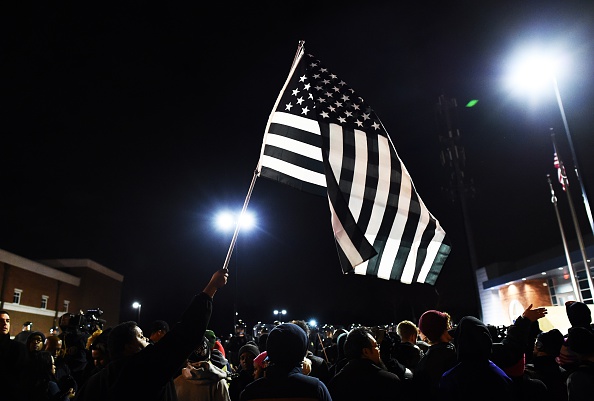
(Photo: A protester in Ferguson waves a black-and-white modified US flag during a march following the grand jury decision on November 24, 2014. By Jewel Samad/AFP/Getty Images)

Yglesias Award Nominee II

“What is the point of this bill? Does this bill not in fact play into the hands of those who seek to slander us? Into the very hands of those who wish to show that even among us, there are those who see contradiction between our being a free people in our land, and the freedoms of the non-Jewish communities in our midst? The declaration of independence, in its depth and greatness, bound together two components of the state as Jewish and democratic, democratic and Jewish,” – Israeli president Reuven Rivlin, a Likudnik who has become the country’s conscience in its rush to becoming an apartheid state.

Rape By Fraud?

New Jersey state Assemblyman Troy Singleton is proposing a law that would make it illegal to lie to a prospective sexual partner in order to get them in bed. The bill – which is unlikely to pass – defines “sexual assault by fraud” as “an act of sexual penetration to which a person has given consent because the actor has misrepresented the purpose of the act or has represented he is someone he is not”. Elizabeth Nolan Brown loses it:

No no no just no: we do not need a legal remedy for people having bad judgement. Is it a shame that some people misrepresent themselves to get people to sleep with them? Sure. But not every aspect of social and sexual relationships can be a matter for government concern. What’s next, making it a misdemeanor to use outdated photos on your Tinder profile? Criminalizing push-up bras? Throwing people in jail who say they’ll call the next day but don’t?

The situation Singleton says spawned his proposal involves Mischele Lewis, a woman defrauded by a man claiming to be a British military official. The pair had sex and Lewis also paid the man, William Allen Jordan, $5,000 for an alleged security clearance. When Jordan turned out to be a scam artist, Lewis pressed charges and he wound up pleading guilty to defrauding her. Justice served, right? Not in the warped worldview of New Jersey prosecutors, who apparently can’t stand the idea that some areas of interpersonal dynamics aren’t within their prosecutorial reach.

This is too much even for Amanda Marcotte:

Given that this law has very little chance of passing, it shouldn’t matter much. But it does! Because it gives those who oppose any legislation attempting to address sexual abuse (affirmative consent laws, for instance) the ability to point and say: Look, those crazies think everything is rape, even fibbing!

Rape is a fairly straightforward crime. It’s a matter of having sex with someone who does not want to have sex at that moment in time. Despite claims to the contrary, affirmative consent supporters don’t actually want to make it legal to retroactively retract consent. But this law would open the door to allowing people to do so, which actually does muddy the definition and understanding of rape. Jerks who exploit people’s desire to be loved in order to defraud them can be convicted under other laws. Otherwise, relationship fouls are simply not criminal offenses.

It’s good to see that there’s a limiting principle in the state’s sexual policing power. Even for Marcotte.

Maxing Out Our Airports

Traveling for thanksgiving

Adam Minter predicts Thanksgiving-type travel days year-round in coming years:

[E]ven with billions worth of improvements in the pipeline, the picture for travelers remains bleak. Of the 30 busiest U.S. airports (accounting for 70 percent of total U.S. passenger flow), 13 already feel like the day before Thanksgiving one day a week on average. Three airports — Midway, Las Vegas McCarran, and Orlando International — suffer those levels of congestion twice a week. Worse yet, the capacity improvements that are currently slated won’t help much. Within six years, the study notes, 27 of the 30 busiest airports will be Thanksgiving-busy at least once a week.

That this state of affairs is unnatural should be apparent to anyone who flies outside the U.S. even occasionally. In 2011, the World Economic Forum ranked U.S. aviation infrastructure 32nd in the world — behind Malaysia (an assessment that, in my personal experience, remains accurate). This is both embarrassing and somewhat predictable. Developing countries such as Malaysia strongly subsidize airports and airlines, viewing them as important marketing opportunities and first-impression makers.

Clive Irving hates how airlines jam so many seats into coach:

Looking through photographs from the early days of U.S. airlines, I found a shot of the cabin of the Boeing 247, circa 1934. The 247 was the first airplane really to define the form of a modern airliner, flying faster and higher than any predecessor. The passengers in the photo are enjoying a standard of comfort undreamed of in coach today: only one seat on each side of the aisle, generous leg room, nice wide seat cushions, and seat backs shaped to reflect the curves of the human body. Some of the ladies are wearing furs and hats. Even a 200-pounder could sink contentedly into the space without encroaching on anyone else.

In 1934, those passengers paid $160 for a one-way flight from Newark to San Francisco, in today’s money $2,800. This was at the depths of the Great Depression. In its infancy, air travel was a luxury only the wealthy could afford as they flew nonchalantly over the states where the likes of Ma and Pa Joad were fleeing the Dust Bowl. At the front end of the cabin it remains so. Airplanes have become as segregated by class as the old ocean liners—opulence for the rich and the crush of steerage for the rest of us.

But Amy Cohn contends that the disparity in airline ticket prices benefits everyone:

Suppose that an airline offers a 100-seat flight from Philadelphia to Chicago, and that it costs $40,000 to cover the costs of the airplane, fuel, pilots, flight attendants, landing fees, insurance, and so on. The airline needs to make at least $40,000 in ticket revenues for the flight to be worth flying. If the airline were to offer just one fare for all tickets on that flight, what should that fare be? Selling every seat for $425, for a total of $42,500, would make the flight nominally profitable.

But there may not be 100 people willing to pay $425 for this flight. Maybe there are 100 cash-poor college students who want to fly, but can only afford $300 per ticket. On the other hand, there may be 20 business travelers who want to fly, each willing to pay up to $900. … This is where “fare differentiation” comes in. If they can sell $300 seats to 80 college students and $900 seats to 20 business travelers, then they can sell all 100 seats, earning $42,000 and making the flight worth offering.

How all passengers wins:

While it is definitely to the benefit of college students to have business travelers “subsidize” their fares, the business travelers may be getting the bigger benefitand not just because there are usually a few tickets still available at the last minute (at the highest fare). This fee structure allows airlines to increase the number of flights offered, giving the business traveler more options to choose from.

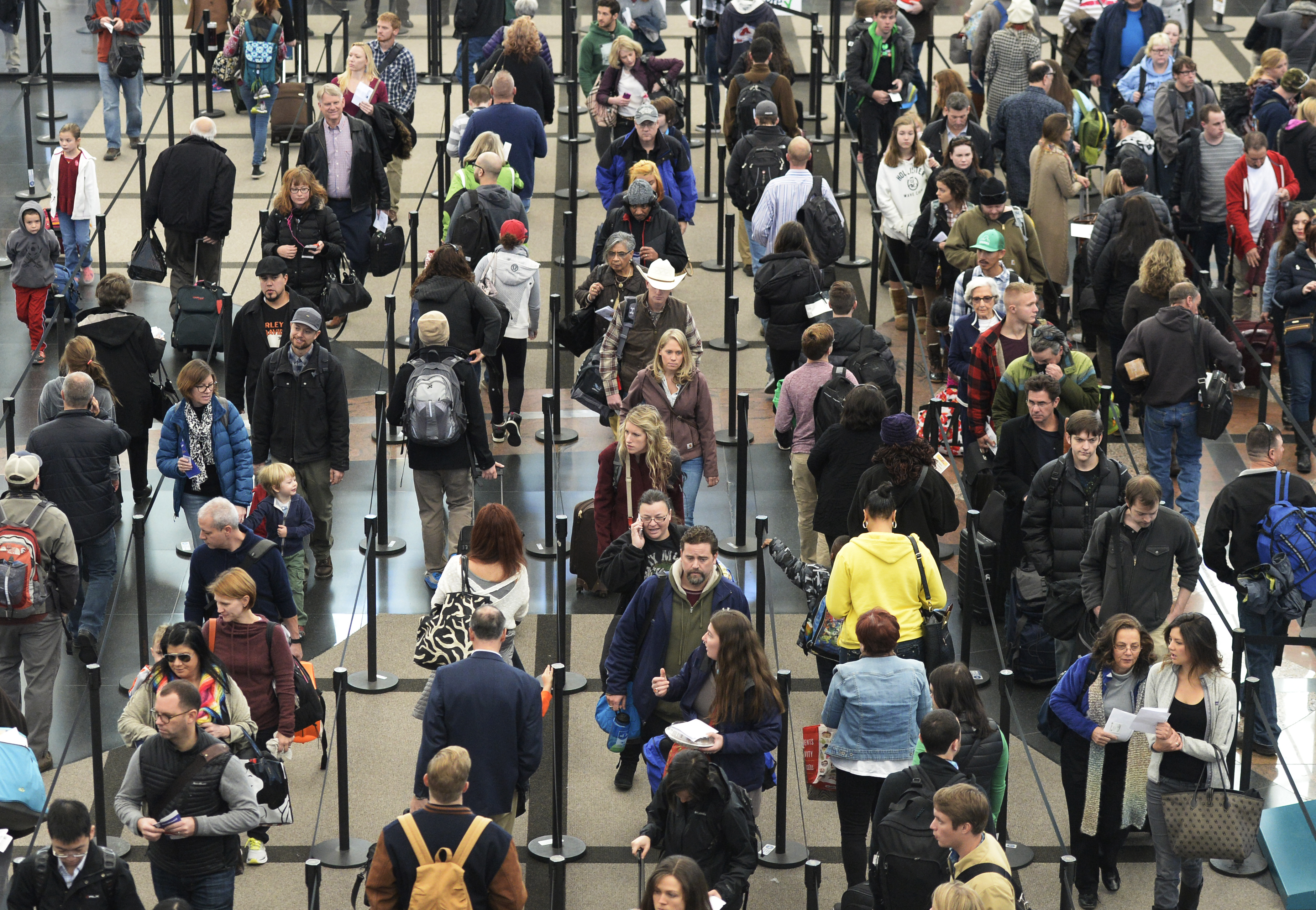
(Photo: Security lines at Denver International Airport on November 26, 2014. By RJ Sangosti/The Denver Post via Getty Images)