Skateboardanimation from Tilles Singer on Vimeo.
(Hat tip: LikeCool)
Skateboardanimation from Tilles Singer on Vimeo.
(Hat tip: LikeCool)
For every single reason Mary Gordon lays out so beautifully.
A reader writes:
My grandfather grew up in a large family in rural Poland during the 20s. He was sent around from aunt to aunt; as the youngest boy, times were hard and he worked to help pay for his keep. He spent a lot of time working the farm and fields of the local parish church, backbreaking jobs in exchange for a meal or two.
As a teenager, the pastor one day followed him out to the remote field my grandfather was working and told my grandfather he intended to get what he wanted.
My grandfather had the courage to lift a huge rock at his feet and told the priest, "take one step closer and I swear I'll kill you." The pastor laughed and said "You're nobody. Who is going to believe your word against mine?"
My grandfather married a Catholic girl, left Poland for Brooklyn, allowed my grandmother to raise my mother as a Catholic, but he himself never again set foot inside a church. He never spoke of what happened, and it wasn't until he died 20 years ago that I learned from my grandmother why he never went to Mass with us all those years.
Josh Marshall's take:
Steele was hired because he was black. And the other truth is that now he can't be fired, in significant measure, because he's black. Because canning Steele now would only drive home the reality that Republicans were trying to paper over, fairly clumsily, when they hired him in the first place. So Republicans are stuck with his myriad goofs and pressfails and incompetent management and all the rest because of a set of circumstances entirely of their own making.
They finally cover the story: a joint piece by Mr and Mrs Gingrich on the glorious legacy of John Paul II.
A reader writes:
Having been in the computer hardware and software business since the mid-sixties, I am amazed that people like Cory Doctorow can still get an audience. He yearns for a long-gone era of home-grown hacking. If people like him were in charge we would still be using Altair 8800s. The iPad is a demonstration of the total irrelevance of his ilk. There is a predictable Not Invented Here backlash from the noisy crowd re the iPad. They know better than us what we should be doing and buying. His headline "Why I won't buy an iPad (and think you shouldn't, either)" says it all.
Another writes:
Cory's full of it. Yes, if you want to be a hardware hacker and in total control, the iPad is not for you. But for the other 99.999% of us, who like things that perform their functions easily and elegantly, the iPad is pretty cool.
Just because I know how to create a program doesn't mean I want to do it every time I need something done, on every device. Cory will have plenty of tablet devices to play on soon enough, I'm sure, many that will run Linux or Android and have plenty of ways to customize them. Why should he diss the iPad and those who buy it? If he doesn't like it, just ignore it.
Another:
Doctorow's arguments are so easily shot down as to be suspicious of intentional internet trolling. The first being "contempt for the owner" vis-a-vis hiding the screws in an attempt to make a seamless experience. This has certainly not stopped ambitious hardware hackers in the past from opening up and modifying their hardware. Search YouTube someday for "repair iphone." It certainly will not stop potential iPad hackers.
Secondly, and most importantly, is his ridiculous assertion that the method of improving your iPad is to buy apps. What's so shameful about it is that it ignores the real avenue of creative input: writing your own app. Apple has certainly put forward the kit necessary for coders to access the hardware to make it do essentially whatever they can imagine. Obviously the framework of the App Store has come under fire for their less-than-transparent approval processes, but still. The App Store was the defining success of the iPhone, and will undoubtedly continue with the iPad.
This is to say nothing of the highly active "jailbreak" scene, wherein basically anyone can install alternative software on their device to allow the use of unapproved apps. Been going on nearly as long as the App Store. The iPad was jailbroken the day after it was released.
Finally, one of Doctorow's central arguments is that the iPad is faulty for being in essence a device centered around consumption (as opposed to creation), and all of the Baron Harkonnen grotesqueries implied by that. That is completely unmade not only for the reasons above, but also by every consumer who uses these apps in new and creative ways. Perhaps he forgets the cover of the New Yorker that was created from an iPhone screen, or impromptu concerts people have rigged by connecting iPhones with music apps. To my mind it is akin to criticizing a blank sheet of paper for its inherent blankness, just before an artist transforms it into an origami swan.
Neatorama explains:
In the 1920s and 1930s, censorship of movies was often governed by local boards, and achieved by snipping the scenes from the film reels. It won’t surprise anyone that those clipped film segments were sometimes saved. Here a number of them have been assembled into a montage, which was submitted to the 2007 72 Hour Film Festival in Frederick, Maryland.
Censors of that period seem to have been particularly interested in feet.
Jessica Crispin has a whimsical article on the history of the mind's dark corners:
Even if you provided me with incontrovertible proof that my dreams were meaningless (who knows what such evidence would even look like), I would still spend my mornings documenting my dreams in detail and associating out the visuals. I really do wish I could be more rational — honestly, it's a goal of mine. And yet that "proven" column, with its right angles and straight lines, its belief that depression is a chemical imbalance best treated with SSRIs, that dreams are problem-solving mechanisms and not symbol-laden poetry, that the physical plane is the only one there is…
As someone who has ended relationships because of dreams, and had prolonged periods of unexplained (I would say hysterical) blindness, I don't quite fit in there. The white coats often look into that unscientific past and see merely superstition and fear, useless nonsense. But hidden in the mire, we have thinkers and ideas, waiting for their wisdom to be re-acknowledged.
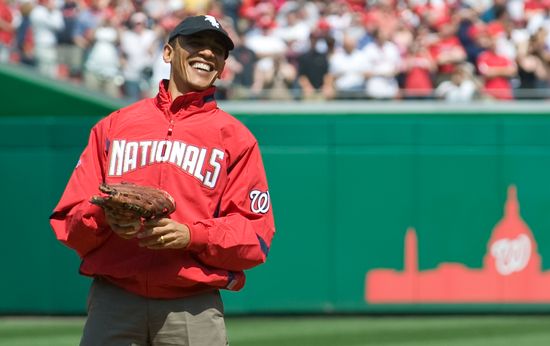
Massie agrees with me on Obama’s “Tory temperament” but differs from there:
[I]f one is to redefine Toryism as simply a subset of pragmatism then perhaps we’re defining matters in a less than completely helpful fashion. Obama is a pragmatist and the pragmatist is careful not to rule anything out until the point at which it becomes clear that whatever that anything may be it’s not something that will advance his ambitions.
Nevertheless, if Obama wants to be a transformational President of real consequence then, almost by definition, he cannot be any more a Tory than was Margaret Thatcher. Like her he will be a radical (I don’t use the term in any pejorative sense, incidentally). And in the American context, in as much as these labels can ever be transferred from one side of the Atlantic to another, I think the true Tory approach to matters such as healthcare would instinctively be federalist, not federal. And not just in healthcare neither. But I see little evidence of modesty of ambition in Obama’s political agenda.
But I’d argue that Thatcher was a Tory and her radicalism was a function of the crisis of governance in Britain in the late 1970s. She was a radical because in order to rescue the balance of British politics, she had to be.
And she clearly radicalized from her stance in the early 1970s when she was pretty much indistinguishable from her “wet” peers. Again, the conservative perspective refuses to see anything out of its historical context.
The case for Obama’s Toryism is that he is attempting to restore America’s political and social balance after a long period of deterioration, debt and polarization, deeply accelerated by the Bush-Cheney disaster. Conservatism is about providing, with apologies to David Remnick, a bridge between past and future, which respects the internal logic and traditions of the polity it operates in. This can mean radicalism in the service of balance – Thatcher/Reagan in the late 1970s; Obama today in less dramatic fashion; or it can mean just keeping a functioning show on the road to retain balance – Eisenhower/Baldwin/Major.
The beauty of actual conservatism is this flexibility, which is rooted in an antipathy to abstraction and ideology – and which is, of course, the nemesis of contemporary Republicanism – which is radical and reactionary and utterly ideological all at once.
People ask me: how can you be a conservative and support Obama?
My response is pretty simple: I support Obama because I am a conservative.
(Photo: Saul Loeb/Getty.)
 The Dish