King George Watch

A reader notices something interesting:

"The Executive Order allowing Cheney to declassify classified information is Executive Order 13292. Bryon York at the National Review actually has a good article on it this morning. I found the date of the Executive Order, March 25, 2003, to be the most astounding part.  According to Wikipedia, the time line of the Plame Affair goes like this.  On March 3, 2003 Joseph Wilson writes an article in the Nation in which he claims that "America has entered one of it [sic] periods of historical madness."  The Executive Order 13292, giving the Vice-President explicit authority to declassify information, is issued on March 25, 2003. On July 6, 2003, Joseph Wilson writes his article in the New York Times disputing the intelligence that Saddam Hussein attempted to acquire nuclear materials in Africa, which is followed by Robert Novak’s article ousting Valerie Plame on July 14, 2003."

The York article is indeed very helpful. York will no doubt soon be called a liberal. More to the point: the circumstantial evidence seems pretty clear to me that the president gave the vice-president constitutional authority to smear Joseph Wilson. It also seems to me that this is a big deal.

UPDATE: Wikipedia appears to be wrong, although my reader read it correctly. The quote from Wilson was actually by John le Carre. The first print mention of Wilson’s dissent from the White House line was in May 2003. So the time-line for a clear connection doesn’t work. All we can say is that Cheney’s new authority to leak classified information came at a time when the administration’s claims about WMDs were beginning to look weak. Not long thereafter, Plame was outed. 
Email of the Day II

A former military man writes:

"When I saw the pictures from Abu Ghraib (and Gitmo?) my eyes filled up and I began to weep slowly. For my country. Americans don’t do things like this! (Yes, I remember My Lai but when it was revealed, the country was shocked and outraged.) I was born in the presidency of FDR and my uncles and cousins fought in the European and Pacific theaters. Enemy soldiers, when they surrendered, wanted to surrender to the Americans because Americans didn’t mistreat prisoners. The Japanese were particularly hated because of their well-known ill-treatment of prisoners.

I grew to manhood during the height of the Cold War and the doctrine of MAD. I never saw combat (too young for Korea, too old for Vietnam) but I did serve for 3 years as an Intelligence officer in a strategic airborne unit. America was widely respected, with all our faults and stumbling steps, as "a shining city on a hill". When we betray our national ideals for the stated purpose of defending them, we lose the moral high ground.
I remember when Bill Buckley started National Review and when Barry Goldwater, an intelligent, thoughtful man, ran for the Presidency. Ronald Reagan, (whom, I confess, I consider a so-so President) was a decent, honorable man who understood that bullets and bombs are not enough to "win" a war.
Question for you, Andrew: when did intellectual conservatism morph into an apologia for trickery, torture, and theocracy?"

Another liberal, I can almost hear Sean Hannity mutter.

Policing the Movement

Here’s a thorough piece on how Bruce Bartlett, horrified by an administration that increased this country’s unfunded liabilities by over $20 trillion in four years, was fired from his think-tank job for his conservative principles. Money quote involving John Goodman, a friend of Karl Rove, and head of the National Center for Policy Analysis, who purged Bartlett:

"No one asked me to do this, no one suggested it would be a good thing, nothing like that," Goodman says. When asked precisely whom he spoke with, Goodman smiles and chuckles. "Well, I don’t want to get into that," he says. "But some people in the Bush administration said, ‘We think you just did something good.’"

You can buy Bruce’s new book, "Impostor," here.

George Will, Non-Conservative

So said Captain’s Quarter’s blog. Then he amended the sentence to say that Will was not a "hardline conservative." Why the new qualification? For some reason, a "coding error" omitted one word from the original post. LOL. Nevertheless, George Will believes in limited government, the rule of law, and prudent foreign policy. He always has. That used to make a person "conservative." Under this president, it makes one a member of the opposition.

Email of the Day

"Hi Andrew, I just thought you might like to know that Sean Hannity disdainfully referred to you as ‘left wing blogger Andrew Sullivan’ on his radio show this afternoon because you had hypothesized about the possible ramifications for Dick Cheney should Mr. Whittington die."

This isn’t the first time Hannity has called me a leftist. Wes Pruden has called me such as well. Bruce Bartlett will soon be receiving the same treatment. Doug Bandow has also recently been called "non-conservative" for dissenting from the court of King George.

King George Watch

Do the president and vice-president have the power to declassify top-secret information, even putting operatives in danger, in order to pursue political push-back? Cheney believes so. Money quote:

"Cheney said an executive order gives him, and President Bush, power to declassify information. ‘I have certainly advocated declassification. I have participated in declassification decisions,’ Cheney said. Asked for details, he said, ‘I don’t want to get into that. There’s an executive order that specifies who has classification authority, and obviously it focuses first and foremost on the president, but also includes the vice president.’"

This may well be part of Libby’s defense, if he were to be accused of actually breaking the law in revealing classified information (as opposed to obstruction of justice and perjury). When a courtier is carrying out the wishes of a monarch, no law against disclosing classified information can hold him liable.

“Like Dogs”

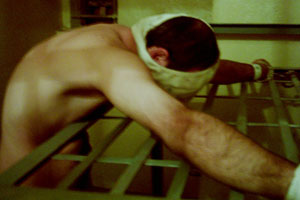
The new Abu Ghraib photographs published by Salon are just as horrifying as all the rest. I’m still trying to find out the basis for the report of six homicides in Abu Ghraib, rather than merely one. Rumsfeld’s point-man, General Miller, famously ordered a subordinate to treat military detainees under American control "like dogs." He isn’t fit to run a kennel.

Cover

Quote for the Day II

"Because it’s fun! And fun is good," – Glenn Reynolds, on his latest technological adventure, podcasting.

We’ve had our differences, but Glenn is a very rare creature: someone who has managed to build a remarkable media empire from scratch and still exhibit all the enthusiasm of a complete newbie. We could do a lot worse in a blogospheric Pied Piper.

Blair vs Freedom

They’ve never been strong friends. The British prime minister sees a problem and feels obliged to offer a solution. If liberty is extinguished a little in the process, he sheds few tears. As readers of this blog well know, there were few sights more abhorrent to me lately than that of Islamist protestors in London, raging against legitimate political speech in cartoons, while threatening violence and glorifying terrorism. But the Blair response is excessive. It’s already illegal to publicly incite violence – and for an obvious reason. It’s incitement to commit a distinct and grave crime. But mere "glorification" of terrorism is an expression of a belief, unrelated to a specific future crime. Blair’s own words reveal the problem:

"The law that we passed today will allow us to take far stronger action against people who don’t just directly engage in terrorism but indirectly incite it."

How do you indirectly incite anything? By that standard, all sorts of ideas could be deemed an indirect incitement to criminality. Many ideas are indirectly dangerous or may indirectly inspire criminal behavior. Being able freely to air such beliefs is integral to the workings of a free society. We have lost many aspects of that freedom since 9/11, sometimes necessarily so. Which is what makes the unnecessary restrictions, made in the heat of the moment, all the more distressing.