
A reader writes:
Thank you so much for your recent writings about the importance of applying the principle of religious freedom to atheists (like myself), as well as followers of all religions.
I’m a staunch liberal (raised in Lexington, MA), but have been a surprised fan of yours since October of 2004, when I saw you come close to losing it on Real Time with Bill Maher, while discussing the lack of respect that the liberal ‘elite’ often show toward the faithful. Now I can see that you are similarly chagrined that atheists like myself are being treated with increasingly open derision in our society. It‚Äôs amazing! Unlike what I used to think of as a ‘typical conservative,’ you seem to operate within a fairly logical set of principles that don’t change based on whether or not a specific outcome will be to your own personal advantage. Why can’t there be more like you?
I don’t believe in God, and I spent a lot of time studying and thinking about the subject before I came to that conclusion. Perhaps as a result of all that studying, I don‚Äôt ever look at the religious with distrust or disrespect simply because of their beliefs (unless they’re Scientologists ‚Äì ha!). However, I have started worrying in recent years that I will eventually be forced to pretend to believe, and that‚Äôs a horrifying prospect. I’m ironically glad that you are also horrified.
All I can say is that my own flawed faith-journey would not have been the same without entertaining the possibility of no God at all. 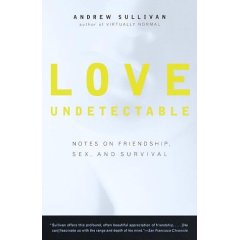 Contemplating atheism, in other words, can be an integral part of believing in the God of the New Testament. Similarly, others arrive at Christianity or other faiths only by wandering for a while in atheist or agnostic territory. I cannot say the atheist temptation has ever been very strong in me, although reading Nietzsche in graduate school was a terrifying experience. For most of my life, I have found it impossible not to believe that something we call God exists. When I went through a time of thinking I would not live past my thirties, my main doubt was not that God did not exist, but that he was evil. I actually did have an epiphany of sorts over that issue, and I wrote about it in my book, "Love Undetectable." My respect for atheism mainly emerged by reading Albert Camus. "The Plague" remains, for me, a great testimony to the integrity of faith and unfaith in the presence of evil. I have come to respect both, and sometimes I find it particularly heartening to be involved in some cause where Christians and atheists can unite: such as fighting the tyrannical and blasphemous pretensions of theocracy.
 The Dish