Roger Scruton takes aim at John Stuart Mill today. He would. Scruton belongs to the tiny band of paleo-Tories who still refuse to come to terms with the logic of liberal society. Mill’s distinction 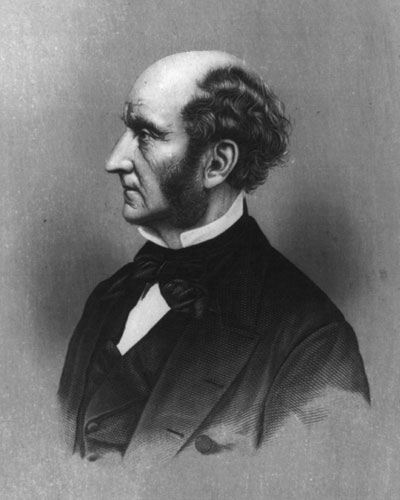 between self-harm and harm to others as the critical criterion in modern politics violates the paleo-Tory principle of defending "the sacred and the prohibited." But what does Scruton mean by this mysterious phrase – "the sacred and the prohibited"? What can he mean by it? There is surely no reason to believe that a liberal political order cannot retain a space for the sacred – in fact, the American liberal order, unlike the Tory English one, has sustained the sacred and religious in vigorous fashion. And what is "prohibited" surely varies through the ages, as societies evolve and change, and mores shift. In college, I found Scruton’s Toryism entrancing and exciting because it was so thrillingly radical. It dared to offer arguments that rested on something "deeper and rarer than rational thought." And which teenager isn’t thrilled to upset his teacher’s liberal assumptions? But when I grew up and analyzed what those things were, I found that they were just one person’s concocted notion of what the past might have been like: fantasy Victorianism. Think of a Tory squire hunting foxes, muttering about Jews, before attending Evensong. When all is said and done, that’s Scruton’s idea of the "sacred and the prohibited."
What Scruton has not comes to terms with is that the liberalism of Mill has become our custom. It has generated a culture that is itself "deeper and rarer than rational thought." Anglo-American society, as it is today, is customarily liberal, in the Millite sense. Our sense of liberty, our resistance to being bossed around, our civil religion of "live and let live": these are now the sacred principles of our customs. Oakeshott’s genius was to recognize this shift – to see that the principles of liberal society themselves generated a custom of what he called "civil association;" that these liberal principles had become conservative customs; and that the true conservative today is someone who defends the social architecture of liberal society, rather than pining for a past that never was in order to buttress prejudices that merely mask bigotry. That’s the distinction between conservatism and reactionaryism. And one can have serious reservations about Mill’s utilitarianism and still recognize that.
 The Dish