On Rove

A reader writes:

I agree with you completely on Karl Rove – I’ve never regarded him as an evil genius. Evil, yes. Genius, no. But the evidence of his strategic mediocrity actually goes back longer than you say. The only races he ever won were before 2000 were in places like Texas and Alabama, where it would have been extremely difficult for a right-wing Republican to LOSE (and even there he picked his races).

And his main accomplishment as a strategist in 2000 was to come within a hair of unnecessarily losing the race for Bush by deciding that his election was a lead-pipe cinch and encouraging Bush to "build up more of a mandate" by spending his last few days trying to add California and New Jersey to his list of states — both of which he lost by a landslide. Had it not been for the evil stellar conjunction of the Electoral College, Ralph Nader, the ballot designers of Palm Beach, a highly doubtful Supreme Court decision, and Gore’s own decision to blow his own foot off by trying to cherry-pick his way to victory instad of immediately demanding an honest statewide recount, Karl Rove would be a political laughingstock today.

Hard to disagree.

The Goods on Addington

U.S. News has a long and worthwhile profile of David Addington, Dick Cheney’s righthand man, and the key force behind the United States’ abandonment of the Geneva Conventions on torture and prisoner abuse. Money quote:

Little known outside the West Wing and the inner sanctums of the CIA, the Pentagon, and the State Department, Addington is a genial colleague who also possesses an explosive temper that he does not hesitate to direct at those who oppose him. Addington, says an admiring former White House official, is "the most powerful person no one has never heard of."

His belief in an untrammeled, extra-legal executive power is as fervent as it has proven dangerous and maladroit.

Taheri Responds

He doesn’t retract the story he sourced. Money quote:

As far as my article is concerned I stand by it.
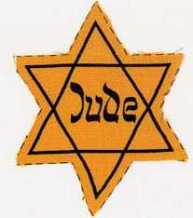
Judebadge_1 The law has been passed by the Islamic Majlis and will now be submitted to the Council of Guardians. A committee has been appointed to work out the modalities of implementation.

Many ideas are being discussed with regard to implementation, including special markers, known as zonnars, for followers of Judaism, Christianity and Zoroastrianism, the only faiths other than Islam that are recognized as such. The zonnar was in use throughout the Muslim world until the early 20th century and marked out the dhimmis, or protected religious minorities. ( In Iran it was formally abolished in 1908). I have been informed of the ideas under discussion thanks to my sources in Tehran, including three members of the Majlis who had tried to block the bill since it was first drafted in 2004.
I do not know which of these ideas or any will be eventually adopted. We will know once the committee appointed to discuss them presents its report, perhaps in September.

He claims vindication because the Tehran mullahs have not publicly stated that they reject the notion of dhimmitude, and the need to mark out religious minorities in public. I guess we’ll soon see whether he is correct or whether, as we now say, he got way ahead of the news cycle.

Thanks

I’ve now received scores of photos from across the country and planet for the "View From Your Window" project. I’ll be posting a selection throughout the week, through the days and nights. Keep ’em coming, although the volume is a little heavier than I anticipated, and I may not be able to scan and sort them all. My apologies for that. But they are eye-opening to me, at least. In the last words of M. de Cinq-Mars: "Mon Dieu! qu’est-ce monde."

Gnostics and Jesus

There’s a useful debunking of some of the historical crapulence in the Da Vinci Code over at Slate. An important point:

In Brown’s scheme, the Gnostics are also the suppressed source of the true account of Jesus’ marriage to Mary Magdalene. In reality, the Gnostics’ negativity about the body includes a dim view of procreation and the sexual activity that went with it. Usually in their writings Jesus is the ideal ascetic who models for his followers a disdain for bodily appetites. So, the marriage of Jesus and Mary Magdalene isn’t just antithetical to Orthodox accounts. It goes against the Gnostic grain, too ‚Äî if anything more so.

I still think that if the DVC gets more people curious about the early church, and increases awareness of the Gnostic Gospels, the good may outdo the bad. Speaking of which, I just read an excellent review of the Gospel of Judas in the New York Review of Books. The authors argue that the Gospel was inspired in part by early Christian divisions over the practice of martyrdom. Money quote:

If the twelve disciples do indeed stand for the bishops who claimed apostolic authority, what could the text mean by suggesting that they were leading the crowd astray like sacrificial animals upon an altar? It seems likely that this is a criticism of the bishops’ endorsement of martyrdom, and the consequent acceptance by early Christians of execution by the Roman authorities. The author of the Gospel of Judas apparently views martyrdom as a vain sacrifice, and blames the church leaders for leading their sheep-like congregations to the slaughter. The editors miss this aspect of the Gospel of Judas, translating the text as saying: "This is the crowd whom you are leading astray before that altar." However, the Coptic literally says "upon."

What interests me is the picture of roiling dispute and dissent in the early church. Uniformity was not the norm.