From Rich Lowry’s account, it seems as if he was subjected to the usual leftist incivility. Too bad. If the left cannot respect McCain, they cannot respect anyone who differs from them. I’d also add the following. It seems significant to me that McCain has given two commencement speeches – at the far right Liberty University and the p.c. left New School. His choice of venues is in itself a statement. He intends to be a uniter, not a divider. Unlike the current president.
Month: May 2006
Iraq Through A Glass Darkly
Amir Taheri sees an influx of emigres and other positive indicators. The NYT sees an exodus of the middle class. Who’s right? None of the rejoinders to the NYT account manage to debunk this:
In the last 10 months, the state has issued new passports to 1.85 million Iraqis, 7 percent of the population and a quarter of the country’s estimated middle class.
Whether they have actually left or not is, I suppose, the salient question. But they are clearly making preparations. Middle classes don’t like living in anarchy. And anarchy is what Donald Rumsfeld has ensured for them.
Opus Dei and Government
In Britain, it’s a live issue, since a follower of Opus Dei, Ruth Kelly, is now the Equality Minister in the Blair cabinet, bringing calls for removal from some gay groups. I think those groups are mistaken. Kelly has every right to her religious faith; and she has also publicly insisted that as a public servant, her first loyalty is to uphold the laws as they stand. That’s exactly the right position; and exactly the right distinction between faith and politics. The gay groups should lay off. Danny Finkelstein gets it exactly right in this column in the Times.
Quote for the Day
"I never meant to say that the Conservatives are generally stupid. I meant to say that stupid people are generally Conservative. I believe that is so obviously and universally admitted a principle that I hardly think any gentleman will deny it," – John Stuart Mill, in a letter to Sir John Pakington, a Conservative MP, March, 1866.
Benedict and Maciel

A quite astonishing development has occurred in Rome. The founder of the Legion of Christ, Father Marcial Maciel Degollado, has finally been disciplined for what was a long and brutal history of sexual abuse and harassment of young seminarians in his care. The case against Maciel has been voluminous and exhaustive. The best account of it appeared in the Hartford Courant, under the by-lines of Jason Berry and Gerald Renner. ABC News also ran a splendid segment, which included the unforgettable footage of then-Cardinal Ratzinger prissily slapping the wrist of Brian Ross, while stonewalling on the inquiry. In Benedict’s defense, Maciel has finally been held to account. But the puny disciplinary measures brought against him are a sign that the Vatican still doesn’t get the gravity of the crimes committed by Maciel against innocents. The statement by the Legion of Christ is even more astonishing:
1. Fr. Marcial Maciel has received during his life a great number of accusations. In the last few years, some of these were presented to the Holy See so that a canonical process would be opened.
2. Facing the accusations made against him, he declared his innocence and, following the example of Jesus Christ, decided not to defend himself in any way.
3. Considering his advanced age and his frail health, the Holy See has decided not to begin a canonical process but to "invite him to a reserved life of prayer and penance, renouncing to any public ministry."
4. Fr. Maciel, with the spirit of obedience to the Church that has always characterized him, he has accepted this communiqué with faith, complete serenity and tranquility of conscience, knowing that it is a new cross that God, the Father of Mercy, has allowed him to suffer and that will obtain many graces for the Legion of Christ and the Regnum Christi Movement.
Outraged yet? They still don’t get it. A full-scale criminal investigation into the Legion – and its past practices – seems to me to be warranted.
(Photo: Andrew Medicini/AP.)
Maciel’s Enablers
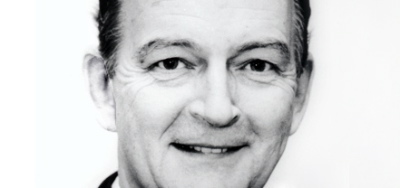
One thing remains: to hold to account those who protected Maciel, denied the charges, covered up the evidence, intimidated witnesses, and slandered good reporters. Chief among these enablers was Pope John Paul II, a close friend of Maciel, who essentially sided with his archconservative friend against the victims of sexual abuse for years, and even granted him honors at a time when the accusations were well known. In this, Pope John Paul II was no better than Cardinal Law. The evidence against Maciel was overwhelming, but John Paul refused to take it seriously. John Paul II’s complicity in his own church’s record of covering up child-molestation has still not been fully elaborated or publicy understood. Somehow, he ducked blame for a crisis that occurred on his watch and, in the Maciel case, with his active, criminal collusion.
But we should not forget Richard John Neuhaus either, the chief theoconservative, editor of First Things, defender of Maciel and slanderer of the journalists who tried to unmask Maciel’s crimes. Here’s Neuhaus on Berry and Renner:
It is not the kind of stuff you would find in any mainstream media, but then Berry and Renner are not practitioners of what is ordinarily meant by responsible journalism. Berry’s business is Catholic scandal and sensationalism. That is what he does. Renner’s tour at the Courant was marked by an animus against things Catholic, an animus by no means limited to the Legion.
Neuhaus owes both men a public apology. Here is Neuhaus on the Maciel case itself:
I can only say why, after a scrupulous examination of the claims and counterclaims, I have arrived at moral certainty that the charges are false and malicious. I cannot know with cognitive certainty what did or did not happen forty, fifty, or sixty years ago. No means are available to reach legal certainty (beyond a reasonable doubt). Moral certainty, on the other hand, is achieved by considering the evidence in light of the Eighth Commandment, ‘You shall not bear false witness against your neighbor.’ On that basis, I believe the charges against Fr. Maciel and the Legion are false and malicious and should be given no credence whatsoever.
The italics for the words "moral certainty" are Neuhaus’s, not mine. For Neuhaus, what mattered was defending an arch-conservative institution within the Catholic church, and describing the sexual abuse crisis as one caused by liberals and homosexuals. He was wrong on both counts. And the beauty of it is: the Pope himself has now corrected him. Is Neuhaus going to accuse the Holy Father of anti-Catholic bias now, as well? Or will he do the decent thing and apologize?
(Photo of Richard John Neuhaus from Time, courtesy of "First Things.")
America – Through British Eyes
The lefty U.S. correspondent for the Guardian just penned his farewell column on this country. I loved this passage:
Time and again, while on the road, I would experience just how warm, wonderful and
occasionally warped Americans can be. In Montgomery, Alabama, the cradle of the Confederacy, I was driven the wrong way up a one-way street by a young white woman high on life and Martini whom I had only just met. By day, I was covering Rosa Parks’ memorial services. By night, I accompanied my new companion from gay bar to night club, drinking plenty and talking about drugs as though the cast of Letter to Brezhnev had ended up in the Deep South.
In Salt Lake City, the main town in the most conservative state in the union, I would wait for the mayor in a Hispanic biker bar, watching slides beamed onto the wall of scantily clad women writhing around on motorcycles. In Mississippi, three elderly people threatened to shoot me when I asked directions. A few months later, in the same state, a policeman would threaten to jail me for "giving him a look".

Yep, I recognize that country. And I love it beyond measure. The rest of the essay, with which I’m not in total agreement, can be read here.
A Celebration of Mill
I guess I should say that I am not a Millite. I’m no utilitarian; but no lover of freedom can ignore the resilient power of Mill’s great work, "On Liberty." Here’s a group blog, "Catallarchy," that is devoted today to a celebration of Mill, warts and all. If you want to read an engrossing dialogue about the great thinker’s legacy, go no further.
The Uber-Tory
Roger Scruton takes aim at John Stuart Mill today. He would. Scruton belongs to the tiny band of paleo-Tories who still refuse to come to terms with the logic of liberal society. Mill’s distinction 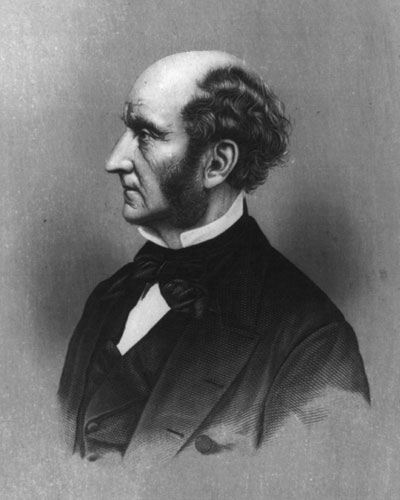 between self-harm and harm to others as the critical criterion in modern politics violates the paleo-Tory principle of defending "the sacred and the prohibited." But what does Scruton mean by this mysterious phrase – "the sacred and the prohibited"? What can he mean by it? There is surely no reason to believe that a liberal political order cannot retain a space for the sacred – in fact, the American liberal order, unlike the Tory English one, has sustained the sacred and religious in vigorous fashion. And what is "prohibited" surely varies through the ages, as societies evolve and change, and mores shift. In college, I found Scruton’s Toryism entrancing and exciting because it was so thrillingly radical. It dared to offer arguments that rested on something "deeper and rarer than rational thought." And which teenager isn’t thrilled to upset his teacher’s liberal assumptions? But when I grew up and analyzed what those things were, I found that they were just one person’s concocted notion of what the past might have been like: fantasy Victorianism. Think of a Tory squire hunting foxes, muttering about Jews, before attending Evensong. When all is said and done, that’s Scruton’s idea of the "sacred and the prohibited."
What Scruton has not comes to terms with is that the liberalism of Mill has become our custom. It has generated a culture that is itself "deeper and rarer than rational thought." Anglo-American society, as it is today, is customarily liberal, in the Millite sense. Our sense of liberty, our resistance to being bossed around, our civil religion of "live and let live": these are now the sacred principles of our customs. Oakeshott’s genius was to recognize this shift – to see that the principles of liberal society themselves generated a custom of what he called "civil association;" that these liberal principles had become conservative customs; and that the true conservative today is someone who defends the social architecture of liberal society, rather than pining for a past that never was in order to buttress prejudices that merely mask bigotry. That’s the distinction between conservatism and reactionaryism. And one can have serious reservations about Mill’s utilitarianism and still recognize that.
Christianism Watch
Tim Graham, at NRO, says the following:
On the occasion of the final episode of NBC’s Will & Grace, Katie Couric insisted, "on a serious note," that it’s one of her daughter’s favorite shows, and it’s so important to teach tolerance of "people who are different" at a "very early age." Anyone who expected a fair and balanced anchorwoman at CBS on the hot-button social issues, shred your illusions now.
Is Graham saying that he favors active intolerance of people who are different? I guess we should be grateful for gaffes like Graham’s. They help reveal that the Christianist right is not actually that interested in social policy as such, in issues such as whether marriage rights for gay couples will hurt or help society, or whether discrimination laws make sense. They’re not even interested in judging whether Will and Grace is a decent show (for the record, I can’t stand it.) They’re interested merely in sustaining stigma against people different from them. That’s the real impulse behind the movement to ban legal protections for gay relationships: such legal rights may defuse the remaining stigma now attached to being gay. And it’s stigmatization that these people are so adamant about.
 The Dish