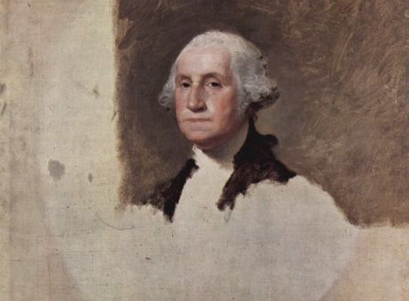
Peter Berkowitz has a typically elegant and insightful review-essay up at RealClearPolitics. It’s about the elitist democrats who created the American constitution. Peter grapples with the paradoxes of "gentlemen revolutionaries" and notes one aspect of them in particular:
[Historian Gordon] Wood concedes that there was something unlikely in Washington’s attainment of heroic stature in his own lifetime. He was not a learned man, he was not a military genius, he was not a great orator, and he was not a brilliant statesman. Rather, "he became a great man and was acclaimed as a classical hero because of the way he conducted himself during times of temptation." Washington stunned the world a first time after leading the Continental Army to victory. Even as many of his countrymen would have welcomed a military dictatorship under his command, and to the astonishment of Europeans who could not conceive of a victorious commander doing anything other than seizing political power, Washington resigned his commission and returned to his beloved Mount Vernon. He stunned the world a second time, and for a similar reason: After having twice won election to the office of what many in the United States and Europe were prepared to view as a constitutional monarch, Washington announced that he would not seek a third term as president of the United States. In both of these acts of splendid renunciation, Washington confirmed his own public virtue as well as the principles of popular sovereignty and liberty under law for which his soldiers had fought and bled and died.
This capacity for restraint, for embracing the limits of power rather than its ends, is at the core of constitutional democracy (and, I would argue, conservatism, properly understood). I wish our current leaders grasped it better. Sharing power is often more powerful than trying to size and horde it. Trusting the constitution is often wiser than feeling the need to bypass it.
 The Dish