The Real Putin Menace

A reader writes:

I just read Hitch’s piece talking about that "cabal of cockroach capitalists and ex-KGB men who now hold power in Moscow" (what formulations – love it!) and had a chuckle.  Fact is that Putin is up to far more mischief that either Hitch or Applebaum suspect.  They’re focused on the domestic scene in Russia. True, it’s pretty grim, but most Russians aren’t complaining because the place is awash with petrodollars. But Putin’s dealings with the Iranians are far more menacing to the West than has been explored in the media up to this point. 

Putin did his dissertation for his kandidat nauk at the St Petersburg Mining Academy (Gornii Institut) on a curious topic – use of Russia’s natural resources strength as a tool of foreign policy‚Ķ His grand design involves using European dependency on Russian oil and gas as the basis for a new Russian economic hegemony in Europe. And he aims to form a new non-Arab oil cartel which would have at its core Russia, Iran and Venezuela. (Do the numbers – it’s a very impressive per centage of the global total). This stuff is all over the trade press, and gets an occasional piece in FT, but for whatever reason there’s very little about it in the mainstream press, which is, as usual, too obsessed with Rovian kickball to cover things that really matter.

For more information on Putin’s malign intentions at home, check this site out.

Dershowitz on Torture

Norm Geras, a founding member of the anti-Islamist Euston Manifesto, writes:

Here is part of [Alan Dershowitz’s] description of those captured by the US and its allies:

"[T]here were admitted members of al-Qa’ida… Some of the detainees are believed to have valuable real-time information that could save lives. Others are simply terrorist pawns willing to do whatever they are told, even if it entails suicide. Inevitably, some, probably, are completely innocent and not dangerous."

How does an eminent liberal lawyer come to be discussing whether it might be OK to effect near-drowning experiences for people, and some of these innocent of any offence? Then there’s also ‘alternating heat and cold’ and ‘uncomfortable and/or painful seating’. Notice the precision of that and/or. Revolting.

Another hysteric? Your call.

After the Courts

I have to say that this "news analysis" in the NYT of the court decisions in New York and Georgia is one of the dumbest pieces of journalism I have read in a very long time. "For Gay Rights Movement, A Key Setback"? In some ways, I think the New York Court of Appeals decision will help, rather than hurt, the cause of marriage equality in the long run. Why? Because it will force the issue into legislatures, where it is best tackled, and where we will eventually win, and in one case, California, have already won. The courts have already done their job – in forcing this issue into the national consciousness, highlighting the grave injustice, correcting it in one state out of fifty, and allowing us to make such great headway in persuading people of our cause.

The basic argument made by the New York court is also not inherently damaging to the gay case. It’s simply saying that the law is not on its face irrational (although it’s deeply unpersuasive), and so the issue is for the legislature, not the court. What the New York court is essentially saying is: you have a case. You just made it to the wrong guys. Talk to the legislature.

The court surely has a point. And this is how these decisions can actually be a boon to the marriage cause. They may help galvanize a broader gay and straight effort to make the case democratically, rather than legally and constitutionally. Since our arguments are so strong, why would we leery of this? We have already made huge strides. We’ve seen dramatic polling drops in opposition to marriage for gay people in the last couple of years. The FMA has withered on the vine. We have civil marriage in one state, Massachusetts. That’s a Big Deal. If someone had asked me seventeen years ago, when I helped pioneer this argument, if I thought that by 2006 I’d be engaged and planning a legal wedding in America, I would have wondered what they were smoking. But next year, I’ll tie the knot – as thousands already have, in America and across the globe. In California, the legislature has already voted for civil marriage, and shows no sign of going back. These state court decisions, moroever, undermine even further the case for a federal amendment and reveal the extremism and un-conservatism of its backers.

I’ve long believed that as long as we can stop the FMA, we need only make our case as best we can, person by person, state by state, and wait for the younger, mellower generation to gain power. That’s happening faster than I ever imagined – and the impatience of some gay activists is morally defensible but pragmatically excessive. Chill. We now have a chance to make our case where it is best made: in the legislatures and in the court of public opinion. In my view, the court strategy, defensible in theory, noble in intent, was fast becoming over-reach in practice. The New York case may have done gay people a favor in that respect. We have the better arguments. Let’s make them – to the people and their elected representatives, and we’ll win in the end.

Quote for the Day

Uk1

"Nothing you do, however many of us you kill, will stop that flight to our city where freedom is strong and where people can live in harmony with one another. Whatever you do, however many you kill, you will fail," – Ken Livingstone, the mayor of London, in a rare moment of moral clarity, a year ago today, in the wake of Islamist terror.

Londoner Johann Hari writes a poignant 7/7 memorial essay here.

Ponnuru Is Right

A reader remonstrates:

With respect to you, Ramesh Ponnuru is right. You truly believe in civil liberty. You take an educated approach to the Constitution, not a strained view that would lump off the 14th amendment. You oppose Christianism. You either lack the partisanship or the gullibility to swallow what the Bush administration continually sells.

In today’s political landscape, that makes you a liberal. Did you think that just because you support capitalism and oppose wacky elements of the left, from Foucault to Fidel supporters, that therefore you were a conservative? No, sorry, that really has nothing to do with the practical divides today.

I’m for balanced budgets, low taxes, cuts in entitlements, welfare reform, more military manpower, privately run healthcare, free speech, religious liberty, a stronger commitment to Iraq, and gun rights. I’m against affirmative action, federally-funded abortion and embryonic stem-cell research, protectionism, hate crime laws, the Medicare prescription drug program, pork barrel spending, torture, an untrammeled executive, and censoring anyone anywhere to appease Islamist extremists. And, according to Ponnuru, no "serious" conservative regards me as a conservative any more. What does that tell you?

Email of the Day

A reader writes:

I just read Ramesh Ponnuru’s remark about you:

"Since another panelist had quoted one of his sermons as evidence of intra-conservative strife, I also observed that I know no serious conservative who considers him a conservative. I am prepared to believe that there are a few misguided conservatives, unbeknownst to me, who do consider him a fellow conservative. But even if that’s true, it would not change the fundamental accuracy of my statement that Sullivan’s pronouncements are not good evidence of intra-conservative strife."

It just occurred to me that if you modify Ponnuru’s statement to replace "conservative" with "Delta Lambda Phi", it could have been made by a snooty sorority girl.

K-Lo has the paddle; and Jonah has the keg. Now I finally know the true meaning of Rush Limbaugh.

Rationality and Marriage

The key argument of the New York Appeals Court is that it is not prima facie irrational to keep civil marriage exclusively for straights because the consequences of their irresponsibility extend to a third party, children. Civil marriage, in other words, is an incentive to behave better for the sake of kids. But what of civil marriages without kids? The "rational" standard is a very low one, of course. And the best case to be made is that because it’s just easier to have kids accidentally in a straight relationship, then straights need the incentive more than gays. But what of those straight couples who are past menopause or sterilized? In New Jersey, for example, there’s a pending court case that rests in part on this distinction. A reader explains:

In New Jersey, we have a ‘domestic partnership’ rule that allows two people of either the same sex, or of opposite sex over age 62, to enter into domestic partnership together. The DP provides some ‚Äì but not most ‚Äì of the rights of marriage. Presumably, an opposite sex couple over age 62 is allowed to enter into a DP because of this same issue articulated in the NY ruling ‚Äì like gay couples, heterosexual couples over age 62 are unable to produce any unintended offspring.

However, in New Jersey, an opposite sex couple over age 62 can also enter into a marriage. There is nothing in NJ law that prevents opposite sex couples over age 62 from getting married, as there is for gay people. So the NY reasoning would fail in NJ, because the logic of the NJ legislature has not been consistent in regards to children: either opposite sex couples over 62 and gay couples should only be able to enter into a DP, or both sets of couples should be able to either enter into marriage or a DP. Since children are not an issue in either case, the only reason to not allow gay people to marry but allow people over 62 to marry would be irrational discrimination against gay people.

Then there’s the question of gay couples with children. It seems to me that if children are the standard, then civil marriage should rationally apply only to those with kids, gay or straight, and civil unions should apply to everyone else. Everyone gets a civil union license at first (unless they already have kids) and can upgrade to a civil marriage license after and only after they have reproduced or adopted. That’s the truly rational policy from the NY decision.

As for Georgia, it’s important to note that the court has ruled that gay couples are not only barred from civil marriage, they are barred from any legal protections whatever. Georgia wants its gays like it once wanted its blacks: segregated from integration into "normal" families, even if they have been born into them. And, yes, many thought that was rational for a very long time as well.

(My anthology on the arguments – legal, moral, historical, religious and constitutional – for and against marriage rights for gay couples can be found here.)

In Defense of Foucault

A reader writes:

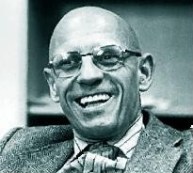
You write about Foucault as if he’s not worth reading because the political consequences Michelfoucault of some of his ideas have been pernicious. It’s not that such consequences should be ignored – I think the academy would be a more serious place if Foucault had less influence – but I’m not sure what I lost, for example, by reading Discipline and Punish and History of Sexuality Vol. 1 with an open mind, particularly after having read Nietzsche a few weeks before, and Hegel before that, and then reading Derrida a few weeks later, and then Edward Said’s Orientalism, etc., etc., etc. (it was a class on philosophy for historians). Would I have been better off not reading Foucault? Was I deluding myself that he was offering an interesting perspective, and that my understanding of, say, Nietzsche was deepened by reading him?

You write about it as if it’s all just part of the academic culture wars, and if we cede too much ground to those insidious Frenchmen than we’ll have betrayed our side and its solid, Anglo-American values. It seems anti-intellectual to me. I would expect better of you. Have you read much Foucault? Didn’t you find that he said anything interesting? Wasn’t his writing powerful enough that reading it was at least profitable for you in the sense of having to contend with a deep but flawer thinker?

The writer makes a good point. I have, of course, read Foucault. The second chapter of "Virtually Normal" is largely devoted to his influence on our understanding of homosexuality and its attendant politics. I certainly think he’s worth reading. What concerns me is that he and his increasingly incomprehensible disciples became almost the only source for the profilerating "queer studies" departments and programs for American students in the 1990s. So many young gay and straight minds were subjected to his prose as the first way to think about homosexuality. Plato, Whitman, Proust, Wilde, Disraeli, Lincoln, Forster, Auden: you would never have read them in any decent course in a university on gay studies. Compared to these giants, Foucault is a midget. He was also an early enthusiast for the Iranian Islamist regime. When you see pictures of gay teenagers hanging in Iran, it’s worth remembering that Foucault loved this regime. There is no greater symbol of what his nihilist leftism leads to.

Sticking It To Cruise

912_tomcruise_7

Great news! The South Park episode banned in Britain and pulled by the cowards at Viacom is up for an award:

One of the Emmy nominees for best animated program is the episode of "South Park" that’s said to have angered Tom Cruise and Isaac Hayes. The episode called "Trapped in the Closet" implies that Cruise is gay and makes fun of Scientology.

There is a God. And he isn’t Xenu.