Another point of agreement with Ahmadinejad – this time from a Columbia professor, no less.
Month: October 2007
Cheney’s and Clinton’s War?
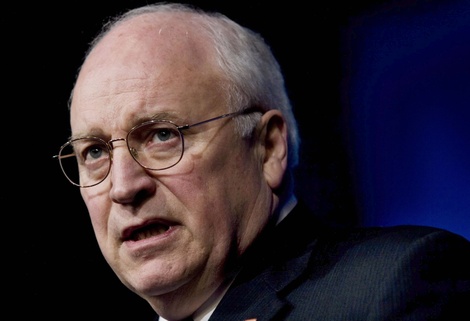
Just because it’s unthinkable doesn’t mean this president won’t do it. The latest Sy Hersh piece adds fuel to the already looming consensus in Washington that Dick Cheney is insistent on war with Iran, and he’ll get it regardless of the rationale. If the WMD argument won’t work, there’s the careful way in which the administration and its supporters have been redefining the war in Iraq to one which is already a war with Iran:
Now the emphasis is on "surgical" strikes on Revolutionary Guard Corps facilities in Tehran and elsewhere, which, the Administration claims, have been the source of attacks on Americans in Iraq. What had been presented primarily as a counter-proliferation mission has been reconceived as counterterrorism…
At a White House meeting with Cheney this summer, according to a former senior intelligence official, it was agreed that, if limited strikes on Iran were carried out, the Administration could fend off criticism by arguing that they were a defensive action to save soldiers in Iraq. If Democrats objected, the Administration could say, “Bill Clinton did the same thing; he conducted limited strikes in Afghanistan, the Sudan, and in Baghdad to protect American lives.” The former intelligence official added, "There is a desperate effort by Cheney et al. to bring military action to Iran as soon as possible. Meanwhile, the politicians are saying, ‘You can’t do it, because every Republican is going to be defeated, and we’re only one fact from going over the cliff in Iraq.’ But Cheney doesn’t give a rat’s ass about the Republican worries, and neither does the President."
Which rat’s ass does this president care about, one wonders? But if these developments gather pace, Clinton also faces a problem. She just voted to designate the Revolutionary Guards a terrorist entity. Giving this president one authorization to go to war might be seen as a problem with the Democratic base. Giving him two should surely be a deal-breaker.
(Photo: Mandel Ngan/AFP.)
Can Japan Help?
The murder of a Japanese journalist by the Burmese junta – shown on Japanese television above – may help jog public opinion in Japan over Burma. That may help put pressure on China. Well, its a hope.
Obama, Clinton, Experience
Bob Reich counters the Clintons on the experience question:
While I can understand Bill Clinton’s eagerness to undermine his wife’s most significant primary opponent, he is not, I believe, completely ingenuous. I happened to talk with him in 1988 before he decided not to run, and also in 1991 before he decided to run the following year. His calculation at both times was decidedly rational and entirely political, based on whether he could win.
But more to the point, it strikes me as unfair to claim that Obama lacks relevant experience for the presidency. When he ran in 1992, Bill Clinton had been the governor of a small, rural southern state; as such, he had only limited experience with national issues and no foreign policy experience to speak of. Incidentally, at this point in the 2008 presidential election, Hillary Clinton has served as an elected official in the U.S. Senate for not quite eight years, and before that a First Lady in the White House. Obama has so far held elective office for almost twelve years, at both levels of government – first as an Illinois state senator and then as a U.S. Senator. Before that he was a community organizer among Chicago’s poor, and then a civil rights lawyer – two experiences that in my view are critically relevant to anyone seeking to become president of all Americans. Obama’s international experience comes first hand – his father was a goat-herder in Kenya, and Obama spent a portion of his childhood in Indonesia. And as an African-American, with all the personal experience that implies, Obama seems particularly well qualified to understand the issues that need to be addressed in order to unify America and renew the nation’s moral authority around the world.
The Other Base
"I was having a conversation over drinks with a friend, a lifelong Republican, big Wall Street legal brain (but now retired), sometime generous contributor to party funds, normally good-natured and mild-mannered. We weren’t even talking politics. The topic was the current woes of the poor old dollar.
Suddenly, with uncharacteristic anger, my drinking buddy said something like this: "The federal government’s main functions are to maintain a stable currency, keep us out of unnecessary foreign entanglements and wars, and patrol the coasts and borders. That’s three strikes on George Bush, [blasphemous expletive]! The man’s been a total [sexual expletive] disaster. What the [blasphemous expletive] [sexual expletive] hell was I thinking of, voting for this [cognitive-function expletive]?”" – Derb, reflecting how many feel.
Burmese Horror?
I cannot independently verify this, but everything we know about the junta in Burma suggests it’s more than possible:
"Many more people have been killed in recent days than you’ve heard about. The bodies can be counted in several thousand."
“I Never Thought About It, Whoopi”
Adventures in the state of education today. Or: why The View’s Sherri Shepherd is definitely not smarter than a fifth grader:
Ghetto Living
Being surrounded by crime and the fear of crime literally makes people sick:
A new UCL (University College London) study has shown that people with a strong fear of crime are almost twice as likely to show symptoms of depression. The research, based on data taken from the Whitehall II study*, also shows that fear of crime is associated with decreased physical functioning and lower quality of life. The findings are published in the American Journal of Public Health.
The study’s lead author, Dr Mai Stafford, UCL Epidemiology & Public Health, said: "Very broadly, these results show that if your fear of crime levels are higher, your health is likely to be worse – particularly your mental health. Of course, you might expect that people who are depressed or frail might be more afraid of crime and venturing out of doors, so we have taken account of previous mental health problems and physical frailty and adjusted for those accordingly. Even with a level playing field, the data still demonstrates this strong link between fear of crime and poorer mental health.
Finally
A chewing gum brand taste-test.
 The Dish