In many ways, I think those two polarities often expose the deeper fault-lines in our politics than right or left (because the choice between freedom and power exists within both right and left as well). And this Rick Warren flap at its core, I think, is about the difference between those who see a civil rights movement as a means to wield power and those who see it as a means to spread freedom.
My long conflict with some parts of the gay left is precisely about this distinction, and Virtually Normal was an attempt to construct a theory for gay civil rights which rests on as much freedom and as little power as possible. I want to live in a free society alongside people who genuinely believe I am a sinner destined for hell – and I want to get along with them. I am concerned (but not obsessed) with changing their minds, but totally repelled by the idea of coercing or pressuring them to do so. I am simply interested in having the government treat me as it would treat them. Once we establish that, we can all believe and say and argue for precisely what we want. May a thousand theologies bloom.
So I oppose hate crime laws because they walk too close to the line of trying to police people’s thoughts. 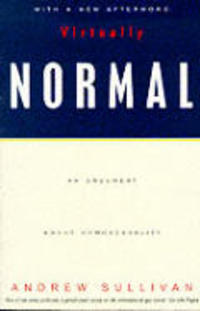 I support the right of various religious associations to discriminate against homosexuals in employment. I support the right of the most fanatical Christianist to spread the most defamatory stuff about me and the right of the most persuasive Christianist to teach me the error of my ways. I support the right of the St Patrick’s Day Parade to exclude gay people – because that’s what freedom of association requires. In my ideal libertarian world, I would even support the right of employers to fire gay people at will (although I am in a tiny minority of gays and straights who would tolerate such a thing). All I ask in return is a reciprocal respect: the right to express myself freely and to be treated by the government exactly as any heterosexual in my position would be treated.
I deliberately framed my own case for gay rights away from forcing or even pressuring any other citizen to accept me – because that impedes their freedom and, in my view, the gay movement should always, always be about expanding freedom for everyone, even bigots. That’s why I focused on the government treating gays and straights alike. And so the notion of the president stigmatizing someone because of his religious views, and the gay movement pressuring to ban such a person from a civic ceremony, strikes me as coming from precisely the wrong place. A president is president of all the people. Unlike Bush, Obama means it. And unlike Bush, he has already proven it. Can you imagine if Bush had asked an openly gay minister to give his Invocation? That would have been the unifying move – and opened up a new space for dialogue. But Bush closed it down. I did not endorse Obama to perpetuate that kind of politics. Using government to advance the worldview of one group of people and to stigmatize another is exactly what went wrong these past eight years.
Besides, if we stick rigorously to the cause of freedom and toleration, we win the argument. We already have. The impulse to engage now in tit-for-tat, or to use power not to advance our freedom but to impede others’, is a dead, dispiriting end. It is particularly stupid when it is the only way we will lose – by turning this into a battle in which gay people are described as intolerant and evangelicals are described as open to debate.
Much more important, with Obama’s election, power has shifted. Gay people helped win this election. We will be part of this administration in ways that we would never be under a McCain or a Bush. Yes, we should demand change and hold Obama accountable in every respect. But this is not 1992. It’s 2008. Our biggest loss in the biggest state on a question  that would have been a pipe-dream a decade ago was 52 – 48. Every year, the gap narrows (and the No On 8 campaign was almost, alas, a parody of HRC-style incompetence.) If we take this issue fairly to the ballot box next time instead of using power to enforce a premature settlement, our victory will have a durability and a legitimacy that will count for generations. So thanks, Jerry Brown, but no thanks. We already have marriage in two states. If we have patience and rely on freedom, victory – and a meaningful victory of good ideas – will come. If we are consumed by anger and rely on power, we could deservedly snatch failure from the slow march of success.
The key point about marriage rights for gays, after all, is that they do not affect or change marriage rights for straights. No one’s rights are removed. In fact, as I have discovered, straight family members often find their own marriages affirmed by their gay siblings’ commitment. It is win-win – an expansion of freedom and social stability. And the key to succeeding as a civil rights movement, as King taught us, is never to give in to the intolerance of the other side by engaging in it yourself; never engage in violence or intimidation; never try to force anyone to do anything they do not want to do; always respect others’ consciences.
And this is why I think gay people of faith have a central role to play now. In the battle between a frightened fundamentalism and a wounded gay community, we are called to be healers and bridge builders. This is our Christian obligation, the part we have to play. The dynamic between the short-term pleasure of power and the long-term argument for freedom affects all civil rights movements. The central element in the success of black civil rights was the role of Christianity in tempering and guiding and restraining the temptations of power in favor of the deferred promises of freedom and charity. Gay Christians are needed now as much as ever to help in that task, however hard it can be to swallow the spiritual hurt and to rise above it in charity. I know how hard that is, and I haven’t met the standard always myself. I’m not preaching; I’m just saying what I’ve learned – in prayer and in action.
Every day, with everyone you meet, do what you can.


 The Dish