The Five Worst Christmases Ever

This came in at Number 5 on ZenMonkeys:

Christmas Eve midnight mass in Temoaya, Mexico in 1953 had just finished. Three thousand worshippers were peacefully filing out when someone tripped over the wrong wire. There was a bright blue flash, and then total darkness. All sense of peace and goodwill toward men vanished as the crowd transformed into a panic-stricken mob stampeding from the sanctuary. By the time the lights came on a few minutes later, 23 people were dead and over 200 injured.

A Conservative of Doubt

Greg Mankiw isn’t sold on the rapidly expanding stimulus plans of the president-elect:

In general, I think economists need a large dose of humility when evaluating alternative proposals to deal with the current downturn, as there is still a lot we do not understand. I am sure I am not the only person in the economics profession skeptical of spending increases to stimulate the economy. See, for example, GMU economist Tyler Cowen. If the new administration wanted to find more skeptics of stimulus spending among professional economists, I could have come up with some possible candidates for them, but the Obama economists probably already know who those likely skeptics would be.

Conservatives vs The Executive

George F Will has long been a conservative who defines himself by a defense of Congressional centrality and checks on executive power. In other words: a Burkean, not a Schmittian. His column today is excellent as usual, and he notes how unchecked executive power has a habit of extending into realms beyond national security:

Most of the administration’s executive truculence has pertained to national security, where the case for broad prerogatives, although not as powerful as the administration supposes, is at least arguable. With the automakers, however, executive branch overreaching now extends to the essence of domestic policy — spending — and traduces a core constitutional principle, the separation of powers.

Most members of the House and Senate want the automakers to get the money, so they probably are pleased that the administration has disregarded Congress’s institutional dignity. History, however, teaches that it is difficult for Congress to be only intermittently invertebrate.

The proper description for the seizure of the TARP money to spend on something Congress declined to spend it on is … lawless.

A Christmas Sentiment

About freedom, not power, from Melissa Etheridge’s wife:

rick is not a televangelist. rick is not falwell. rick spoke of some "stupid" things he’s said (his word, not mine), some missquotes that were given, and lots of ammunition from the media. all excellent points. (we’re all war-minded right now, you know. it’s easy for the media to distract us by throwing us into our own verbal wars here at home.) ) what to do, what to do…. the rest of the public is given an animation of rick warren… and then my wife meets the man behind the projections, the quotes, the "OTHER SIDE".

and he is warm, caring, effusive, and LOVES gays. since he nearly swallowed honey when he hugged her, i tend to believe him. he wants our gay marriages to be just as respected and embraced as the straight marriages. he just wants to wear his yamaka, and me wear my hat. anway. hath hell frozenth over? rick warren was humble and kind. honey and i are to go to his church sometime soon. and honey invited him to our house for an afternoon, to be with our family. (w.t.f.)

It’s Always Been Legal

"Physical pressure" that isn’t "torture" has been defended before. As long as it isn’t abused and is kept within boundaries, in fact, it is essential for the security of the state:

It has become known to the VKP CC that the secretaries of oblast and regional party committees, in checking up on employees of NKVD directorates, have laid blame on them for the use of physical pressure against those who have been arrested, treating it as something criminal.

The VKP CC affirms that the use of physical pressure in the work of the NKVD has been permitted since 1937 in accordance with a resolution of the VKP CC. This directive indicated that physical pressure was to be used in exceptional cases and only against blatant enemies of the people who, when interrogated by humane methods, defiantly refuse to turn over the names of co-conspirators, and who refuse for months on end to provide any evidence, and who try to thwart the unmasking of co-conspirators who are still at large, and who thereby continue even from prison to wage a struggle against the Soviet regime. Experience has shown that such an arrangement has produced good results and has greatly expedited the unmasking of enemies of the people. True, subsequently in practice the method of physical pressure was abused by Zakovsky, Litvin, Uspensky, and other scoundrels, converting it from an exception into a rule and beginning to apply it against honest people who had been arrested accidentally. For these abuses, they [the scoundrels] have been given due punishment.

But this in no way detracts from the value of the method itself when it is properly used.

It is known that all bourgeois secret services use physical pressure against representatives of the socialist proletariat and rely on especially savage methods of it. We might therefore ask why a socialist secret service should be any more more humane in relation to inveterate agent of the bourgeoisie and sworn enemies of the working class and collectivized farmers. The VKP CC believes that the use of physical pressure must absolutely be continued from here on in exceptional cases and against blatant and invidious enemies of the people, and that this is a perfectly appropriate and desirable method. The VKP CC demands that the secretaries of oblast and regional party committees and the CCs of national party committees bear in mind this explanation when they check up on the employees of NKVD directorates.

In case you were wondering, this is the work of Joseph Stalin,

Written: 10 January 1939
First Published:
Source: RGASPI, f. 1, op. 58, d. 6, ll. 145-146.
Translated: from the Russian Dr. Mark Kramer, Harvard University.
Transcription/Markup: B. Basgen

The Right To Dissolve The Constitution

Cheneyalexwonggetty

One thing you have to concede to Dick Cheney. He says what he thinks. And so we get this:

WALLACE: This is at the core of the controversies that I want to get to with you in a moment. If the president during war decides to do something to protect the country, is it legal?

CHENEY: General proposition, I’d say yes. You need to be more specific than that. I mean — but clearly, when you take the oath of office on January 20th of 2001, as we did, you take the oath to support and defend and protect the Constitution of the United States against all enemies, foreign and domestic.

The irony seems lost on him. How can the suspension of all laws into the power of the executive branch in wartime be seen as a defense or protection of the Constitution? Perhaps for a brief amount of time in a dire emergency, after which there would be a thorough accounting to the Congress and the Courts. But indefinitely? As inherent in the office? And with jurisdiction over the entire United States as well as the world? With "enemy combatants" defined as anyone the president calls an "enemy combatant" and no distinction between citizen and non-citizen? Including the right to torture? Indefinitely?

What Cheney has advanced is that the president has the right to dissolve the constitution permanently. That he has the right to commit war crimes with impunity. That there is no legal authority to which he is ever required to pay deference in a war that is his and his alone to declare and end. Now when you consider that, in Cheney’s view, these war-powers are limitless, and that war is declared not by the Congress but by the president, and can be defined against a broad, amorphous enemy such as "terrorism", and never end, you begin to see what a dangerous man he is, and how much danger we have all been in since he seized control of the government seven years ago.

And Cheney’s colorful explanation of this theory is also extremely revealing:

The president of the United States now for 50 years is followed at all times, 24 hours a day, by a military aide carrying a football that contains the nuclear codes that he would use and be authorized to use in the event of a nuclear attack on the United States.

He could launch a kind of devastating attack the world’s never seen. He doesn’t have to check with anybody. He doesn’t have to call the Congress. He doesn’t have to check with the courts. He has that authority because of the nature of the world we live in.

What Cheney is saying is that if the president of the United States has the power to destroy all civilization alone, he has the power to do anything up to and including that. Chris Wallace asks the right questions, but it is very telling that he didn’t ask about torture. I presume that was agreed by Fox and Cheney in advance. I can see no other reason for the lacuna.

But what we know with real clarity is the following: the vice-president long ago became an enemy to the Constitution and to all it represents. He should have been impeached long ago; and the shamelessness of his exit makes prosecution all the more vital. If we let this would-be dictator do what he has done to the constitution and get away with it, the damage to the American idea is deep and permanent.

(Photo: Alex Wong/Getty.)

Person Of The Year

I don’t begrudge Time magazine for their obvious choice. But given the great progress we’ve made this year in flushing out and facing what happened in the past seven years with respect to prisoner abuse and torture as policy, I’d like to nominate someone else. You can see the gradual exposure of presidential war crimes as a permanent blot on the United States. But it remains equally true that this blot was first exposed by people within the military, the CIA and the FBI, who refused to sanction the orders of president Bush on down. I prefer to see the exposure of this evil as a result of patriotic Americans serving their country, resisting and finally ending the immoral and ineffective policies of their commanders. Ian Fishback was one of the very first, with a great deal to lose. He is a loyal soldier, still in active service, in Iraq and Afghanistan. He is worth recalling not just because he stood up to abuse in Iraq, but because his letter to Senator McCain, after desperately and endlessly trying to get his concerns taken seriously by a Pentagon command under orders to retain the abuse, is an historic document. Here it is, as moving and as vital as the day it was written, September 16, 2005:

Dear Senator McCain:

I am a graduate of West Point currently serving as a Captain in the U.S. Army Infantry. I have served two combat tours with the 82nd Airborne Division, one each in Afghanistan and Iraq. While I served in the Global War on Terror, the actions and statements of my leadership led me to believe that United States policy did not require application of the Geneva Conventions in Afghanistan or Iraq. On 7 May 2004, Secretary of Defense Rumsfeld’s Fishback0508 testimony that the United States followed the Geneva Conventions in Iraq and the "spirit" of the Geneva Conventions in Afghanistan prompted me to begin an approach for clarification. For 17 months, I tried to determine what specific standards governed the treatment of detainees by consulting my chain of command through battalion commander, multiple JAG lawyers, multiple Democrat and Republican Congressmen and their aides, the Ft. Bragg Inspector General’s office, multiple government reports, the Secretary of the Army and multiple general officers, a professional interrogator at Guantanamo Bay, the deputy head of the department at West Point responsible for teaching Just War Theory and Law of Land Warfare, and numerous peers who I regard as honorable and intelligent men.
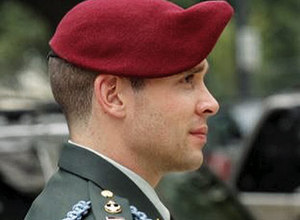
Instead of resolving my concerns, the approach for clarification process leaves me deeply troubled. Despite my efforts, I have been unable to get clear, consistent answers from my leadership about what constitutes lawful and humane treatment of detainees. I am certain that this confusion contributed to a wide range of abuses including death threats, beatings, broken bones, murder, exposure to elements, extreme forced physical exertion, hostage-taking, stripping, sleep deprivation and degrading treatment. I and troops under my command witnessed some of these abuses in both Afghanistan and Iraq.

This is a tragedy. I can remember, as a cadet at West Point, resolving to ensure that my men would never commit a dishonorable act; that I would protect them from that type of burden. It absolutely breaks my heart that I have failed some of them in this regard.

That is in the past and there is nothing we can do about it now. But, we can learn from our mistakes and ensure that this does not happen again. Take a major step in that direction; eliminate the confusion. My approach for clarification provides clear evidence that confusion over standards was a major contributor to the prisoner abuse. We owe our soldiers better than this. Give them a clear standard that is in accordance with the bedrock principles of our nation.

Some do not see the need for this work. Some argue that since our actions are not as horrifying as Al Qaeda’s, we should not be concerned. When did Al Qaeda become any type of standard by which we measure the morality of the United States? We are America, and our actions should be held to a higher standard, the ideals expressed in documents such as the Declaration of Independence and the Constitution.

Others argue that clear standards will limit the President’s ability to wage the War on Terror. Since clear standards only limit interrogation techniques, it is reasonable for me to assume that supporters of this argument desire to use coercion to acquire information from detainees. This is morally inconsistent with the Constitution and justice in war. It is unacceptable.

Both of these arguments stem from the larger question, the most important question that this generation will answer. Do we sacrifice our ideals in order to preserve security? Terrorism inspires fear and suppresses ideals like freedom and individual rights. Overcoming the fear posed by terrorist threats is a tremendous test of our courage. Will we confront danger and adversity in order to preserve our ideals, or will our courage and commitment to individual rights wither at the prospect of sacrifice? My response is simple. If we abandon our ideals in the face of adversity and aggression, then those ideals were never really in our possession. I would rather die fighting than give up even the smallest part of the idea that is "America."

Once again, I strongly urge you to do justice to your men and women in uniform. Give them clear standards of conduct that reflect the ideals they risk their lives for.

With the Utmost Respect,

— Capt. Ian Fishback

1st Battalion,

504th Parachute Infantry Regiment,

82nd Airborne Division,

Fort Bragg, North Carolina

Just World Hypothesis

Jonah Lehrer feels no sympathy for Madoff victim Alexandra Penney:

It’s an awful story, and I can’t imagine how terrible Penney must feel. And yet, I read her entire tale without feeling any genuine sympathy. Sure, she lost all of her money, but so what? It’s her own fault for investing with Madoff in the first place. If she hadn’t been so greedy then none of this would have happened. That was my callous first reaction. (And, if my friends are a representative sample, I’m not the only one who felt such heartless feelings.) I blamed the victim.

Such cold-hearted thoughts are actually a basic feature of human nature.

[…]This is known as the Just World Hypothesis, but it’s really about how we tend to rationalize injustices away, so that we can maintain our naive belief in a just world. This, I believe, is what happened when I read Penney’s woeful story – my just world mechanisms kicked into gear, and I started by blaming the victim, coming up with reasons why she deserved to get swindled. The end result was a complete lack of sympathy.

The irony of the Just World Hypothesis is that it demonstrates how our faith in justice leads directly to injustice. Because we trust that the world is fair, and that bad things don’t happen to good people, we naturally skew our judgments of individuals to align with this unrealistic assumption. The truth, of course, is that bad things happen to good people all the time. The world isn’t fair. Alexandra Penney deserves my sympathy.