Jim Burroway asks:
President Barack Obama will be in Los Angeles on Wednesday, which will be the day immediately following Decision Day. Do you think he can make it through the entire visit without mentioning Prop 8?
Yes he can!
Jim Burroway asks:
Yes he can!
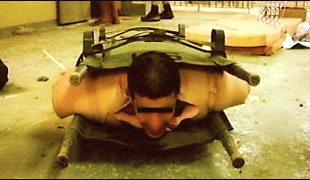
"Human dignity is inviolable. To respect and protect it shall be the duty of all state authority," – Section 1, Article 1, Paragraph 1, the Basic Law of the Federal Republic of Germany.
Via DiA, The Houston Chronicle:
That's a little unfair. The exact status of the immigrant is still vague and he had been in the US legally on a student visa in the first place. If the mayor were heterosexual and his amour a foreign woman, of course, he could marry and all would be well (barring other legal issues. That's also the case, by the way, for me and my HIV. If Aaron were a woman, I'd be American by now). Then another instance in the news:
Raul Hernandez, a gay man who defected from Cuba in 1993 to live in Brazil, had hoped to obtain permanent U.S. residency under the 1966 Cuban Adjustment Act after he arrived in 2000… But following a lengthy application and appeal process, Hernandez, 40, who lives in Arlington, Va., was turned down for admission under the Cuban Adjustment Act in 2005 because he’s HIV positive.
There's something poignant about the US discriminating against a Cuban exile because of his HIV. And something more poignant about president Obama enforcing it. As he still is.
It's Memorial Day, a time when we think of the many who fought and died for freedom, for the American idea. Who better to remind us of what we still fight for and of the "cunning tyrants" who would take it away than Lincoln:
Our reliance is in the love of liberty which God has planted in us. Our defence is in the spirit which prizes liberty as the heritage of all men, in all lands everywhere. Destroy this spirit and you have planted the seeds of despotism at your own doors. Familiarize yourselves with the chains of bondage and you prepare your own limbs to wear them. Accustomed to trample on the rights of others, you have lost the genius of your own independence and become the fit subjects of the first cunning tyrant who rises among you."
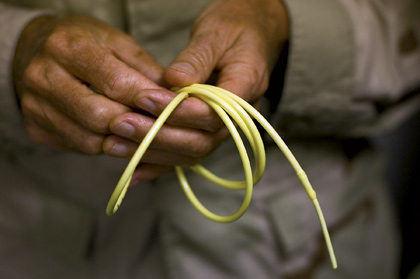
(Photo: A feeding tube of the type used on detainees who go on hunger strikes, by Louie Palu. The striker is restrained while the feeding tube is passed through his nose. Hunger strikes have recurred at the camp since it opened. According to The New York Times, the peak number of simultaneous hunger strikers was more than 130, in September 2005. The largest number of those restrained and force-fed was 15, in March 2006. In June 2006, three inmates who were on hunger strikes succeeded in hanging themselves. By Louie Palu. More images of Gitmo here.)
A reader writes:
Sure, there are people who get away with smoking pot. But given that the possible legal consequences – exile, imprisonment, and job loss – are pretty much the most serious imaginable, it seems that anybody who feels 100% safe is just fooling themselves. I bet you could get just emails from people who regularly drive drunk and have had nothing happen to them.
I'm not comparing smoking with friends to driving drunk, just pointing out that it is human nature to want to minimize the feeling of risk associated with common activities. Smoking pot is normal, so it should be legally safe? I agree. Smoking is normal, so it is legally safe? Sounds like a sampling error to me.
I am a cannabis exile. I hardly ever smoke, but when I applied for a fiance visa for the woman who's now my wife, she was foolishly honest during her doctor's appointment. She got classed as an "addict" and I have never been able to bring my family to the US, despite applying for a visa 5 more times.
The break was quite wonderful. I'd like to thank the Dish's guardian angel, Patrick Appel, and his co-under-blogger, Chris Bodenner, for mastering the craft so effortlessly, and Dick, Richard and Lane for their prolific and diverse and honest posts. As Patrick wrote, I'm sure you'll visit them in their Atlantic blog from now on.
As for me, it is hard to describe the experience of the long-distance blogger who takes a short rest for a while. A few will know – Mickey, Glenn, and Josh come to mind. Your brain feels like an arm after it's liberated from resting against a wall for a few minutes. You feel bouncy at first then heavier than ever. And just as you start to feel normal again … it's back to Typepad we go.
It's less the constant attempt to think, or to try to think, about everything while it's still happening all the time, it's the constant emotional and intellectual exposure to the world. More and more people experience this – Facebook, anyone? – but there's an intensity to the high-traffic, high-volume, one-person blog (even with the indispensable Chris and Patrick) that takes its toll on the psyche. You lose the space to wander in your own thoughts in silence, without the constant humiliation of time and public error. You lose solitude. If you're like me, that's a big loss most of the time.
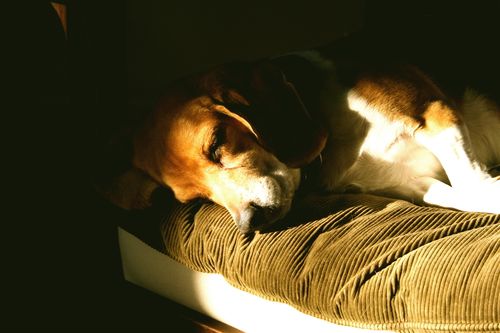
I read a lot at home, I spent time with Aaron and the dogs, a friend and his wife came in to town and we hung and watched bad movies and basketball and went for a bike ride and visited the zoo. (If you ever need a little perspective, the Great Ape House is invaluable.) I became a Kindle addict (about which more later), and transitioned to new HIV meds (the old ones were working but the side-effects on the heart and kidneys are less onerous now). There were a couple of days last week in Washington that were about as sublime as it gets in this city before the soup of summer moves in. It's the light in the evening through the new leaves that grabs me at this time of year. I think it brings back the late summer nights in the English countryside where I grew up – but there's a quality to the slanted green light in Rock Creek in the May evenings that always makes me feel at home.
As I do coming back here. Missed you.
by Chris Bodenner
Richard Florida mined more material on hipsters, highlighted maps of our personality traits, revealed Google's secret to quitting, viewed the patterns of pop piracy, illustrated a huge hurdle to cutting carbon, asked what to do about empty car lots, pointed to the feeding frenzy in real estate, supplemented Posner's take on bubbles, talked about city-haters, honored Canadian vets, discussed – with a reader – the identity crisis facing working-class men, and expanded upon his Atlantic piece.
Lane Wallace added to her series on travel risk, featured two stories of American vets, noted a cyclist's quest to conquer LA traffic, pondered over – with a reader – the future of work, and saluted the sanctity of silence.
Richard Posner expanded upon his view of inflation, critiqued the latest legislation on credit cards, and replied to an email from a Dish reader – Alan Greenspan.
Finally, along with Patrick, I want to extend a hearty thanks to everyone who helped us hold down the fort this week. It's impossible to replace Andrew's insight and personality on this blog, but we hope we served up a good balance of wonkery and revelry to reflect his style and keep you up to date. (Also, I'm proud to report our window book is close to completion, so be on the lookout.) Till next time!
by Patrick Appel
Thank you for a wonderful week –we couldn't have done it without your e-mails. I'd like to thank my co-under-blogger, Chis Bodenner aka Lord of the Mental Health Break, who obsessively mines culture blogs for the Dish and keeps us abreast any late-breaking internet memes. Our guest bloggers also deserve sincere thanks as they have done a superb job. Please patronize their blogs often: Richard Florida, Richard Posner, and Lane Wallace can all be found on the Atlantic Correspondents page. Clicking on their names above will take you to their individual blogs.
I should also point out that Andrew was wrong: the world didn't explode while he was away. A first.
He should be back soon.
by Chris Bodenner
Thrice-married Sam Schulman has a sprawling essay in the Weekly Standard entitled "The Worst Thing About Gay Marriage" (the lack of kinship, apparently). Isaac Chotiner pretty much lets the awful piece speak for itself:
The sense that Schulman has never met a gay person gets stronger by the paragraph, before culminating with this gem:
Gay marriage may reside outside the kinship system, but it has all the wedding-planning, nest-building fun of marriage but none of its rules or obligations (except the duties that all lovers have toward one another). Gay spouses have none of our guilt about sex-before-marriage. They have no tedious obligations towards in-laws, need never worry about Oedipus or Electra, won't have to face a menacing set of brothers or aunts should they betray their spouse. But without these obligations–why marry? Gay marriage is as good as no marriage at all.
He even cites Oakeshott to make his case. Brace yourself.
 The Dish