by Andrew
I'm on vacation, I know, but a speech of this maturity and magnitude demands some kind of comment on a blog that has been deeply disturbed by and engaged in these questions of the laws of war, torture, abuse, detention, interrogation and the like over the last few years. I reprint it here in its entirety, as I have many such speeches from Barack Obama since the beginning of his campaign for the presidency.
I regard it as the national security equivalent of his Jeremiah Wright speech. Why? Because it managed to reach a place apart from, while being fully part of, the furious debates we have been having. These debates are vital, and the notion that we can simply move on from the Bush-Cheney era without some accounting or reform is both empirically and morally false. We are struggling for a sustainable, long-term balance between security against a ruthless and unprincipled and lawless enemy – and a law of war, and a judicial system and a civilization that we rightly love and want to defend. This struggle will be a long one, and an extremely difficult one, and the most profound of the insights that the president offered today is as banal as it is central:
There is a core principle that we will apply to all of our actions: even as we clean up the mess at Guantanamo, we will constantly re-evaluate our approach, subject our decisions to review from the other branches of government, and seek the strongest and most sustainable legal framework for addressing these issues in the long-term.
This speech, to my mind, was a conservative one by a conservative president who seeks first and foremost to use existing institutions to address the new challenges of the moment, and then seeks 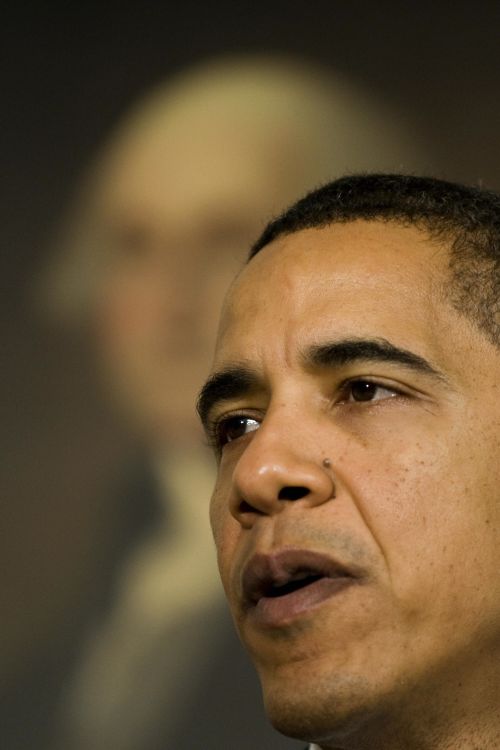 pragmatic compromises, always open to future checks and balances, in those places where such institutions clearly need reform and adjustment. The speech does not shrink from clear positions but it always does so from a place of reason and authority as opposed to politics and power. It is a presidential speech – from a man who seeks to unite and lead this country forward, rather than someone who sees fear and division as a tool to be exploited.
I'm going to ponder some of the specifics over the next few days. Such a thoughtful speech deserves our time and reflection. And that is also why I'm not going to linger on the politics of all this today. I have no idea whether Obama or Cheney will "win" this news cycle. I do know that this is far too important a question to be judged in that fashion.
I can say this after watching the speech and reading its text: by his sobriety and balance, care and precision, Obama has sketched a way forward that is a function of both war and law, seeking no shallow political edge in an area that should never have been abused by Rovian cynicism in the first place. At first blush, I find the balance near pitch-perfect – on detention, torture, interrogation and Gitmo.
Like the president, I am under no illusions as to the enemy we face and the need to fight it. But like the president, I was deeply disturbed by both the tools that the last president used – above all the tool of torture – and the rationale of uncheckable and lawless executive supremacy that underpinned it. Something very profound went very wrong. We all need to understand that at a minimum, however we want to move forward.
I wish the war could be over. It isn't. More important, I do not want America to be over, and, thanks to this remarkable figure in a terribly divided and difficult time, it isn't. The system which relies on law not men, on decency not barbarism, on democratic balance not autocratic deciderism is the system we are fighting for. It won, as Obama noted, even before the last election when two anti-torture candidates, McCain and Obama, emerged from the pack. But its long-term victory was never assured.
I feel much more confidence now that victory – for both our system and the war against Jihadism – is possible. Civil liberties purists will quibble and fight. Cheney-dead-enders will continue to stoke fear and division. I think this is the right balance – and deserves our vocal and persistent support.
The full speech is after the jump:
These are extraordinary times for our country. We are confronting an historic economic crisis. We are fighting two wars. We face a range of challenges that will define the way that Americans will live in the 21st century. There is no shortage of work to be done, or responsibilities to bear.
And we have begun to make progress. Just this week, we have taken steps to protect American consumers and homeowners, and to reform our system of government contracting so that we better protect our people while spending our money more wisely. The engines of our economy are slowly beginning to turn, and we are working toward historic reform of health care and energy. I welcome the hard work that has been done by the Congress on these and other issues.
In the midst of all these challenges, however, my single most important responsibility as President is to keep the American people safe. That is the first thing that I think about when I wake up in the morning. It is the last thing that I think about when I go to sleep at night.
This responsibility is only magnified in an era when an extremist ideology threatens our people, and technology gives a handful of terrorists the potential to do us great harm. We are less than eight years removed from the deadliest attack on American soil in our history. We know that al Qaeda is actively planning to attack us again. We know that this threat will be with us for a long time, and that we must use all elements of our power to defeat it.
Already, we have taken several steps to achieve that goal. For the first time since 2002, we are providing the necessary resources and strategic direction to take the fight to the extremists who attacked us on 9/11 in Afghanistan and Pakistan. We are investing in the 21st century military and intelligence capabilities that will allow us to stay one step ahead of a nimble enemy. We have re-energized a global non-proliferation regime to deny the world's most dangerous people access to the world's deadliest weapons, and launched an effort to secure all loose nuclear materials within four years. We are better protecting our border, and increasing our preparedness for any future attack or natural disaster. We are building new partnerships around the world to disrupt, dismantle, and defeat al Qaeda and its affiliates. And we have renewed American diplomacy so that we once again have the strength and standing to truly lead the world.
These steps are all critical to keeping America secure. But I believe with every fiber of my being that in the long run we also cannot keep this country safe unless we enlist the power of our most fundamental values. The documents that we hold in this very hall – the Declaration of Independence, the Constitution, the Bill of Rights –are not simply words written into aging parchment. They are the foundation of liberty and justice in this country, and a light that shines for all who seek freedom, fairness, equality and dignity in the world.
I stand here today as someone whose own life was made possible by these documents. My father came to our shores in search of the promise that they offered. My mother made me rise before dawn to learn of their truth when I lived as a child in a foreign land. My own American journey was paved by generations of citizens who gave meaning to those simple words – "to form a more perfect union." I have studied the Constitution as a student; I have taught it as a teacher; I have been bound by it as a lawyer and legislator. I took an oath to preserve, protect and defend the Constitution as Commander-in-Chief, and as a citizen, I know that we must never – ever – turn our back on its enduring principles for expedience sake.
I make this claim not simply as a matter of idealism. We uphold our most cherished values not only because doing so is right, but because it strengthens our country and keeps us safe. Time and again, our values have been our best national security asset – in war and peace; in times of ease and in eras of upheaval.
Fidelity to our values is the reason why the United States of America grew from a small string of colonies under the writ of an empire to the strongest nation in the world.
It is the reason why enemy soldiers have surrendered to us in battle, knowing they'd receive better treatment from America's armed forces than from their own government.
It is the reason why America has benefited from strong alliances that amplified our power, and drawn a sharp and moral contrast with our adversaries.
It is the reason why we've been able to overpower the iron fist of fascism, outlast the iron curtain of communism, and enlist free nations and free people everywhere in common cause and common effort.
From Europe to the Pacific, we have been a nation that has shut down torture chambers and replaced tyranny with the rule of law. That is who we are. And where terrorists offer only the injustice of disorder and destruction, America must demonstrate that our values and institutions are more resilient than a hateful ideology.
After 9/11, we knew that we had entered a new era – that enemies who did not abide by any law of war would present new challenges to our application of the law; that our government would need new tools to protect the American people, and that these tools would have to allow us to prevent attacks instead of simply prosecuting those who try to carry them out.
Unfortunately, faced with an uncertain threat, our government made a series of hasty decisions. And I believe that those decisions were motivated by a sincere desire to protect the American people. But I also believe that – too often – our government made decisions based upon fear rather than foresight, and all too often trimmed facts and evidence to fit ideological predispositions. Instead of strategically applying our power and our principles, we too often set those principles aside as luxuries that we could no longer afford. And in this season of fear, too many of us – Democrats and Republicans; politicians, journalists and citizens – fell silent.
In other words, we went off course. And this is not my assessment alone. It was an assessment that was shared by the American people, who nominated candidates for President from both major parties who, despite our many differences, called for a new approach – one that rejected torture, and recognized the imperative of closing the prison at Guantanamo Bay.
Now let me be clear: we are indeed at war with al Qaeda and its affiliates. We do need to update our institutions to deal with this threat. But we must do so with an abiding confidence in the rule of law and due process; in checks and balances and accountability. For reasons that I will explain, the decisions that were made over the last eight years established an ad hoc legal approach for fighting terrorism that was neither effective nor sustainable – a framework that failed to rely on our legal traditions and time-tested institutions; that failed to use our values as a compass. And that is why I took several steps upon taking office to better protect the American people.
First, I banned the use of so-called enhanced interrogation techniques by the United States of America.
I know some have argued that brutal methods like water-boarding were necessary to keep us safe. I could not disagree more. As Commander-in-Chief, I see the intelligence, I bear responsibility for keeping this country safe, and I reject the assertion that these are the most effective means of interrogation. What's more, they undermine the rule of law. They alienate us in the world. They serve as a recruitment tool for terrorists, and increase the will of our enemies to fight us, while decreasing the will of others to work with America. They risk the lives of our troops by making it less likely that others will surrender to them in battle, and more likely that Americans will be mistreated if they are captured. In short, they did not advance our war and counter-terrorism efforts – they undermined them, and that is why I ended them once and for all.
The arguments against these techniques did not originate from my Administration. As Senator McCain once said, torture "serves as a great propaganda tool for those who recruit people to fight against us." And even under President Bush, there was recognition among members of his Administration – including a Secretary of State, other senior officials, and many in the military and intelligence community – that those who argued for these tactics were on the wrong side of the debate, and the wrong side of history. We must leave these methods where they belong – in the past. They are not who we are. They are not America.
The second decision that I made was to order the closing of the prison camp at Guantanamo Bay.
For over seven years, we have detained hundreds of people at Guantanamo. During that time, the system of Military Commissions at Guantanamo succeeded in convicting a grand total of three suspected terrorists. Let me repeat that: three convictions in over seven years. Instead of bringing terrorists to justice, efforts at prosecution met setbacks, cases lingered on, and in 2006 the Supreme Court invalidated the entire system. Meanwhile, over five hundred and twenty-five detainees were released from Guantanamo under the Bush Administration. Let me repeat that: two-thirds of the detainees were released before I took office and ordered the closure of Guantanamo.
There is also no question that Guantanamo set back the moral authority that is America's strongest currency in the world. Instead of building a durable framework for the struggle against al Qaeda that drew upon our deeply held values and traditions, our government was defending positions that undermined the rule of law. Indeed, part of the rationale for establishing Guantanamo in the first place was the misplaced notion that a prison there would be beyond the law – a proposition that the Supreme Court soundly rejected. Meanwhile, instead of serving as a tool to counter-terrorism, Guantanamo became a symbol that helped al Qaeda recruit terrorists to its cause. Indeed, the existence of Guantanamo likely created more terrorists around the world than it ever detained.
So the record is clear: rather than keep us safer, the prison at Guantanamo has weakened American national security. It is a rallying cry for our enemies. It sets back the willingness of our allies to work with us in fighting an enemy that operates in scores of countries. By any measure, the costs of keeping it open far exceed the complications involved in closing it. That is why I argued that it should be closed throughout my campaign. And that is why I ordered it closed within one year.
The third decision that I made was to order a review of all the pending cases at Guantanamo.
I knew when I ordered Guantanamo closed that it would be difficult and complex. There are 240 people there who have now spent years in legal limbo. In dealing with this situation, we do not have the luxury of starting from scratch. We are cleaning up something that is – quite simply – a mess; a misguided experiment that has left in its wake a flood of legal challenges that my Administration is forced to deal with on a constant basis, and that consumes the time of government officials whose time should be spent on better protecting our country.
Indeed, the legal challenges that have sparked so much debate in recent weeks in Washington would be taking place whether or not I decided to close Guantanamo. For example, the court order to release seventeen Uighur detainees took place last fall – when George Bush was President. The Supreme Court that invalidated the system of prosecution at Guantanamo in 2006 was overwhelmingly appointed by Republican Presidents. In other words, the problem of what to do with Guantanamo detainees was not caused by my decision to close the facility; the problem exists because of the decision to open Guantanamo in the first place.
There are no neat or easy answers here. But I can tell you that the wrong answer is to pretend like this problem will go away if we maintain an unsustainable status quo. As President, I refuse to allow this problem to fester. Our security interests won't permit it. Our courts won't allow it. And neither should our conscience.
Now, over the last several weeks, we have seen a return of the politicization of these issues that have characterized the last several years. I understand that these problems arouse passions and concerns. They should. We are confronting some of the most complicated questions that a democracy can face. But I have no interest in spending our time re-litigating the policies of the last eight years. I want to solve these problems, and I want to solve them together as Americans.
And we will be ill-served by some of the fear-mongering that emerges whenever we discuss this issue. Listening to the recent debate, I've heard words that are calculated to scare people rather than educate them; words that have more to do with politics than protecting our country. So I want to take this opportunity to lay out what we are doing, and how we intend to resolve these outstanding issues. I will explain how each action that we are taking will help build a framework that protects both the American people and the values that we hold dear. And I will focus on two broad areas: first, issues relating to Guantanamo and our detention policy; second, issues relating to security and transparency.
Let me begin by disposing of one argument as plainly as I can: we are not going to release anyone if it would endanger our national security, nor will we release detainees within the United States who endanger the American people. Where demanded by justice and national security, we will seek to transfer some detainees to the same type of facilities in which we hold all manner of dangerous and violent criminals within our borders – highly secure prisons that ensure the public safety. As we make these decisions, bear in mind the following fact: nobody has ever escaped from one of our federal "supermax" prisons, which hold hundreds of convicted terrorists. As Senator Lindsey Graham said: "The idea that we cannot find a place to securely house 250-plus detainees within the United States is not rational."
We are currently in the process of reviewing each of the detainee cases at Guantanamo to determine the appropriate policy for dealing with them. As we do so, we are acutely aware that under the last Administration, detainees were released only to return to the battlefield. That is why we are doing away with the poorly planned, haphazard approach that let those detainees go in the past. Instead, we are treating these cases with the care and attention that the law requires and our security demands. Going forward, these cases will fall into five distinct categories.
First, when feasible, we will try those who have violated American criminal laws in federal courts – courts provided for by the United States Constitution. Some have derided our federal courts as incapable of handling the trials of terrorists. They are wrong. Our courts and juries of our citizens are tough enough to convict terrorists, and the record makes that clear. Ramzi Yousef tried to blow up the World Trade Center – he was convicted in our courts, and is serving a life sentence in U.S. prison. Zaccarias Moussaoui has been identified as the 20th 9/11 hijacker – he was convicted in our courts, and he too is serving a life sentence in prison. If we can try those terrorists in our courts and hold them in our prisons, then we can do the same with detainees from Guantanamo.
Recently, we prosecuted and received a guilty plea from a detainee – al-Marri – in federal court after years of legal confusion. We are preparing to transfer another detainee to the Southern District of New York, where he will face trial on charges related to the 1998 bombings of our embassies in Kenya and Tanzania – bombings that killed over 200 people. Preventing this detainee from coming to our shores would prevent his trial and conviction. And after over a decade, it is time to finally see that justice is served, and that is what we intend to do.
The second category of cases involves detainees who violate the laws of war and are best tried through Military Commissions. Military commissions have a history in the United States dating back to George Washington and the Revolutionary War. They are an appropriate venue for trying detainees for violations of the laws of war. They allow for the protection of sensitive sources and methods of intelligence-gathering; for the safety and security of participants; and for the presentation of evidence gathered from the battlefield that cannot be effectively presented in federal Courts.
Now, some have suggested that this represents a reversal on my part. They are wrong. In 2006, I did strongly oppose legislation proposed by the Bush Administration and passed by the Congress because it failed to establish a legitimate legal framework, with the kind of meaningful due process and rights for the accused that could stand up on appeal. I did, however, support the use of military commissions to try detainees, provided there were several reforms. And those are the reforms that we are making.
Instead of using the flawed Commissions of the last seven years, my Administration is bringing our Commissions in line with the rule of law. The rule will no longer permit us to use as evidence statements that have been obtained using cruel, inhuman, or degrading interrogation methods. We will no longer place the burden to prove that hearsay is unreliable on the opponent of the hearsay. And we will give detainees greater latitude in selecting their own counsel, and more protections if they refuse to testify. These reforms – among others – will make our Military Commissions a more credible and effective means of administering justice, and I will work with Congress and legal authorities across the political spectrum on legislation to ensure that these Commissions are fair, legitimate, and effective.
The third category of detainees includes those who we have been ordered released by the courts. Let me repeat what I said earlier: this has absolutely nothing to do with my decision to close Guantanamo. It has to do with the rule of law. The courts have found that there is no legitimate reason to hold twenty-one of the people currently held at Guantanamo. Twenty of these findings took place before I came into office. The United States is a nation of laws, and we must abide by these rulings.
The fourth category of cases involves detainees who we have determined can be transferred safely to another country. So far, our review team has approved fifty detainees for transfer. And my Administration is in ongoing discussions with a number of other countries about the transfer of detainees to their soil for detention and rehabilitation.
Finally, there remains the question of detainees at Guantanamo who cannot be prosecuted yet who pose a clear danger to the American people.
I want to be honest: this is the toughest issue we will face. We are going to exhaust every avenue that we have to prosecute those at Guantanamo who pose a danger to our country. But even when this process is complete, there may be a number of people who cannot be prosecuted for past crimes, but who nonetheless pose a threat to the security of the United States. Examples of that threat include people who have received extensive explosives training at al Qaeda training camps, commanded Taliban troops in battle, expressed their allegiance to Osama bin Laden, or otherwise made it clear that they want to kill Americans. These are people who, in effect, remain at war with the United States.
As I said, I am not going to release individuals who endanger the American people. Al Qaeda terrorists and their affiliates are at war with the United States, and those that we capture – like other prisoners of war – must be prevented from attacking us again. However, we must recognize that these detention policies cannot be unbounded. That is why my Administration has begun to reshape these standards to ensure they are in line with the rule of law. We must have clear, defensible and lawful standards for those who fall in this category. We must have fair procedures so that we don't make mistakes. We must have a thorough process of periodic review, so that any prolonged detention is carefully evaluated and justified.
I know that creating such a system poses unique challenges. Other countries have grappled with this question, and so must we. But I want to be very clear that our goal is to construct a legitimate legal framework for Guantanamo detainees – not to avoid one. In our constitutional system, prolonged detention should not be the decision of any one man. If and when we determine that the United States must hold individuals to keep them from carrying out an act of war, we will do so within a system that involves judicial and congressional oversight. And so going forward, my Administration will work with Congress to develop an appropriate legal regime so that our efforts are consistent with our values and our Constitution.
As our efforts to close Guantanamo move forward, I know that the politics in Congress will be difficult. These issues are fodder for 30-second commercials and direct mail pieces that are designed to frighten. I get it. But if we continue to make decisions from within a climate of fear, we will make more mistakes. And if we refuse to deal with these issues today, then I guarantee you that they will be an albatross around our efforts to combat terrorism in the future. I have confidence that the American people are more interested in doing what is right to protect this country than in political posturing. I am not the only person in this city who swore an oath to uphold the Constitution – so did each and every member of Congress. Together we have a responsibility to enlist our values in the effort to secure our people, and to leave behind the legacy that makes it easier for future Presidents to keep this country safe.
The second set of issues that I want to discuss relates to security and transparency.
National security requires a delicate balance. Our democracy depends upon transparency, but some information must be protected from public disclosure for the sake of our security – for instance, the movements of our troops; our intelligence-gathering; or the information we have about a terrorist organization and its affiliates. In these and other cases, lives are at stake.
Several weeks ago, as part of an ongoing court case, I released memos issued by the previous Administration's Office of Legal Counsel. I did not do this because I disagreed with the enhanced interrogation techniques that those memos authorized, or because I reject their legal rationale – although I do on both counts. I released the memos because the existence of that approach to interrogation was already widely known, the Bush Administration had acknowledged its existence, and I had already banned those methods. The argument that somehow by releasing those memos, we are providing terrorists with information about how they will be interrogated is unfounded – we will not be interrogating terrorists using that approach, because that approach is now prohibited.
In short, I released these memos because there was no overriding reason to protect them. And the ensuing debate has helped the American people better understand how these interrogation methods came to be authorized and used.
On the other hand, I recently opposed the release of certain photographs that were taken of detainees by U.S. personnel between 2002 and 2004. Individuals who violated standards of behavior in these photos have been investigated and held accountable. There is no debate as to whether what is reflected in those photos is wrong, and nothing has been concealed to absolve perpetrators of crimes. However, it was my judgment – informed by my national security team – that releasing these photos would inflame anti-American opinion, and allow our enemies to paint U.S. troops with a broad, damning and inaccurate brush, endangering them in theaters of war.
In short, there is a clear and compelling reason to not release these particular photos. There are nearly 200,000 Americans who are serving in harm's way, and I have a solemn responsibility for their safety as Commander-in-Chief. Nothing would be gained by the release of these photos that matters more than the lives of our young men and women serving in harm's way.
In each of these cases, I had to strike the right balance between transparency and national security. This balance brings with it a precious responsibility. And there is no doubt that the American people have seen this balance tested. In the images from Abu Ghraib and the brutal interrogation techniques made public long before I was President, the American people learned of actions taken in their name that bear no resemblance to the ideals that generations of Americans have fought for. And whether it was the run-up to the Iraq War or the revelation of secret programs, Americans often felt like part of the story had been unnecessarily withheld from them. That causes suspicion to build up. That leads to a thirst for accountability.
I ran for President promising transparency, and I meant what I said. That is why, whenever possible, we will make information available to the American people so that they can make informed judgments and hold us accountable. But I have never argued – and never will – that our most sensitive national security matters should be an open book. I will never abandon – and I will vigorously defend – the necessity of classification to defend our troops at war; to protect sources and methods; and to safeguard confidential actions that keep the American people safe. And so, whenever we cannot release certain information to the public for valid national security reasons, I will insist that there is oversight of my actions – by Congress or by the courts.
We are launching a review of current policies by all of those agencies responsible for the classification of documents to determine where reforms are possible, and to assure that the other branches of government will be in a position to review executive branch decisions on these matters. Because in our system of checks and balances, someone must always watch over the watchers – especially when it comes to sensitive information.
Along those same lines, my Administration is also confronting challenges to what is known as the "State Secrets" privilege. This is a doctrine that allows the government to challenge legal cases involving secret programs. It has been used by many past Presidents – Republican and Democrat – for many decades. And while this principle is absolutely necessary to protect national security, I am concerned that it has been over-used. We must not protect information merely because it reveals the violation of a law or embarrasses the government. That is why my Administration is nearing completion of a thorough review of this practice.
We plan to embrace several principles for reform. We will apply a stricter legal test to material that can be protected under the State Secrets privilege. We will not assert the privilege in court without first following a formal process, including review by a Justice Department committee and the personal approval of the Attorney General. Finally, each year we will voluntarily report to Congress when we have invoked the privilege and why, because there must be proper oversight of our actions.
On all of these matter related to the disclosure of sensitive information, I wish I could say that there is a simple formula. But there is not. These are tough calls involving competing concerns, and they require a surgical approach. But the common thread that runs through all of my decisions is simple: we will safeguard what we must to protect the American people, but we will also ensure the accountability and oversight that is the hallmark of our constitutional system. I will never hide the truth because it is uncomfortable. I will deal with Congress and the courts as co-equal branches of government. I will tell the American people what I know and don't know, and when I release something publicly or keep something secret, I will tell you why.
In all of the areas that I have discussed today, the policies that I have proposed represent a new direction from the last eight years. To protect the American people and our values, we have banned enhanced interrogation techniques. We are closing the prison at Guantanamo. We are reforming Military Commissions, and we will pursue a new legal regime to detain terrorists. We are declassifying more information and embracing more oversight of our actions, and narrowing our use of the State Secrets privilege. These are dramatic changes that will put our approach to national security on a surer, safer and more sustainable footing, and their implementation will take time.
There is a core principle that we will apply to all of our actions: even as we clean up the mess at Guantanamo, we will constantly re-evaluate our approach, subject our decisions to review from the other branches of government, and seek the strongest and most sustainable legal framework for addressing these issues in the long-term. By doing that, we can leave behind a legacy that outlasts my Administration, and that endures for the next President and the President after that; a legacy that protects the American people, and enjoys broad legitimacy at home and abroad.
That is what I mean when I say that we need to focus on the future. I recognize that many still have a strong desire to focus on the past. When it comes to the actions of the last eight years, some Americans are angry; others want to re-fight debates that have been settled, most clearly at the ballot box in November. And I know that these debates lead directly to a call for a fuller accounting, perhaps through an Independent Commission.
I have opposed the creation of such a Commission because I believe that our existing democratic institutions are strong enough to deliver accountability. The Congress can review abuses of our values, and there are ongoing inquiries by the Congress into matters like enhanced interrogation techniques. The Department of Justice and our courts can work through and punish any violations of our laws.
I understand that it is no secret that there is a tendency in Washington to spend our time pointing fingers at one another. And our media culture feeds the impulses that lead to a good fight. Nothing will contribute more to that than an extended re-litigation of the last eight years. Already, we have seen how that kind of effort only leads those in Washington to different sides laying blame, and can distract us from focusing our time, our effort, and our politics on the challenges of the future.
We see that, above all, in how the recent debate has been obscured by two opposite and absolutist ends. On one side of the spectrum, there are those who make little allowance for the unique challenges posed by terrorism, and who would almost never put national security over transparency. On the other end of the spectrum, there are those who embrace a view that can be summarized in two words: "anything goes." Their arguments suggest that the ends of fighting terrorism can be used to justify any means, and that the President should have blanket authority to do whatever he wants – provided that it is a President with whom they agree.
Both sides may be sincere in their views, but neither side is right. The American people are not absolutist, and they don't elect us to impose a rigid ideology on our problems. They know that we need not sacrifice our security for our values, nor sacrifice our values for our security, so long as we approach difficult questions with honesty, and care, and a dose of common sense. That, after all, is the unique genius of America. That is the challenge laid down by our Constitution. That has been the source of our strength through the ages. That is what makes the United States of America different as a nation.
I can stand here today, as President of the United States, and say without exception or equivocation that we do not torture, and that we will vigorously protect our people while forging a strong and durable framework that allows us to fight terrorism while abiding by the rule of law. Make no mistake: if we fail to turn the page on the approach that was taken over the past several years, then I will not be able to say that as President. And if we cannot stand for those core values, then we are not keeping faith with the documents that are enshrined in this hall.
The Framers who drafted the Constitution could not have foreseen the challenges that have unfolded over the last two hundred and twenty two years. But our Constitution has endured through secession and civil rights – through World War and Cold War – because it provides a foundation of principles that can be applied pragmatically; it provides a compass that can help us find our way. It hasn't always been easy. We are an imperfect people. Every now and then, there are those who think that America's safety and success requires us to walk away from the sacred principles enshrined in this building. We hear such voices today. But the American people have resisted that temptation. And though we have made our share of mistakes and course corrections, we have held fast to the principles that have been the source of our strength, and a beacon to the world.
Now, this generation faces a great test in the specter of terrorism. Unlike the Civil War or World War II, we cannot count on a surrender ceremony to bring this journey to an end. Right now, in distant training camps and in crowded cities, there are people plotting to take American lives. That will be the case a year from now, five years from now, and – in all probability – ten years from now. Neither I nor anyone else can standing here today can say that there will not be another terrorist attack that takes American lives. But I can say with certainty that my Administration – along with our extraordinary troops and the patriotic men and women who defend our national security – will do everything in our power to keep the American people safe. And I do know with certainty that we can defeat al Qaeda. Because the terrorists can only succeed if they swell their ranks and alienate America from our allies, and they will never be able to do that if we stay true to who we are; if we forge tough and durable approaches to fighting terrorism that are anchored in our timeless ideals.
This must be our common purpose. I ran for President because I believe that we cannot solve the challenges of our time unless we solve them together. We will not be safe if we see national security as a wedge that divides America – it can and must be a cause that unites us as one people, as one nation. We have done so before in times that were more perilous than ours. We will do so once again. Thank you, God Bless you, and God bless the United States of America.
 The Dish