The wood menagerie:
The wood menagerie:
Marc Lynch has some bullet points for Israeli-Palestinian negotiations:
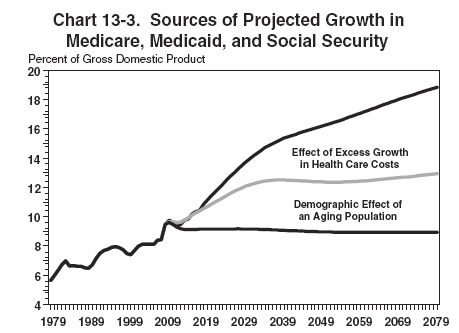
Or: it's the seniors, stupid. Andrew Biggs questions the Obama administration's belief that cutting healthcare costs is the key to spending restraint:
[T]here's been some debate over the sources of future entitlement deficits: the traditional view has been that it's the aging population, which pushes more people onto the Social Security, Medicare and Medicaid rolls. A new view says the real culprit is rising per capita health care costs – called "excess cost growth" – which push up spending even if the population doesn't get older. Under the first view, the likely reform approaches are traditional ones like raising taxes, cutting benefits, increasing the retirement age or trying to pre-fund future benefits. Under the new view, only comprehensive health care reform – meaning, reform of private sector health provision in addition to government health plans – can stop rising prices.
[…] What the chart shows is that aging will be the largest driver of entitlement cost growth out through 2040 and likely beyond.
You can judge for yourselves, but it seems to me that given what the chart shows the emphasis of the text could be at least somewhat different.
Over the next 30 years, population aging is our main entitlements problem and it makes sense to seek solutions that are based on the problem we have, not the problem we want to have. Without downplaying healthcare funding issues, which are significant today and will grow even more so in the future, I can't help but think that some on the left have latched onto this new view because it promotes a policy outcome they happen to favor: increased government control over private sector health care provision for working-age people. I suspect that many of these folks would favor more government control even if health care costs weren't rising.
The torture victim who gave Cheney the false evidence that Saddam and al Qaeda were operationally linked – a person who might have shed new light on why Washington ordered his torture – committed "suicide" in his Libyan jail yesterday after months of being missing. My take on what this could mean here.

He used innovative photo-montages to demonstrate the evil of Nazism. And he was a German citizen who escaped to London. Here's a little essay celebrating him.
The Obamacon's reflections on the Bush-Cheney OLC below – aligning Kmiec with Kuo and DiIuliano among those who came to see just how unprincipled his fellow Bushies were – deserve being read in the context of his two-year-old post on Balkinization, defending James Comey (who, so far as one can tell, was an admirable resister of the worst on the inside). But I missed this aside and it has obvious personal salience:
It was "politically imprudent" for a Bush administration official to worry about discrimination against people with HIV.
Ruffini sees how Obama is leveraging his popularity:
Nate Silver thinks so. I'll just stick to rooting for his wife.
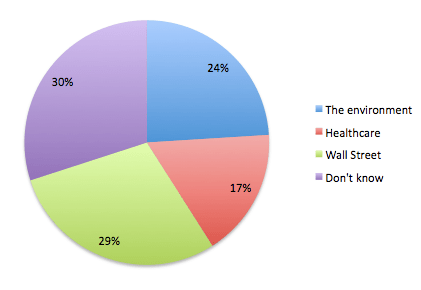
This chart is making the rounds:
And yet this is arguably the biggest policy shift proposed by the Obama administration. No one explains it; no one explains why it is preferable to the alternatives and, as this blog has revealed, it's a vital and fascinating and contentious debate. The right has a great deal of responsibility since they are still in Drudge-Inhofe land. But just because we do not have a serious right-of-center party in this country doesn't mean we don't need to debate this more fully.
God bless him:
Jesse Ventura: I would prosecute every person who was involved in that torture. I would prosecute the people that did it, I would prosecute the people that ordered it, because torture is against the law."
Larry King: You were a Navy S.E.A.L.
Jesse Ventura: Yes, and I was waterboarded [in training] so I know… It is torture…I'll put it to you this way: You give me a waterboard, Dick Cheney and one hour, and I'll have him confess to the Sharon Tate murders.
Watch the video. We will win back this country one day – and one American – at a time.
 The Dish