In Defense Of Travel

Travel

A reader writes:

I hope you'll consider the argument below from John Stuart Mill's On Liberty as a defense of travel. As a twenty-something American who has had the good fortune to be able to travel both personally and professionally, including to some conflict zones, I feel that travel is an important, if not essential component to understanding our complex world. At the risk of making the mistake Mill warns about and making assumptions about the age we're living in, it seems to me that as the world grows more connected and conflicted, we suffer precisely from not knowing enough about others and about ourselves as seen through others' eyes. To use Mill's formulation, my world has grown immeasurably with each new part of it I've come into contact with, with each new sect, new opinion, new party, new country. But, perhaps more importantly, travel has given me experiences and opportunities for discussion that have challenged the assumptions, preconceived notions, and biases that each of us inherits from our own circumstances, wherever we are born.

I'm familiar with the Emerson essay you cited, and I've struggled with to come to terms with it over the years. In the end, I think it's Mill's formulation that rescues travel from the idolatry, imitation, and boorishness of tourists, and places it in terms that Emerson might have respected. Emerson is correct to argue that when we travel, we should remain "at home" in some sense, but we should also remain open to the opportunities that travel gives us to examine our homes and ourselves in new ways and we should celebrate and the fact that travel equips us with the only tools available to make sound rational judgments about our common condition: new facts and new experiences to discuss. John Stuart Mill:

"Unfortunately for the good sense of mankind, the fact of their fallibility is far from carrying the weight in their practical judgment which is always allowed to it in theory; for while everyone well knows himself to be fallible, few think it necessary to take any precautions against their own fallibility, or admit the supposition that any opinion of which they feel certain may be one of the examples of the error to which they acknowledge themselves to be liable. Absolute princes, or others who are accustomed to unlimited deference, usually feel this complete confidence in their own opinions on nearly all subjects. People more happily situated, who sometimes hear their opinions disputed and are not wholly unused to be set right when they are wrong, place the same unbounded reliance only on such of their opinions as are shared by all who surround them, or to whom they habitually defer; for in proportion to a man's want of confidence in his own solitary judgment does he usually repose, with implicit trust, on the infallibility of "the world" in general. And the world, to each individual, means the part of it with which he comes in contact: his party, his sect, his church, his class of society: the man may be called, by comparison almost liberal and large-minded to whom it means anything so comprehensive as his own country or his own age. Nor is his faith in this collective authority at all shaken by his being aware that other ages, countries, sects, churches, classes, and parties have thought, and even now think, the exact reverse. He devolves upon his own world the responsibility of being in the right against the dissentient worlds of other people; and it never troubles him that a mere accident has decided which of these numerous worlds is the object of his reliance, and that the same causes which make him a churchman in London would have made him a Buddhist or a Confucian in Peking."

Shortly following the positing of the counterargument against relativism and the intellectual paralysis it can produce and Emerson also rejected:

"Why is it, then, that there is on the whole a preponderance among mankind of rational opinions and rational conduct? If there really is this preponderance– which there must be unless human affairs are, and have always been, in an almost desperate state – it is owing to a quality of the human mind, the source of everything respectable in man wither as an intellectual or as a moral being, namely, that his errors are corrigible. He is capable of rectifying his mistakes by discussion and experience. Not by experience alone. There must be discussion to show how experience is to be interpreted. Wrong opinions and practices gradually yield to fact and argument, but facts and arguments, to produce any effect on the mind, must be brought before it."

(Image by Flicker user jrayfarm1980)
The Next Globalization

Brad DeLong thinks that the savings glut countries are going to colonize us financially:

Can anything stop this progression? Yes. A collapse of world economic growth—which would create a very dangerous and angry world. Or a sudden return to thrift on the part of American consumers—so that we can finance the industrialization of the rest of the world rather than having them finance our consumption. But neither is likely.

“The Aesthetic Charge Of The Beard”

Lowell

The Language of the Beard, circulated by The Torchbearer Society of London in 1913, was a sort of precursor of bear appreciation. So was its author's Poets Ranked by Beard Weight. Gilbert Alter-Gilbert writes:

Typifying a once-popular, but nowadays seldom-encountered species of turn-of-the-century ephemera, Poets Ranked by Beard Weight has become a rarity much prized by bibliophiles, and one that still stands out as a particular curiosity among the many colorful curiosities of the period. Its author, one Upton Uxbridge Underwood (1881 – 1937), was a deipnosophist, clubman, and literary miscellanist with a special interest in tonsorial subjects. His masterpiece, The Language of the Beard, an epicurean treat confected for the delectation of fellow bon vivants, vaunts the premise that the texture, contours, and growth patterns of a man's beard indicate personality traits, aptitudes, and strengths and weaknesses of character…

[Author Upton Uxbridge Underwood] applies a grading system structured as a sliding scale he has unassumingly named the Underwood Pogonometric Index. This admirable instrument of scientific classification gauges the presence and projection of a "galvanic imponderable" Underwood calls poetic gravity — an intangible property which results from the aesthetic "charge" of the beard itself rather than from any intrinsic ability or merit attaching to the wearer in question or to his literary productions.

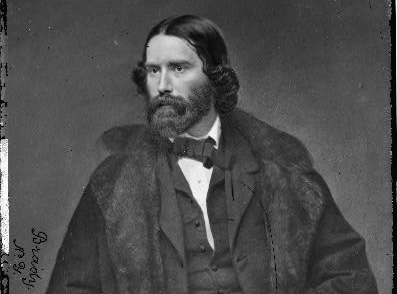
See how three of The Atlantic Monthly's founders — Henry Wadsworth Longfellow, John Greenleaf Whittier, and James Russell Lowell — size up.

The Bundle Of Nerves

Carl Zimmer explains why the brain has two halves. His closing paragraphs are excellent:

No matter how lateralized the brain can get, though, the two sides still work together. The pop psychology notion of a left brain and a right brain doesn’t capture their intimate working relationship. The left hemisphere specializes in picking out the sounds that form words and working out the syntax of the words, for example, but it does not have a monopoly on language processing. The right hemisphere is actually more sensitive to the emotional features of language, tuning in to the slow rhythms of speech that carry intonation and stress.

Neuroscientists know that the hemispheres work together and that they do so by communicating through the corpus callosum. But exactly how the hemispheres cooperate is not so clear. Perhaps paired regions take turns being dominant. That is known to happen in some animals. For instance, dolphins use this strategy to sleep and swim at the same time: One hemisphere remains active for hours, then fades while the other takes over. Bird brains switch as well. In order to sing, a songbird makes the two sides of its lungs open and close. The two hemispheres of the bird’s brain take turns controlling the song, each dominating for a hundredth of a second.

The intimate cooperation between the two hemispheres makes it all the more remarkable that a person can survive with just one—a sign that the brain is far more malleable than we once thought. After a hemisphere is forced to manage on its own, it can rewire itself to handle all the tasks of a full brain. In fact, two hemispheres can cause more trouble than one if they cannot talk clearly to each other. Neuro scientists have linked some mental disorders, including dyslexia and Alzheimer’s, with a breakdown in left-right communication.

The two sides of the brain may be a legacy that we inherited from our wormlike ancestors. But their delicate balance of symmetry and specialization is now woven into the very essence of human nature.

Safe, Legal, And Early

Saletan responds to Steve Waldman's abortion compromise:

…people won't take the more-but-earlier-abortions deal. Yes, they prefer earlier abortions to later ones, as Waldman's poll data show. But those data say nothing about a trade-off for more abortions. So earlier timing isn't a substitute for reduction. It's an add-on.

In fact, the timing approach logically fits the reduction framework. A nine-week abortion is better than a 12-week abortion. A six-week abortion is even better. But eventually, this trajectory takes you all the way back before conception. That's not an abortion anymore. It's birth control or abstinence. In other words, it's reduction.

Quote For The Day

Onespot

"The person who finds his homeland sweet is still a tender beginner; he to whom every soil is as his native one is already strong; but he is perfect to whom the entire world is as a foreign place. The tender soul has fixed his love on one spot in the world; the strong person has extended his love to all places; the perfect man extinguished his," – Hugo St. Victor, 12th Century.