Helmet Or No?

E.D. Kain revisits the bicyclist's dilemma:

Personally, I’m a helmet guy.  However ineffective helmets may be, I still appreciate the contents of my skull enough to do whatever I can to protect them, including donning the rather clumsy foam and plastic encasement even at the risk of forsaking the “sublime.”   Then, too, I’m a parent and one who doesn’t subscribe to the “do as I say, not as I do” approach to parenting.  When it all comes down, I’d prefer to see my daughter wear a helmet when she’s of a biking age.

I just can't do it. I like the rush of wind in my hair … oh never mind. They can be pretty effective, mind you:

Correctly worn, bike helmets are about 70 percent effective in preventing damage on impact. Mary Pat McKay, director of the Center for Injury Prevention and Control at the Ronald Reagan Institute of Emergency Medicine, says that with those odds, she doesn’t understand why so many people continue to ride without a helmet. “If I had a magic pill to prevent 70 percent of heart attacks among people with heart disease, they’d want me to put it in the water.”
The New York Times And “Torture”

Here's proof positive that what was once considered routine to call torture in the pages of the New York Times has now been changed, to accommodate the Bush administration. An obit, obviously written before Bill Keller decided to take his editorial cues from Dick Cheney, describes the torture undergone by an American Korean War airman at the hands of the Communist Chinese. Not the most sadistic or comic book type of torture – just open-ended solitary confinement in a damp, cold cell, with meager food and regular piercing alarms to enforce sleep deprivation. No one, including the NYT, called this anything but torture – until they had to accommodate the US government's attempt to torture prisoners without moral accountability or legal authority.

The Book Project Of Alexandria

David Post defends Google:

The Google Books project has the potential to become one of the great information-gathering activities in human history — every book (just about), at everyone's fingertips, searchable and instantly accessible from any corner of the globe. And we want to deter that?? Because that will decrease "respect for IP laws"? Talk about putting the cart before the horse!! Because it will inflict some sort of terrible "harm" on copyright holders? I'm not terribly sympathetic. Copyright, as Jefferson stressed so long ago, is a "social right" — given by society because we feel it serves useful ends (incentivizing authors to produce new creative works). When it ceases to serve those ends, it should be eliminated. The Google Books project is another example of how copyright interests, these days, do little more than obstruct useful innovations. There are 7 million (or more) out of print books that Google would like to place on-line where they can actually be accessed and read. I'm sorry if that infringes someone's copyright, but really — in what way is society better off, exactly, from recognizing the copyright holder's rights in this circumstance?

Release The OPR Report

It's the closest thing we have right now to a Truth Commission, and Americans have a right to know and understand how a secret law allowed illegal torture came to pass. Even the establishment WaPo agrees:

Investigations of this type are usually kept secret unless and until the investigating entity determines that wrongdoing has occurred. There's a certain logic and decency to this: Mere news that someone is under investigation is often enough to tarnish that person's reputation — even if charges ultimately are not brought. Yet the existence of the investigation and many details of the OPR report have already found their way into the public arena.

For example, The Post and other news outlets have reported that the OPR will recommend that Judge Bybee and Mr. Yoo be referred to their respective bar associations for possible sanctions. The best way to proceed — both to ensure fairness and to fulfill the strong and legitimate public need to know how questionable policies and legal opinions came into being — is to make all material relating to this investigation public, regardless of the Justice Department's findings. Documents that should be released include the full OPR report, all submissions by the subjects of the probe, and the letter written by former attorney general Michael B. Mukasey and former deputy attorney general Mark R. Filip that criticized the draft report.

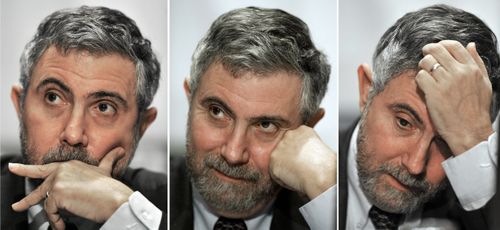
The Krugman Syndrome?

KRUGMANPaulJRochards:AFP:Getty

Bennett Gordon summarizes Arthur Herman’s article on professional pessimists (the full article isn’t online):

The professional pessimist is able to “not only make past successes look like failure, but can present catastrophe as condign punishment for past sins.” Unfortunately for their home countries, these pessimists can convince other people to panic, or to blithely accept a bleak future, making the decline of their civilization unavoidable.

(Photo: Paul J Richards/Getty.)

Free-Range Kids

Lenore Skenazy wants to let kids be kids:

There is a 1 in 1.5 million chance that your kid would be abducted and killed by a stranger. It is hard to wrap your mind around those numbers, and everybody always assumes: What if it's my 1 in 1.5 million? If you don't want to have your child in any kind of danger, you really can't do anything. You certainly couldn't drive them in a car, because that's the No. 1 way kids die, as passengers in car accidents.

The Morality Of Food

 Max Fisher explores the tension between vegetarians and vegans:

Vegans are statistically minuscule–about one quarter of one percent of Americans–and can seem most significant for the questions they raise about the rest of us. For a vegetarian like me, they are a blow to any confidence I feel in my chosen lifestyle. If I really cared about animal welfare, wouldn't I be vegan? If I don't have it in myself to live as a vegan, does that make the sacrifice of vegetarianism insignificant in comparison? Worse, does it make me a hypocrite?

Snake Oil And Autism

Dan Summers, a doctor, tackles Jim Carrey and the anti-vaccine crowd:

Carrey simply expects us to trust that the evidence supports his claim, that pediatricians and public health experts are in thrall to the vaccine industry, all the while blithely assuming that nobody will bother to sift through the science his organization has thrown at the wall like so much spaghetti. The simple (if time-consuming) act of checking what he says makes his dishonest, uninformed grandstanding apparent.