
New Delhi, India, 6 pm
New Delhi, India, 6 pm
by Chris Bodenner
Megan has a sensible final word on gun-toting protesters:
[L]ots of things make it harder for the Secret Service to do their job. Protesting is much harder on the Secret Service–almost certainly harder than one guy openly carrying a gun, because the protesters are a crowd of people who have to be watched constantly for suspicious movements. […] People who are planning to commit violence are probably going to try to conceal it until the last moment. And the other people aren't going to pick fights with the guy with the gun.
Unless the other people have guns, too. I'm just waiting for the media circus when a small militia shows up to the next rally. Or, conversely, when a liberal protester of Arab descent shows up with a turban and AK-47, just to make Republicans squirm. Anyway, Wilkinson also offers some productive push-back on Zengerle:
The silliest thing is Zengerle’s casual assumption that if the free and peaceful exercise of an enumerated constitutional right “takes up resources,” then the state may therefore limit it. I doubt he’d like to generalize this principle. Of course, the real issue is likely that Zengerle is not impressed with the idea of an individual right to bear arms. So he’s untroubled by limiting it on the grounds that it might cost a little money or slightly affect the probability of harm to the president.
I lean towards the libertarians on this one.
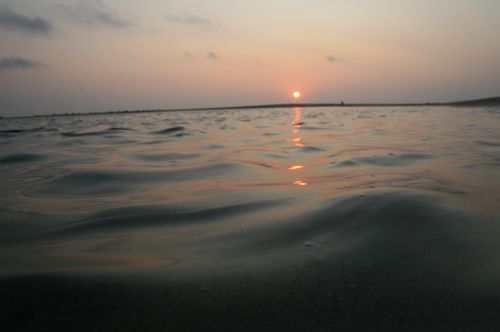
The people along the sand
All turn and look one way.
They turn their back on the land.
They look at the sea all day.
As long as it takes to pass
A ship keeps raising its hull;
The wetter ground like glass
Reflects a standing gull.
The land may vary more;
But wherever the truth may be—
The water comes ashore,
And the people look at the sea.
They cannot look out far.
They cannot look in deep.
But when was that ever a bar
To any watch they keep?
– Neither Out Far Nor In Deep, by Robert Frost.
By Andrew
The Onion discusses accountability for the systematic torture and abuse of prisoners under the last administration:
by Conor Friedersdorf
One editorial feature discussed but never implemented at a defunct Web magazine where I once worked was Revise & Resubmit — the idea was to find good ideas that were poorly executed by other magazines, and to redo them as they should've been done.
by Hanna Rosin
Gabriel Winant of Salon quotes Rush Limbaugh on circumcision, which is fast becoming the symbol for the right of what Obama intends to do.
Two days ago, Rush Limbaugh claimed, "It is President Obama who wants [to] mandate circumcision … And that means, if we need to save our penises from anybody, it's Obama."
So now that we're talking about Limbaugh's penis, all of a sudden, we're in a world where the tiniest measure of government suggestion about sexual health equals a full onslaught against privacy. Expect to see the radio talker at the next march to protect abortion rights with a "Keep your government hands off my private parts" sign.
by Patrick Appel
Scott Horton's analysis of the DOJ investigating CIA interrogators who went beyond what the Bush administration approved:
The passage of time and the destruction of evidence and a host of complex legal issues may very well make actual prosecutions coming out of the CIA interrogations program unlikely. But the attorney general has a duty under the law, and specifically under the Convention Against Torture, to insure that all credible allegations of torture are properly investigated. In this case, the CIA’s own internal watchdog concluded that the Justice Department’s involvement was warranted, and the Bush Administration engaged in a cover-up rather than seriously investigate the matters. In appointing Durham, Holder did no more than his office required. Indeed, the lingering question is whether he did enough: Durham is a serious professional, and he should be trusted to do his job, without the blinders that Eric Holder has insisted on strapping on him.
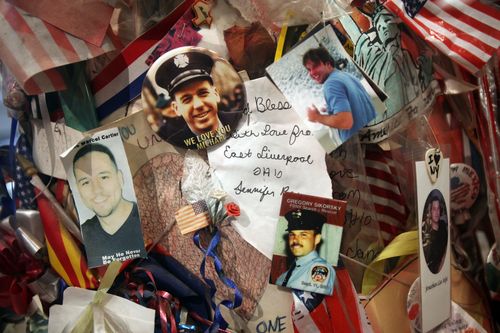
A Statue of Liberty model is seen adorned with 9-11 mementos on the opening day of the 9/11 Memorial Preview Site near the World Trade Center August 26, 2009 in New York City. The site provides the public with an opportunity to learn about the September 11 terrorist attacks and the National September 11 Memorial and Museum which is scheduled to open September 11, 2011. By Mario Tama/Getty.
by Hanna Rosin
The author of Black Water, a novel based on the incident, weighs in at the Guardian.
Yet if one weighs the life of a single young woman against the accomplishments of the man President Obama has called the greatest Democratic senator in history, what is one to think?
The poet John Berryman once wondered: "Is wickedness soluble in art?". One might rephrase, in a vocabulary more suitable for our politicized era: "Is wickedness soluble in good deeds?"
This paradox lies at the heart of so much of public life: individuals of dubious character and cruel deeds may redeem themselves in selfless actions. Fidelity to a personal code of morality would seem to fade in significance as the public sphere, like an enormous sun, blinds us to all else.
by Patrick Appel
A reader writes:
I can't understand Conor's contempt for us recent law school graduates. Sure, it's easy to make fun of the stereotypical corporate attorney who gets paid $500 dollar an hour to pick his nose, but most of us don't fit that bill. I recently graduated from a private law school and put myself six figures in debt to do it. I spent my time in law school doing legal aid work. All of my clients were poor; most were elderly and/or veterans. I defended them against criminal charges, against predatory landlords, and helped them fight through government red tape.
The economy being what it is, only the top five in my graduating class had what you would consider "big law firm" jobs waiting for them after they graduated. Most of my class is struggling to find jobs that will pay us enough to live on while paying off our loans. One of my classmates left a $120K a year job to go to law school, and now after three years, he can't find a job that pays more than $50K a year.
Another reader:
I'm interviewing for those misery-inducing summer associateships right now and share some of Conor's sentiments. But it is a tad reductionist to portray all expensive legal work as highlighting discovery documents for mergers and acquisitions. I am looking to practice in the tax and bankruptcy fields, and the level of study, hard work, and attention to detail required is NOT something I could have mustered as a paralegal. Granted that the example cited was meant to illustrate how far goes the absurdity that is the legal hiring process. But it is only fair to note that, for many firms, the summer hiring is not just to show gunners the nicest wood-paneled office in which to be miserable – it is to get the jump on those attorneys capable of developing genuine expertise in difficult – and socially necessary – fields of law.
Yet another:
The bubble has been bursting for awhile now. Personally, I passed the bar exam a few years ago and have yet to land an actual job. Instead I've been a legal temp working when I can. When I'm lucky the gig lasts for a few months. When I'm not so lucky there is no paycheck for a couple months. The legal temp industry has mushroomed in the past 10 years. What is it that we temps do? We are the ones doing the work described in Conor's post. Pretty much every gig is poring over discovery documents in lawsuits between major corporations. In some places the newer associates do take on that work, but the work now largely falls onto teams of temp attorneys. If the newer associates are involved they are usually supervising.
We make far from six figures. Instead the going rate here in the midwest is $19 an hour, with no benefits, overtime pay only if we are lucky, and it doesn't add anything to the resume that would benefit in finding permanent work. It is a lot less that the associates make, usually less that the paralegals earn and sometimes even less than the firm's secretaries. You can make more on the coast, but that usually tops out at around $30 something an hour. I can't claim it is hard work, often a trained monkey could do it, and there are certainly a lot of things we could do that would pay less, but it doesn't do much to put a dent in the six figure student loans many attorneys end school with. Finally, despite licensed attorneys and having 7+ years of college, temp attorneys are more treated like school children than professional employees in many places with timed bathroom breaks, no phone use allowed, and divulging as little information on the project status as possible. As the number of law schools grow and churn out far more attorneys than there are positions available this underclass of attorneys is growing and being exploited by the big law firms.
I'll end with a link to the main blog covering the temp attorney world. The blog can be rather nasty, but so can the working conditions at times.
Final one:
Conor is so right on here. I'm blessed to work for a small firm that bills on a fixed fee basis. The billable hour is Satan incarnate and has sucked the souls right out of countless eager associates and grizzled partners. I don't make as much money as the associates at the big firms do, but the quality of my life is immeasurably better than theirs.
 The Dish