The Early Dominick Dunne

by Hanna Rosin

So much of what Dunne did in his later life seemed like a parody of Hollywood tabloid crime writing. Here is a clip from the first story he ever wrote, an amazing account in Vanity Fair of his daughter's murder trial.

At first I did not realize the person on the bed was Dominique. There were tubes in her everywhere, and the life-support system caused her to breathe in and out with a grotesque jerking movement that seemed a parody of life. Her eyes were open, massively enlarged, staring sightlessly up at the ceiling. Her beautiful hair had been shaved off. A large bolt had been screwed into her skull to relieve the pressure on her brain. Her neck was purpled and swollen; vividly visible on it were the marks of the massive hands of the man who had strangled her. It was nearly impossible to look at her, but also impossible to look away.

Quote For The Day

by Andrew

"[I]f you genuinely believe in the rule of law, you can't invoke political expediency as a guide to whether possible crimes should be investigated and prosecuted. And the fact that the Attorney-General has decided to go forward should be seen as very positive sign, because it shows that he is willing to fulfill his constitutional responsibilities even if it is politically inconvenient for the president who appointed him. I have no doubt that the president would prefer to "look forward," because an investigation and/or prosecution will drive both the CIA and the right-wing media types crazy and because he's got enough alligators to wrestle with already. But he also promised us that he would end the politicization of the Department of Justice that his predecessor practiced, and Holder's decision, however inconvenient for Obama, is a reassuring sign that there is still life in the U.S. Constitution," – Stephen Walt.

Compare and contrast with once-libertarian Charles Murray, who sees only culture war politics as the salient issue:

Nothing but the Pauline Kael syndrome can explain the political idiocy of letting Attorney General Eric Holder go after the interrogators.

Nothing but the rule of law, that is. Remember when that mattered to conservatives? The GOP could think of nothing else when impeaching a president for perjury in a civil trial. But secretly committing war crimes and rigging the legal system to give you a golden shield from prosecution for torture? We should all stand up and applaud illegality, defend the politicians who broke the law and authorized the torture, abuse and murder of prisoners of war. And you wonder why conservatism as it is currently exemplified disgusts me.

How Little Changed

by Patrick Appel

Daphne Eviatar does some reporting:

“It’s surprising how little the analysis in this memo changed from the past memos, notwithstanding the passage of the [Detainee Treatment Act] and the Supreme Court’s decision in Hamdan,” said American Civil Liberties Union national security project lawyer Alex Abdo.

The July 2007 opinion, for example, analyzed whether prolonged sleep deprivation for up to 96 straight hours (or 180 hours in a 30-day period) while a prisoner is forced to stand, shackled, in diapers, and eventually in his own urine and feces violates the Detainee Treatment Act and Geneva Conventions’ prohibitions on “cruel, inhuman and degrading treatment”.

The Justice Department lawyers concluded that it does not violate either law, even if the sleep deprivation is combined with restriction to a 1,000-calorie-a-day diet (half the recommended daily human intake) of liquid formula, and with “corrective techniques” such as the “facial hold,” “facial slap,” and “abdominal slap”.

The rules are not violated because the CIA has determined that such techniques are “safe”, concludes the memo, meaning they cause no “serious,” permanent or long-lasting injury.

Calling Out Hoekstra

by Chris Bodenner

A group of former national security and military officials publish a letter knocking the gubernatorial candidate for “stirring up panic and distorting reality for political purposes." Here they target one of his more fallacious claims:

The former warden of the Supermax facility said [convicted terrorists] “spend up to 23 hours a day in their cells, every minute, every meal. The window in their cell is blocked so they can’t see the mountains.” Yet you stated that detainees housed in America “would have greater opportunities to command and control their networks through outsiders and to spread radical jihadist ideology.” The Supermax warden also stated that Ramzi Yousef has never left his cell. If the same-if not stricter-standards are applied to Guantanamo detainees held domestically, then how exactly would they command terrorist networks overseas?

Kennedy and Women

by Hanna Rosin

I waited all day yesterday for some important news outlet to turn and face Chappaquiddick full on, but none did. Instead it was left to euphemisms, "the controversy," "the shadow over his life." The Kopechne parents have died, and we have no British tradition of truth telling obituaries here. But as Clive Crook wrote, "What he did was terrible. He survived as a politician only because of his name–a disgusting thing." But even Clive jumps too quickly to the redemption. 

It's not just about Chappaquiddick. There is the bigger problem of the Kennedy women, and how the family conceived of their role in the legacy. The example was set by Rose, "a wife and mother whose emotions were rigidly controlled and whose mechanisms of denial so highly refined that she could accept her husband's lovers—notably Gloria Swanson—into her home," from a review of a book on the Kennedy women. The wives and daughters were pretty statues, quietly suffering  or, if they were lucky, they did "charity" work. There is Joe Kennedy's established line of political succession, which omitted all the daughters (I write more about this on DoubleX here).

The old guard feminists have long ago made peace with Kennedy. Judith Lichtman recalled this morning the great work Kennedy did in Borking Supreme Court nominee Robert Bork. Kennedy gave a pivotal speech talking about "back alley abortions" in a way the feminists could never have gotten away with. But even this protector role he played for feminists has a hidebound, patrician air about it.

The next generation of Kennedy women are doing it on their own: Kathleen Kennedy Townsend, Caroline (sort of) and Maria Shriver, who is not quite as famous as her husband but still. I've read rumors today that Vicki Kennedy is being talked about as a succesor to her husband's Senate seat. For the Kennedy women, that would be a step backwards. I really hope she doesn't.

I am not seething with rage at Kennedy, but that is mostly because of what Clive mentioned. There are very few examples of true redemption in public life, and Kennedy may be one of them. We don't know if he woke up and thought about Mary Jo Kopechne every morning or if it was in some way, his rosebud. But he certainly behaved like a man foregoing glory for daily penance. In this morning's New York Times, Adam Clymer gives a peek into Kennedy's Senate life which confirms this. 

Like a schoolboy bored in class, Robert passed Ted a note: “Is this the way I become a good senator — sitting here and waiting my turn?” Ted scribbled, “Yes.” Then Robert asked, “How many hours do I have to sit here to be a good senator?” Ted replied, “As long as necessary, Robbie.”
When Pipe Dreams And Reality Collide

by Patrick Appel

Romney has been mentioned as a contender for Kennedy's seat. Nate Silver analyzes whether a Republican has a shot:

Short answer: Very probably not. Longer answer: Almost certainly not if the candidate is Mitt Romney. Romney served one term as governor of Massachusetts and was not popular at the time he left office. A Survey USA poll conducted in mid-November 2006 put the outgoing governor's approval rating at just 34 percent, against 65 percent disapproval. This poll does not particularly seem to have been an outlier. A Boston Globe/University of New Hampshire poll in late October, 2006 also had Romney's approval numbers in the red — 34 percent of likely voters had a favorable impression of him and 54 percent an unfavorable one — and polling conducted throughout 2005 (before Romney announced in December of that year that he would not seek a second term) showed him as many as 16 points behind his prospective Democratic rivals. Voters had evidently had enough of the guy.

Not All Readers Are Created Equal

by Patrick Appel

Ryan Chittum posts on the chasm between print and web reader revenues:

Print newspapers took in $34.7 billion in ad revenue last year and had 49 million subscribers. That works out to $709 per subscriber…Newspapers online had $3.1 billion in ad revenue last year and averaged 67.3 million unique visitors per month. That’s $46 per reader $709 (or even $603) versus $46. And you wonder why newspapers still like their print products.

But it's much easier to attact (or lose) an online reader because information online is nearly a perfect market. The value of given knowledge rises and falls with the cirumstances. Unlike the subscription model where a reader is locked into a contract for a set period of time, an online reader can usually switch back and forth between news holes with no penalty. An online reader might be worth less individually, but it should also easier for a start-up to attract new readers since the readers are investing time, not money.

Inside The Mind Of A Politican

by Patrick Appel

Yglesias admits:

I find it very difficult to extend my powers of moral imagination to the kind of people who hold high political office in the United States. Tyler Cowen deems the relevant psychological dynamic the addiction of fame and power and it’s just an addiction I have a hard time understanding. If some weird situation somehow resulted in me becoming a United States Senator, I would spend six years making trouble, having fun, and trying to do the right thing. Probably I’d lose a primary or something since I wasn’t bothering to raise money or campaign. Then I’d [write] a book about it.

Wilkinson chimes in:

The incentives of the political process create a kind of filter that selects for individuals extraordinarily fixated on power and status and extraordinarily motivated to keep it. If this is right (anyone know of personality studies of politicans?), then the problem with standard public choice is that it gives too much credit to politicians by assuming they’re like everyone else and therefore it fails to capture just how exceptionally prone politicians are to narcissism, motivated cognition, self-deception, and brazen lying.

It would be incredible to see personality profiles of politicians at different levels of government, but politicians by and large have a flexible definition of truth, so I'm not convinced that you would be able to get accurate psychological profiles.

Caster Semenya Not Unique

by Chris Bodenner

Buzzfeed compiles ten other gender scandals from Olympic history. Here's one from The Guardian:

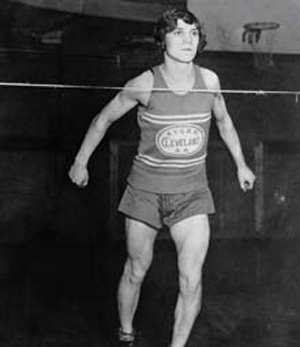
At one point, Stella Walsh, a Polish-American sprinter, was the fastest woman in the world.Stella-walsh She won gold in 1932 and silver in 1936 for the 100m sprint. During her career, she set more than 100 national and world records and was inducted into the American Track and Field Hall of Fame. She lived her entire life as a woman, and even had a short-lived marriage to an American man. In 1980, Walsh was killed by mistake during an armed robbery at a shopping mall in Cleveland, Ohio. The postmortem revealed she had male genitalia. She was also found to have both male and female chromosomes.