Why Won’t Same-Sex Marriage Opponents Go on the Record With Their Predictions?

by Peter Suderman

Opponents of same-sex marriage tend to cast it in the gloomiest, most terrifying light. Maggie Gallagher, for example, once wrote that it could "mean losing American civilization." But do they really have confidence in their predictions? Steve Chapman decides to find out:

I contacted three serious conservative thinkers who have written extensively about the dangers of allowing gay marriage and asked them to make simple, concrete predictions about measurable social indicators—marriage rates, divorce, out-of-wedlock births, child poverty, you name it.

You would think they would react like Albert Pujols when presented with a hanging curveball. Yet none was prepared to forecast what would happen in same-sex marriage states versus other states.

The View From Your Sickbed

by Patrick Appel

A reader writes:

The post from an ER pediatric physician hits close-to-home for me. He talks about the young teenager with chest pain, and wasteful tests that could be avoided by talking to the family and a simple examination. True, no doubt, but my story ends a little differently. My six year-old son had a chest cold, and our pediatrician while listening to his lungs thought perhaps he noticed a slight rubbing sound in his heart.

The pediatrician had never heard the sound before in examining my son, and was quite confident that it was not cardiac-related. But just to be sure, he suggested we see a pediatric cardiologist at a nationally recognized children’s hospital that just happened to be within an hour’s drive of our home, AND covered by my wife’s generous insurance. Our son seemed to be recovering from his cold just fine, and had no other symptoms, but we decided to get him checked out anyway because you can never be too sure with your own children. You know what’s coming next, right? The cardiologist conducted a full echocardiogram—very expensive, yes–which uncovered a major heart defect. My son had open-heart surgery, and has thankfully recovered beautifully. I’m all for figuring out a way to make the system less wasteful, but the technology exists for a purpose; to save lives like my son’s.

Worst Case Scenarios: Afghanistan Election Edition

by Patrick Appel

Believe it or not, this is one of Christian Brose's more cheery nightmare scenarios:

One worst case outcome is the Iran scenario — a disputed election result, allegations of fraud, and a drawn-out political fight laced with street protests and sporadic violence. This could be set off by either a narrow Karzai win or a suspicious Karzai blow-out (Ahmadinejad style). One could imagine days, even weeks, of protests by the losing candidates' supporters demanding a recount, or a revote if none is declared, ultimately leading to an unpopular Karzai dispatching the U.S.-backed Afghan security forces to do battle with his political opponents under the banner law and order.

Best Case Scenarios: Afghanistan Election Edition

by Patrick Appel

Shuja Nawaz was very optimistic about the election yesterday:

A successful Afghan election in which more than fifty percent of registered voters cast their votes may well have a positive 'Demonstration Effect' in the neighborhood. Pakistan and Tajikistan pay heed. Let the people decide. Don't decide for them.

Katherine Tiedemann rounds-up reports on voter turnout, which anecdotal evidence suggests may have been lower than 2004. Tiedemann is also live-blogging.

Video-Game Economics

by Peter Suderman

As I noted in my introductory post, in the past few weeks, I've spent more time playing Fable II than I'd really like to admit. Like recent entries in the Grand Theft Auto series, it's an open-world game that allows the player to travel to any location at any time and pick and choose between multiple available missions, some of which help complete the main storyline, some of which are simply entertaining diversions. 

Unlike the Grand Theft Auto games, however, Fable II relies heavily on role-playing game tropes: depending on what choices are made, characters can develop unique abilities, collect items that open up new game-play styles, and communicate with a world's worth of computer-controlled characters. 

There's plenty of action and adventure and tromping around the game's cartoony fantasy world. But what interests me most about Fable is that it's not just an action-fantasy game, it's also a clever economics simulator. 

In addition to the usual fantasy questions, players have the option to earn money through work: The game-world is made up of a series of quaint towns, most of which offer one or more "jobs" — bartender, blacksmith, etc. You don't really bartend or hammer out swords, but you do play various, simple arcade-style "mini-games" that increase with difficulty over time. And as the games get harder, you earn more money. 

That money can be used to buy from merchants in the towns, who sell you new clothes, food, magic potions, weapons, and other items that change your character's look and abilities. If you don't like the prices, you can even barter with the merchants by playing another "mini-game." And if you buy or find items you don't want, you can sell them to store owners — though you won't always get full value.

What's more, each of the towns has its own economy, which is either good or bad depending on the choices you make: Kill a lot of townspeople, or commit a lot of other "crimes," and the town's economy gets worse. Buy a lot of stuff from the local vendors, and the town's economy might improve. Sometimes stores have sales. Other times they have shortages. It's possible to take advantage of both by buying cheap — and then selling when demand is high. I know that other games employ similar mechanisms, but, from my limited experience, Fable II's economy does seem somewhat more developed than competitors. 

What's the point? Because games like Fable II don't involve the thousands of human players that massively-multiplayer online counterparts like World of Warcraft do, they aren't likely to be nearly as useful for conducting large-scale research into how market economies work. But it strikes me that they do suggest ways in which incredibly fun, addictive games might also serve as teaching tools. Imagine using a game like Fable II to teach middle- or high-schoolers about how markets work — supply, demand, prices, labor. As a kid, I played a primitive, monochrome video-game called Lemonade Stand that, by allowing players to "run" a virtual lemonade stand, was supposed to teach all those things, but it always seemed like work. Fable II, on the other hand, offers a smart, compelling, extremely well-produced virtual experience — and, with a little bit of tweaking, it or something like it might actually serve as a great tool for learning as well. 
Tort Reform Won’t Fix Healthcare?

by Patrick Appel

So reports Daphne Eviatar:

"It’s really just a distraction,” said Tom Baker, a professor at the University of Pennsylvania Law School and author of “The Medical Malpractice Myth.” “If you were to eliminate medical malpractice liability, even forgetting the negative consequences that would have for safety, accountability, and responsiveness, maybe we’d be talking about 1.5 percent of health care costs. So we’re not talking about real money. It’s small relative to the out-of-control cost of health care.”

Insurance costs about $50-$60 billion a year, Baker estimates. As for what’s often called “defensive medicine,” “there’s really no good study that’s been able to put a number on that,” said Baker.

More On The Future of the Public Option

by Conor Clarke

I got a bunch of emails about my last two posts on the public option, some of which were sharp and helpful, and some of which were just a teeny bit too loaded with insults for me to make much sense of one way or another. But I liked this one:

I'm kind of confused as to why you don't understand why House Democrats are drawing the line in the sand with regards to the Public Option. It's not the Public Option that they (and I) are attached to. Most of the House Dems who have pledged to vote "no" unless a healthcare bill contains a public option are single-payer advocates. Same with the people who are angry about it not being seen as essential. The Public Option IS the compromise. A pretty enormous compromise at that. […]

That makes sense. But it seems to me that there are three possible arguments here, and I'm kind of confused which one is intended. It could be: (1) The public option still has the important and desirable elements of a single-payer system; (2) The public option is a crappy compromise, but we're hoping it might somehow blossom into a single-payer system in the future; or (3) The public option was a compromise, and we are sick sick sick of compromising.

So which is it? I still think (1) is false. The public option is not the most important element of the proposed reforms. (And I notice Ezra Klein agrees.) Medicaid expansion, new private insurance requirements and consumer subsidies will do more. I understand the sinister appeal of (2), but I went to Catholic school and naturally cannot approve of such disingenuousness. And while sympathize with (3), I really do fear that the baby will drown in its bathwater if the public option becomes non-negotiable.

Reading Tea Leaves In Afghanistan

ElectionAfghanistan

by Patrick Appel

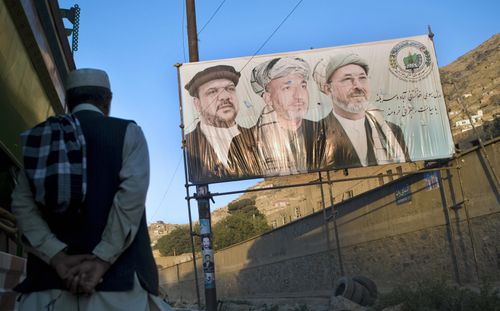
Sameer Lalwani describes why has been so hard to poll the country ahead of it's election, which took place today:

Afghanistan is still one of the poorest countries in the world with an extremely low telecommunications penetration rate. According to the International Telecommunication Union, there is less than one fixed phone line per thousand people. The world average is about nineteen per thousand. Afghan mobile phone usage has increased exponentially in recent years to 29 per thousand but this still remains half the global average. This telecom divide means phone polling tends to favor wealthier urban constituents and under-sample rural areas. Pollsters can correct for this with face-to-face interviews (as the IRI and Glevum Associates did in their recent election polls) though they are more time consuming and expensive. But polling in a conflict-zone incurs new sampling biases by tending to over-sample safer and less-conflict ridden areas.

Renard Sexton compares 2004 polling to 2009 polling.

(Image: An Afghan man walks alongside an electoral billboard with the picture of incumbent president Hamid Karzai (C) and running mates Mohamad Qasim Fahim (L) and Karim Khalili (R) in Kabul on August 19, 2009. Taliban gunmen struck inside the heavily guarded Afghan capital yesterday, police said, as the Islamist militia waged a bloody countdown to the war-torn country's second presidential election. By Pedro Ugarte/AFP/Getty Images)

Playing Video Games With Real Guns


by Peter Suderman

The geeks at Waterloo labs rig up the classic sci-fi shooter Half-Life to a big, wooden screen — and start firing away.

Not being a big fan of firearms myself (I don't understand the thrill, or the obsession), I don't think I'd like playing all that much (although the shovels option looks more my style). And as Gizmodo points out, these guys certainly certainly aren't doing any service to those of us who are skeptical of the links between video games and gun violence. Still, as geektastic science projects go, it's pretty fantastic — a minor nerd triumph, I'd say.