by Chris Bodenner
Month: September 2009
Sugar Rush
by Patrick Appel
Daniel Gross is suspicious of the cupcake bubble:
I'm suspicious of the durability of the cupcake boomlet on economic grounds, too. One colleague says the cupcakes are "sort of the baked equivalent of Bush's tax cuts." Why? "Their economic rationale withstands any and all conditions. When the economy is going well, people can afford little extras like cupcakes. When the economy isn't going well, people can afford only cupcakes." Indeed, they are being pitched as affordable luxuries. In an age when discretionary, feel-good spending is at a nadir, cupcake bakeries are trying to persuade people to trade up from cheaper sugar-delivery vehicles (such as, say, a doughnut). It's telling, to me, that the Crumbs that just opened in Westport, Conn., is in the back of a Tiffany's that opened a few years ago. With employment rising and wages under pressure, the larger trend is for consumers to trade down—not up.
Atlantic food critic Corby Kummer reviewed the fad some time ago.
Mental Health Break
by Chris Bodenner
Silence
by Patrick Appel
While taking aim at tech optimists and pessimists, Sara Maitland's A Book of Silence:
Maitland believes that our culture hates silence. We fear it, despise it, do anything to avoid it. Maitland moved to rural England in order to escape the noise of her city life, and in her book she examines the experience of silence and isolation, both voluntary and involuntary. She rather overstates her case, honestly. Anyone who lives in a city does not fear silence. They crave it, wish for it when the train rumbles by every 15 minutes all night long, or when the neighbor you're afraid of turns on the death metal until your apartment floor vibrates. She points to our constant noise-making as proof of our fear, but I think her examples are just our attempts to make the sounds around us friendlier. An iPod full of our favorite music is greatly preferred over random subway rumble and chatter, and texting or phoning your dearest is preferred over a roomful of strangers' conversation.
Face Of The Day
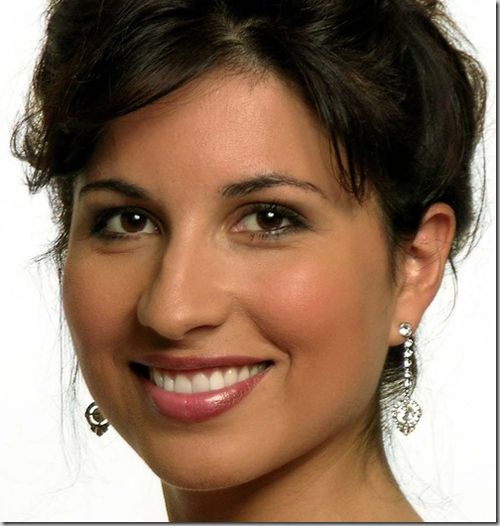
Surfing Gaza
by Patrick Appel
Brian Calvert reports on an unusual surf club:
Gaza is, among other things, a natural place to surf. Waves that build across 3,000 miles of the Mediterranean break on its beaches with surprising frequency and occasional intensity. But of course, Gaza is also the crowded home of 1.5 million refugees and descendants of refugees, isolated under an Israeli blockade and reeling from bombardment. If it weren’t for that grisly reality, outside surfers might find their way there. As it is, the handful of locals who ply Gaza’s beaches do so on a diminishing supply of ragged surfboards.
Western Traditions
by Patrick Appel
As a native Californian, this hits close to home:
The Hidden Economics Of Pirates
Merchant sailors quietly gave in to pirate attacks because of a principal-agent problem—it wasn’t their cargo—and because doing so enabled them to adopt a way of life that was a hundred to a thousand times more lucrative. Snelgrave may have been under the impression that pirates forced men to join, but this was for the most part a myth, devised for the sake of a legal defense if caught. Until their final, desperate days, pirates took few conscripts, because so many sailors begged to enlist and because conscripts had the unpleasant habit of absconding and testifying against pirates in court. As for the death-defying attitude—“a merry Life and a short one” was Bartholomew Roberts’s motto—pirates cultivated it to convince people that they had what economists call a high discount rate. If future punishments meant so little, their wildest threats were credible.
Crain adds a few final words about pirate treasure at his blog.
Wine Ratings
by Jonah Lehrer
You know those tiny gold medals that appear on wine labels? It turns out they’re mostly meaningless:
Writing in the Journal of Wine Economics, retired Cal State Humboldt professor Robert Hodgson said he looked at the results for more than 4,000 wines entered in 13 U.S. competitions in 2003 and found little consistency in what wines won gold medals. The study found that of almost 2,500 wines that were entered in more than three competitions, 47% won a gold medal in at least one contest.
However, of those gold medal winners, 98% were regarded as just above average or below in at least one of the other competitions. Hodgson said that demonstrated how little consistency there was.”Of the wines that entered five competitions and got at least one gold, about 75% also received no award in at least one of the remaining competitions,” he said.
In recent years, wine tasting has become a surprisingly popular experimental subject. Neuroscientists at Cal-Tech conducted an elaborate taste-test of California Cabernets in a brain scanner – more expensive wines taste better, even when they’re actually cheap plonk gussied up with a pretend price tag – while Frederic Brochet, a cognitive psychologist at the University of Bordeaux, explored the sensory frailties of wine “experts”.
The Brochet experiment went like this: he invited 54 experienced wine tasters to give their impressions of a red wine and a white wine. Not surprisingly, the experts described the wines with the standard set of adjectives: the red wine was “jammy” and full of “crushed red fruit.” The white wine, meanwhile, tasted of lemon, peaches, and honey. The next day, Brochet invited the wine experts back for another tasting. This time, however, he dyed the white wine with red food coloring, so that it looked as if they were tasting two red wines. The trick worked. The experts described the dyed white wine with the language typically used to describe red wines. The peaches and honey tasted like black currants.
According to Brochet, the lesson of his experiment is that our experience is the end result of an elaborate interpretive process, in which the brain parses our sensations based upon our expectations. If we think a wine is red, or that a certain brand is better, then we will interpret our senses to preserve that belief. Such distortions are a fundamental feature of the brain.
But the news for wine experts isn’t all bad. A large study published last year demonstrated that, although there’s a slightly negative correlation between the price of a wine and the pleasure it gives wine amateurs, oenophiles actually derive more pleasure from more expensive wines, even when tasted blind.
In a sample of more than 6,000 blind tastings, we find that the correlation between price and overall rating is small and negative, suggesting that individuals on average enjoy more expensive wines slightly less. For individuals with wine training, however, we find indications of a positive relationship between price and enjoyment. Our results indicate that both the prices of wines and wine recommendations by experts may be poor guides for non-expert wine consumers.
The View From Your Window

Philadelphia, Pennsylvania, 11.14 am
 The Dish