Buzzfeed compiles 21 blunders. Here’s one from the Cape: 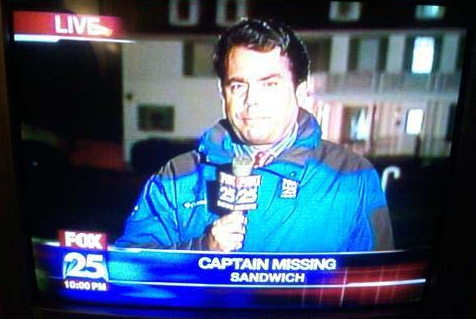 Another Dish fave after the jump:
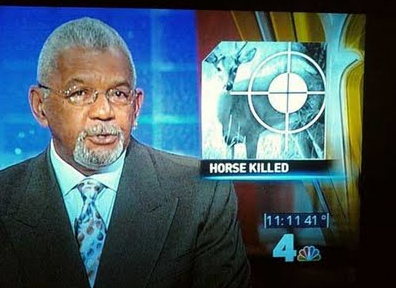
Buzzfeed compiles 21 blunders. Here’s one from the Cape: Another Dish fave after the jump:
Radio Free Europe does some reporting:
[Is] Afghanistan ready to hold a second vote on such short notice? Wadir Safi, a political analyst in Kabul, doesn't think so, and that considering the "logistical and security" issues the runoff entails, ensuring turnout high enough to give the election legitimacy will be difficult. "The turnout was quite low in the first round of the election, too. I don't think even 5 percent of the voters would take part in the second round," Safi says.
However, Safi predicts that, even in the event of low turnout and additional fraud, "the outcome of the runoff would be accepted by everyone" both in Afghanistan and the West. He says that this is despite the fact there "is no guarantee" that the runoff will be free of fraud. "The second round is going to be a symbolic act, not a real, free and fair election," Safi adds.
Money Magazine interviews Bruce Bartlett:
So are Republicans fighting the last war? What good are tax cuts when people have no income to tax? In this crisis we've run into the same problem we had in the Great Depression: a liquidity trap. Money isn't circulating. The stimulus package may have been over-sold by Obama, but the principle was correct. We need government spending to get out of the trap.
Do you support the idea of another stimulus package? No. The lags in implementation are so great that it would have no effect until long after the recovery is under way. And I think the makings of a fairly rapid recovery are here.
Nice to hear some optimism. My Republican friends, to a person, think that Obama's policies are going to be disastrous and that they'll be able to waltz into the White House in 2012. I keep asking, "What if you're wrong? What's your backup plan in case the economy does recover and Obama gets credit for bringing us out of the biggest crisis since the Depression?"
This is why equality will win in the end. In Maine, a World War II vet stood up for his son, and for the America he and so many others fought for:
Jason Zengerle reacts:
It's obviously significant that Karzai has not only agreed to a run-off, but has acquiesced to holding that run-off on November 7, rather than pushing it back until after the Afghan winter, as some thought he might try to do. And it does give the Obama administration some more room to operate. But how much? Just thinking in terms of timing, it's not likely we'll know the Afghan election results very soon after November 7; after all, we didn't get the final results of the August 20 election until just this week.
But is a couple weeks enough time to organize a second round of voting? And what is to ensure that similar fraud won't occur this time around?
Here's his self-defense from the Jerusalem Post this morning. Read the whole thing. I find it completely convincing just as I believe its publication in the Jerusalem Post is yet another reminder of the preciousness of Israeli democracy – unique in its region. Money quotes:
I believed strongly that our mission should have been allowed to visit Sderot and other parts of southern Israel that have been at the receiving end of unlawful attacks by many thousands of rockets and mortars fired at civilian targets by Hamas and other armed groups in Gaza. We were prevented from doing so by, what I believe, was a misguided decision by the Israeli government.
In Gaza, I was surprised and shocked by the destruction and misery there. I had not expected it. I did not anticipate that the IDF would have targeted civilians and civilian objects. I did not anticipate seeing the vast destruction of the economic infrastructure of Gaza including its agricultural lands, industrial factories, water supply and sanitation works. These are not military targets. I have not heard or read any government justification for this destruction.
Of course the children of Sderot and the children of Gaza have the same rights to protection under international law and that is why, notwithstanding the decision of the government of Israel, we took whatever steps were open to us to obtain information from victims and experts in southern Israel about the effects on their lives of sustained rocket and mortar attacks over a period of years. It was on the strength of those investigations that we held those attacks to constitute serious war crimes and possibly crimes against humanity.
The laws of war are the laws of war. It is not a defense of Israel to say that others have committed similar crimes. Under the Bush administration, the Geneva Conventions were held in contempt by the highest officials of the US government. Either we abide by these laws in the defense of civilization, or we become unwitting partners in the destruction of that civilization. The notion of collective punishment, of deterrence by civilian attrition and suffering, is as repugnant as assuming that every prisoner seized in the chaos of war is "the worst of the worst" and torturing them.
This is not easy against a ruthless, asymmetric enemy, whose war crimes are a first rather than a last resort. But it is necessary. It is necessary.
A reader writes:
I live in Maine. I've done some phonebanking for Question One. And the fact that you see no reason why kids should learn that homosexuality is part of the world is totally irrelevant to me, too.
You see, I'm charged with raising my son, and I'm wholly unconcerned with your views.
What concerns me is that my son understand the concept of equal rights for everyone. What concerns me is teaching him our duty to always better ourselves and the country we're so fortunate to live in. What concerns me is that his preschool conception of sharing actually grows into morality, and that he sees that even his father is bound by the same rules of care and concern for others. I'm straight. I don't have gay friends.
I don't have any affinity for 'gay culture'–if that's not an offensive term. That matters as little to me as does your opinion. I'm charged with raising my son, and if I don't teach him right from wrong, I've failed as a father.
I don't phonebank for No on One for gay couples, or gay friends, or gay rights. I do it for me, and I do it for him.
And hell, if you're ever in Maine and want to babysit …

A reader writes:
Some of the recent e-mails about whether faith is a choice reminded me of an incident back in 2001 in Germany. President Johannes Rau caused a stir when he said that it was impossible to be "proud" of being a German – after all, he hadn't done anything in order to be a German. I think some of the same logic is being applied here.
I don't agree with President Rau. While he might not have chosen to be born a German, he chose to remain a German – by not choosing to become an American, or a Canadian, or a citizen of any of the countries that might have been happy to have him. If a person is aware that a choice exists, then they have the freedom to keep doing what they're doing, or to alter their behavior.
I think that a similar thing holds
true for faith.
People are taught from a young age that one deity, or another, or none, exist. It's all they know. But for faith to really not be a choice, a person would have to hide in a cave for his whole life, not to experience the many other views of God. To even understand the word Allah, or atheism, or agnosticism, or Krishna, or any of the thousands of others, means that you have made a choice.
That's certainly the case with me. Obviously I was brought up a Catholic. It was ingrained in me in ways that will probably never change. But it was also open to me to challenge it or walk away or question or revolt – and over my lifetime I have done each one. I keep coming back, because in the search for truth and meaning, Catholicism, for all its current flaws and blind spots, remains truer for me than any other system of belief. But this in turn has led to a deeper and deeper frustration with religion as doctrine and a greater and greater interest in religion as practice.
This is where my own profound flaws as a human being come into play. And this is perhaps what every Christian should work on before pronouncing on anything moral or true. They will know we are Christians by by what we do, not by what we say.
A classic Weigel pwning.
The Economist has a thoughtful interview with Reihan. His thoughts on Paul:
My suspicion is that non-interventionism is going to enjoy a rebirth among conservatives. As memories of 9/11 fade and casualties continue to mount, a desire for an independent foreign policy with an inward focus—I won't call it isolationism—will reassert itself. Though I'm a firm believer in a more forward-leaning foreign policy (my instincts are more McCain than Paul), this is a good and healthy debate to have. So in that sense, Mr Paul is good for the party. I worry, however, that the Paul movement represents a turn from political realism.
Call me unprincipled, but I'm very confident that America's federal government will never return to its pre-New Deal state. And so having a large and vocal faction of the GOP that advocates dismantling the New Deal, the Great Society, the Progressive Era, and that's uncomfortable with Abraham Lincoln's Yankee Leviathan is not going to win over swing voters or contribute much to a 21st-century governing agenda.
All that said, the Paul movement is incredibly diverse, and his "Campaign for Liberty" has energised moderate libertarians as well as goldbugs. Overall, I'd say Mr Paul is a slight net positive.
 The Dish