Bitter, Party Of One

LIEBERMANTimSloan:AFP:Getty

Peter Beinart tries to determine why Joe Lieberman - a domestic liberal who regularly received "nearly perfect scores from the American Public Health Association, which backs a single-payer health-care system" – is suddenly trying to sink the public option:

Because he’s bitter. According to former staffers and associates, he was upset by his dismal showing in the 2004 Democratic presidential primary. And he was enraged by the tepid support he got from many party leaders in 2006, when he lost the Democratic primary to an anti-war activist and won reelection as an independent. Gradually, this personal alienation has eaten away at his liberal domestic views. His staff has grown markedly more conservative in recent years, and his closest friends in Congress are now Republicans John McCain and Lindsey Graham. For Lieberman, the personal has become political, and it has pushed him further to the right. […H]e's becoming a standard-issue conservative.

Make that a standard issue Republican.

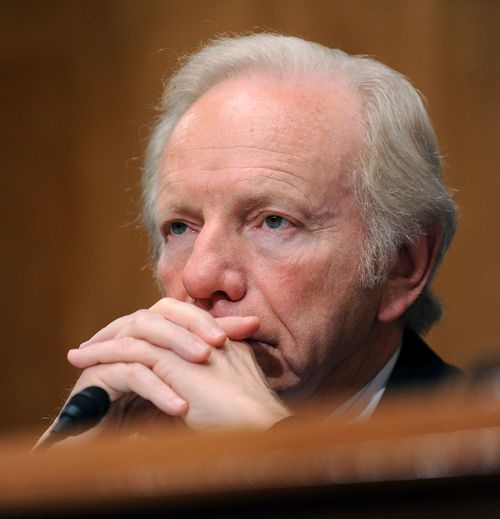
(Photo: US Senator and Chairman of the Senate Homeland Security and Governmental Affairs Committee, Joe Lieberman listens to testimony during a full committee hearing on 'The Fort Hood Attack: A Preliminary Assessment' on November 19, 2009 on Capitol Hill in Washington, DC.By Tim Sloan/AFP/Getty Images)

Beck: “We Need To Start Thinking Like The Chinese”

Conor Friedersdorf sizes up Glenn Beck's latest scheme:

Remember when Glenn Beck accused President Obama of winning followers like a totalitarian demagogue, warned against the nefarious tendencies of community organizers, and was himself defended against critics by Jonah Goldberg, who called Beck "a libertarian populist?” Now the cable television host is touting a "radical," details-to-be-announced mass movement that promises to save the United States. Its name: "The Plan."

It includes a series of adult education seminars where citizens will be taught political activism, self-reliance, and the dread community organizing. The often tearful Fox News personality also promises a book that will include more specifics.

"We need to start thinking like the Chinese," Mr. Beck said at a recent rally. "I’m developing a 100 year plan for America."

At long last, prudent conservatives and libertarians are growing uncomfortable with Mr. Beck's rhetoric. I hope Mr. Goldberg is among them, as there isn't anyone better to write a National Review take-down of The Plan, titled Libertarian Fascism: How Glenn Beck Got Cover from the Right Until It Was Too Late to Stop Him. It wouldn’t require much work. Large excerpts could be copied and pasted from the paperback version of Liberal Fascism, Mr. Goldberg’s recent bestseller.

The weird thing is: some aspects of the current tea-party movement appeal to me. Its deep concern with debt and spending is shared by the Dish and has been since its inception. And a conservative critique of unrestrained capitalism – especially the reckless speculation and banking sector in the past decade – is vital if we are to save capitalism from itself. But Beck is not Richard Posner or Bruce Bartlett or Charles Murray, whose ideas are worth taking seriously. As Charles Murray puts it:

"Beck uses tactics that include tiny snippets of film as proof of a person’s worldview, guilt by association, insinuation, and occasionally outright goofs like the fake quote. To put it another way, I as a viewer have no way to judge whether Beck is right. I have to trust that the snippets are not taken out of context, that the dubious association between A and B actually has evidence to support it, and that his numbers are accurate. It is impossible to have that trust."

No wonder Palin feels a kindred spirit. The two of them represent the degenerate expression of cliches that used to be ideas (and ideas worth retaining and adjusting to new circumstances). But the vessel for rethinking will not come from proud ignoramuses and populist Elmer Gantrys. It will not come from reiterating propaganda but from confronting unpleasant facts about conservatism's recent catastrophic failures and mistakes.

They're not thinking; they're emoting.

They're not engaged in reforming conservatism; they're engaged in escapist denialism about real problems.

They are a sign of profound cultural sickness, not resurgent political and civic health.
Britain’s Complicity In Torture

Human Rights Watch releases a new report:

The damning report, which the UN body says is based on interviews with the suspects, their families and lawyers, warned the UK government that it was on the verge of losing its moral  Dastmalchi20091124183931171 legitimacy as it faces a "legally, morally and politically invidious position".
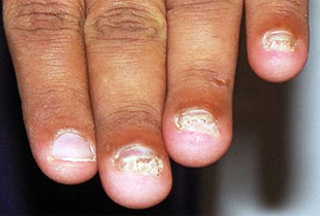
It added that British officials who interrogated four suspects detained in Pakistan could not have missed "clear and visible signs of torture" including the removal of fingernails. The report concluded that "the UK complicity is clear" despite a lack of evidence indicating direct involvement.

British and American agents involved in one case were not only "perfectly aware that we were using all means possible to extract information…[but]…grateful that we were doing so," one Pakistani intelligence source told HRW.

Notice that American agents were involved as well. Norm Geras writes:

HRW's finding of British complicity in torture is … a matter for serious concern and its demand for an independent public inquiry fully justified. Crucial in this regard is the finding that:

In… five cases, British officials and agents first colluded with illegal detention by the Pakistan authorities and then took the collusion further by repeatedly interviewing or passing questions to the detainees between or during torture sessions. [Italics mine.]

Article 4.1 of the UN Convention Against Torture reads:

Each State Party shall ensure that all acts of torture are offences under its criminal law. The same shall apply to an attempt to commit torture and to an act by any person which constitutes complicity or participation in torture.

Generalized statements by government ministers on this matter do not answer to the gravity of the findings in HRW's report. An inquiry is called for.

Agreed. And the responsible parties need to be held accountable – under the law. Including, if necessary, former prime minister Tony Blair and current prime minister Gordon Brown.

Quote For The Day

"Is a sociopath sane?" legislative aide John Bitney, on his former boss, Sarah Palin.

Bitney is the latest to claim that Going Rogue is full of fabrications:

"I'm just pilloried right and left and turned into the big bad wolf here for stuff I didn't do," said Bitney, who is now an aide to Valdez Republican Rep. John Harris. "It's like I'm this fictional character that she's decided to make me out to be this sort of incompetent slob." …

Bitney said he tried to be fair to Palin when national media kept "crawling up my backside" over the past year to interview him about her. But the book is too much, he said. "I've had it. Enough. Just enough; leave me alone," he said.

Why I Remain Bullish On Obama

A reader writes:

I agree wholeheartedly. As you also said recently, we have a president. He’s doing what I wanted him to do — think, take his time, take the long view. I don’t and won’t agree with everything, and he’ll be limited by reality at every turn, but I have faith that he’ll do his best, and faith that his best is very good.

He also, to my admiration, has faith in the democratic process, however messy it gets. While I’ve been pretty aghast at what the debate over health care has looked and sounded like, I’m very glad we’re having it.

John Cronin, who’s spent his life doing environmental work, made an excellent point a few years ago.

He compared the environmental movement to the civil rights movement. The latter convulsed the country. Everyone was thinking about it, debating it, yelling at someone else, throwing rocks, marching, weeping, going to jail. No one missed it! And in the end, the Civil Rights Act was passed. It didn’t solve a lot of problems right away, but no politician since has ever dared run on a platform of returning to segregation. And, slowly, it did make a difference, though we are still on the path.

The environmental movement never had that convulsive argument. The EPA was established in the Nixon era (still something of a surprise) and the government began to regulate in a piecemeal fashion. Because there was never a cultural defining of what we want our environmental policies to do for us, they are always at the mercy of the next round of polemics.

So, yes, there’s been some real insanity in the health care debate. Not as bad as murdering little girls, mowing down people with fire hoses, or stoning school buses full of children, however. And we’ll come out of it thinking about what health care in our modern society should look like. And I’m willing to bet this is just what Obama wants.

The point is: it's been so long that we had this kind of politics we cannot quite absorb it. But history will judge it in ways our current frenzied moment cannot.

Who Is The Adult In The Room?

Christopher Orr doesn't understand the Palin-Johnston feud:

The obvious, immensely easy play here would be for [Palin] to make up publicly with the boy. But even if that's too much–as it obviously is–you'd think she could manage some high-road blather when asked about Johnston ("We've had our disagreements, as you all know, but he's  good kid and I hope it all works out for him in the end") and could avoid bringing him up altogether when she's asked about something else, as in this case. But, no, she somehow seems to believe–and no one close to her can evidently dissuade her–that if she can win a war of words with a semi-employed, 19-year-old high-school dropout, it will amount to an actual victory for her.

Health Incentive Plans

Austin Frakt wants to wants to change how we think about health insurance:

Charging copayments that vary with the efficacy and cost-efficiency of the service is an important concept in benefit design. A “benefit-based” or “value-based” cost-sharing system sets copayment levels lower for therapies proven effective and higher for costly benefits with little or no clinical value. Today health insurance plans do a poor job of aligning cost incentives with benefits of therapy.

I don’t blame insurers. It is a genuinely hard problem, and there is a lack of data on what therapies are more effective compared to substitutes. Moreover, even when data exist attempts to change provider practice and consumer utilization patterns based on it can be controversial. Nevertheless, in time and with more research health plans and the health system in which they operate can, should, and must do a better job of aligning incentives with efficacy. Part of the solution is to think of health plans not only as insurance but as health incentive plans.