The Swiss Ban Minarets, Ctd

3QD reader Cyrus Hall writes:

My temporary home of the last five years, Switzerland, has just voted for one of the most Switzerland-minarets bigoted and undemocratic constitutional reforms in recent memory: the banning of Islamic minarets on Mosques.  The vote appears to be quite stunning, with 58% of voters backing the ban.  This was after the most recent polls showed the measure being rejected by 53%, a story in itself.
This represents the most direct attack on the European Muslim minority yet.  The French "headscarf ban" was at least religion neutral — something I would still argue against (as an Atheist), but I appreciate the attempt at even-handedness.  On the other hand, this constitutional amendment targets a small, largely immigrant population (many of whom have no vote), single-handedly banning them from behavior that would be perfectly acceptable were they of any other faith. Outrageous.

A Dish reader dissents:

Your “Good God” response makes you sound like a knee-jerk liberal, Andrew, as well as making your own toleration seem as shallow as your accusation of that of Europe. To this agnostic Buddhist-leaning Massachusetts Democrat, the response of the Swiss makes perfect sense.

The 2009 estimated population of Switzerland is 7.7 million. The article you link says there are 400,000 Muslims in Switzerland. That makes 5.19% of the population. Why should the other 94.81% of the population agree to the building of towers whose function is to broadcast foreign peoples’ foreign language calls-to-prayer five times a day? Can you think of a clumsier way for 5% of the population to piss off the other 95%? I have no problem with anyone wanting to practice their religion so long as it hurts no one else. And I also have no problem with the Swiss being unwilling to listen to “Allahu akbar, etc.” at dawn, noon, afternoon, sunset and nightfall. The Roman Catholic church down the street from me has a carillon that rings the hours. I like it; it’s pretty and it provides a useful function for the entire neighborhood. But, if it broadcast its priest intoning “Introibo ad altare Dei” every time Mass was said, I’d be on the phone to City Hall every time I heard it.

There are currently four minarets in all of Switzerland. None conduct the call to prayer. Moreover, there is no distinction between "foreign peoples" and Swiss-born Muslims. This is a fascistic act and a profound attack on religious freedom. We will see soon enough if the Christianists who regularly bloviate about religious liberty utter a single sound of protest.

Rick Warren, Silent Enabler Of Hatred

One of Rick Warren's (and president George W. Bush's) longtime allies in Uganda, Martin Ssempe, is the author of a classic piece of minority-baiting legislation. Its details belong in the history of genocidal hatred:

The Ugandan penal code already criminalizes sexual relations "against the order of nature," a characterization that is frequently used to prosecute gays. Under the proposed Anti-Homosexuality Bill of 2009, homosexual relations are specifically targeted. Anyone in a position of authority who is aware of a gay or lesbian individual has 24 hours to inform police or face jail time. Individuals found to engage in efforts to sexually stimulate another for the purpose of homosexual relations, or found touching another for that purpose, will face life in prison. Those who engage in "aggravated homosexuality" — defined as repeated homosexual relations or sexual contact with others who are HIV/AIDS infected — will face the death penalty.

This is an act of terror and murder against an already beleaguered minority, and Warren is an accessory to it. As a powerful figure in distributing AIDS funding in Uganda, he cannot bring himself to oppose a law that would condemn someone in a gay relationship to death, and imprison him or her for touching another human being, and inciting a wave of informing on family members and friends and acquaintances in order to terrify a sexual minority. This alleged man of God cannot speak out on this – except to protect his own p.r. His schtick of actually being the nice evangelical – a schtick that got him to Obama's inauguration – is a lie. If he cannot condemn this fascist act of violence against a tiny minority of vulnerable human beings, then his position in this struggle is clear enough.

Just as he publicly inveighed in favor of stripping gay couples of civil equality in California, and then pretended he didn't, now he distances himself from Ssempe, while refusing to condemn this law reminiscent of early attempts to wipe out minorities in Serbia, Nazi Germany, and Rwanda. This is classic avoidance in an atmosphere of extreme danger. It is the same as the Catholic church's disgraceful neutrality in Rwanda and Nazi Germany, as they saw a chance to enable others to wipe out a minority they wished could be wiped off the face of the earth:

Warren won't go so far as to condemn the legislation itself. A request for a broader reaction to the proposed Ugandan anti-homosexual laws generated this response: "The fundamental dignity of every person, our right to be free, and the freedom to make moral choices are gifts endowed by God, our creator. However, it is not my personal calling as a pastor in America to comment or interfere in the political process of other nations." On Meet the Press this morning, he reiterated this neutral stance in a different context: "As a pastor, my job is to encourage, to support. I never take sides."

He lies. He has taken sides, whenever possible, to stigmatize, demonize and now physically threaten the lives of gay people in his own country and abroad. And his silence on this issue means the deaths of others. Warren needs to come out and condemn this law as evil, which it is. And to stop hiding his own enmeshment with the most virulent forms of fundamentalist hatred under the veil of media-savvy benevolence.

Fundamentalist Politics: In India And America

A reader writes:

Perhaps the Democrats can look to India for reasons to be optimistic.  At this time, the BJP is in electoral ruins, aided by their rank and honest fundamentalism. They've been smashed by Congress for two elections in a row and the report on Ayodhya is about as damning as can be. In response, the hardcore base is working to eliminate anyone who can lead them out of the wilderness. Just as in the GOP, this is done in a pursuit of ideological purity.  The only difference is the

religion being espoused.

The RSS, which provides the ideological grounding of Hindu nationalism, as well as a significant section of the ground game, has forced Jaswant Singh out for the simple act of praising the founder of Pakistan. They've warned all other moderates to basically shut up and toe the party line. No one seems to remember that the BJP became nationally popular thanks to a pragmatic program of economic growth, reducing corruption, and downplaying Hindutva.  Again, the moderates in the party are bemoaning these trends, and warn that divisive communalism may lead to short term electoral gain, but will ultimately lead to total marginalization.  No one is listening. 

There are clearly huge differences between the American and Indian electorates, but both seem sick of politics based on fear of the other, aside from a paranoid minority that has no positive identity, only one framed in opposition.  This minority is geographically concentrated.  In the US, it's the South.  In India, it's the Cow Belt. 

How’s That Iraqi Surge Faring Now, General?

PETRAEUSWinMcNamee:Getty

As Obama considers adding yet more troops to the near-decade-long occupation of Afghanistan, Iraq cannot muster sufficient political consensus to organize the elections critical to the departure of 120,000 US troops. The Beltway consensus that Iraq has already been a victory was always more about the Beltway than Iraq, and more about sustaining neo-imperial morale rather than confronting reality. The Beltway doesn't do reality very well. They prefer Palin and "bending the cost curve" and "exit-ramps" and "optics".

So let's confront reality and remember exactly what the Iraq "surge" was designed to achieve when it was launched in 2007. It was designed to create a security environment in which a new Iraqi political settlement could be hammered out between the various sectarian factions. On this critical test, the surge did prevent more chaos and disintegration, largely because of a well-exploited spontaneous shift in the loyalty of several Sunni tribes. But the vital – indeed central -  task of ensuring that the minority Sunnis have a real stake in the new Iraq (central because it's the core guarantee that a civil sectarian war won't break out again) has not been accomplished.

In fact, recent events suggest a move backwards as the entropy of the Arab and Muslim world reasserts itself. Sectarian violence is up. Little integration of Sunnis in the largely Shiite "national" military has occurred. Core questions of Sunni representation and central issues of territory – such as the Kurdish-Arab fight over Kirkuk – remain unresolved. Lawmakers who told the Americans they were past sectarianism are stoking it again:

Mr. Hashimi, a Sunni who told me not long ago that Iraq was now ready for historic reconciliation, was widely accused of acting in a purely sectarian way to ensure more votes for his bloc. The Parliament’s Shiite and Kurdish blocs promptly joined forces in last week’s session and, despite intense American lobbying, passed yet another election law

that would reduce Sunni seats even more.

To summarize the NYT today:

Adopting legislation to knit the country together; reforming the Constitution; strengthening independent security forces; reconciling Iraq’s Shiites, Sunnis and Kurds — all were benchmarks, and all remain partly or wholly unmet, despite the security gains that were supposed to create the space for political progress and thus peace. Instead, Iraqis treat their Constitution — like the benchmarks — the way they treat what few traffic lights operate here. “So what?” a Kurdish lawmaker, Mahmoud Othman, said when asked about the risk of holding the election later than the Constitution demands.

“Nothing in Iraq is very legitimate.”

All the surge did was provide a face-saving way for the US to create enough temporary security to leave. Given the chaos of the first four years of occupation, this was an achievement. But the achievement was in preventing total humiliation for the US, not anything close to victory or success stable enough to leave with anything but another civil war as the likeliest outcome. But the US didn't leave, Obama took the neocon advice, and is still hanging on to the notion that a stable, democratic, self-governing Iraq is possible after only six years of occupation, tens of thousands of dead Iraqis, 5,000 dead Americans, countless wounded and disabled vets, and up to $3 trillion in taxpayers' money.

As Obama appears to be intensifying the lost war in Afghanistan, with the same benchmark rubric that meant next-to-nothing in the end in Iraq, he does not seem to understand that he will either have to withdraw US troops from Iraq as it slides into new chaos, or he will have to keep the troops there for ever, as the neocons always intended. Or he will have to finance and run two hot wars simultaneously. If he ramps up Afghanistan and delays Iraq withdrawal, he will lose his base. If he does the full metal neocon as he is being urged to, he should not be deluded in believing the GOP will in any way support him. They will oppose him every step of every initiative. They will call him incompetent if Afghanistan deteriorates, they will call him a terrorist-lover if he withdraws, they will call him a traitor if he does not do everything they want, and they will eventually turn on him and demand withdrawal, just as they did in the Balkans with Clinton. Obama's middle way, I fear, is deeper and deeper into a trap, and the abandonment of a historic opportunity to get out.

I pray I'm wrong. Maybe Iraq will teeter away from a second implosion. Maybe the Af-Pak strategy is credible in a way Iraq's surge never was. We have yet to hear the president's explanation and we would do well to ponder his proposal as thoroughly as he has.

But I fear Bush's wars will destroy Obama as they destroyed Bush. Because they are unwinnable; and because the US is bankrupt; and because neither Iraq nor Afghanistan will ever be normal functioning societies in our lifetimes.

You want empire? Then say so and get on with it – with far more forces, and massive cuts in domestic spending to rebuild thankless Muslim population centers thousands of miles from home for decades into the future.

You do not want empire? Then leave.

Those are the presidential level choices.

And neither Bush nor, it seems, Obama has the strength to make them.

The Weekend Wrap

On the Dish over the weekend we learned that the Iranian regime threw another nuclear tantrum, the Swiss banned Muslim minarets, and "The Family" funded the horrifying anti-gay campaign in Uganda. We also tracked the EAU climate-change scandal here, here, here, and here. Also, Andrew dissected Krauthammer's latest take on the climate issue.

In other political coverage, Fallows recorded Obama's under-reported gains in Asia, a DailyKos poll showed the president's base cracking, Reihan compared healthcare reform to the Iraq invasion, and Gabriel Arana analyzed the case that could make or break gay rights at the federal level.

In cultural coverage, Tehran Bureau investigated sexting on the subway, Rachel Kramer Bussel brought some sexy sites, Matt Zoller Seitz spotlighted cooking in cinema, Matt Sigl nuked George Lucas, and Betsy Phillips fought Safran Foer and the book industry. And don't miss Hanna Rosin's report on the prosperity gospel and how it harmed the housing crisis.

In Palin postings, Andrew Halcro tore apart Going Rogue, a theocon supporter wrung his hands over the book, and the former governor kept up her quitting streak. The Dish posted two particularly unique Window Views here and here. (Buy the book version here.) In case you didn't know already, toddlers are terrible at everything. And if you missed our Thanksgiving Wrap, go here.

— C.B.

Chart Of The Day, Ctd

The graph the Fredgraph

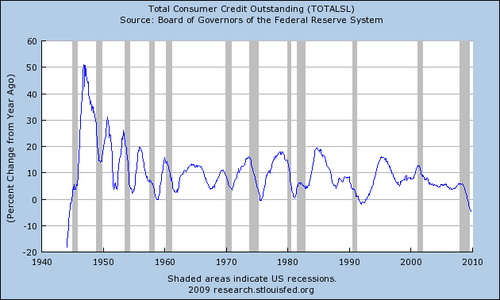
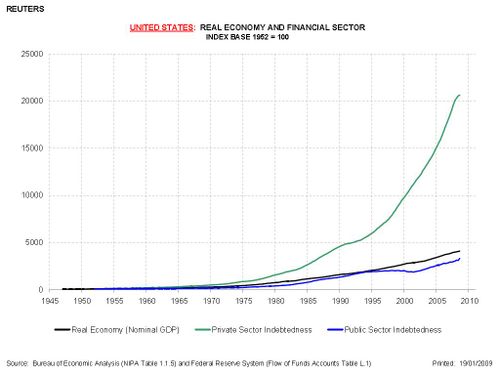
When you look at a graph of private sector indebtedness since 1950, you can see how the era of thrift really did collapse most profoundly in the last two decades – beginning in 1980 and growing fastest under George W. "Deficits Don't Matter" Bush. Under Bush public debt also went up again after a period of restraint in the Clinton-Gingrich years:

Growth-of-private-debt-burden

The Prosperity Gospel And The Subprime Collapse, Ctd

Rosin-prosperity-gospel-wide

A reader writes:

As so often, Tocqueville got there first:

"Not only do the American practice their religion out of self-interest, but they often even place in this world the interest which they have in practicing it. Priests in the Middle Ages spoke of nothing but the other life; they hardly took any trouble to prove that a sincere Christian might be happy here below. But preachers in America are continually coming down to earth. Indeed they find it difficult to take their eyes off it. The better to touch their hearers, they are forever pointing out how religious beliefs favor freedom and public order, and it is often difficult to be sure when listening to them whether the main object of religion is to procure eternal felicity in the next world or prosperity in this."  Tocqueville, Democracy in America, Vol. II, Part 2, ch. 9

It actually struck me as curious Rosin didn't mention this passage or others. Well, not really.

Notice a few pages later Tocqueville has a moving section on how American are "Restless in the Midst of Prosperity." A brief passage:

"When everything is more or less level, the slightest variation is noticed. Hence the more equal men are, the more insatiable will be their longing for equality…That is the reason for the strange melancholy often haunting inhabitants of democracies in the midst of abundance, and of that disgust with life sometimes gripping them in calm and easy circumstances."

In short, there's almost an intrinsic connection between the Prosperity Gospel (and the broader culture of which it is a part) and Prozac Nation. Ha.

(Image: Mark Peterson/Redux.)

Paper And Pixels Coming Together

A reader writes:

It took a few posts to convince me but I ordered the book today, not for myself but as a holiday gift for my mother. I am still relatively young and try to be rather mobile, thus another book to unpack and repack each year holds limited appeal, especially seeing that I have saved most of my favorite "views" on my laptop. My mother, on the other hand, was initially excited when I explained the concept behind the idea of the pictures, but lacked the internet skills to track back through your blog and see the old posts.

This brings me to my point though, which is that I hope her exposure to the book will create an urge for her to get accustomed to visiting your blog more often and broadening her media appetite as well. Even for those who see little utility in collecting books on paper (namely those of us already inundated with graduate school reading), they can use the Dish's book to shamelessly draw an innocent friend or relative into your blog.

From new media to old media to new media: it's the content that counts.

Chuang Tzu And Christianity

Chaff

A reader writes:

I wonder if you realize what you may have have unintentionally affirmed. Chuang Tzu did not believe that even someone as close to him as his own son could grasp the essence of his craft through words. But one could imagine that his boy, watching and imitating for years in kata-like fashion would also have experimented and honed his own senses enough to become a creditable wheelright. Similarly, Chuang Tzu wrote beautiful metaphoric hints, not a definitive manual on wheel-craft for future aspirants to live by.

If Chuang Junior wrote such a manual, it would not have his father's approval. And the further from the source such manuals appeared, the dodgier they would become. In fact he knew that his own writings on Taoism became truth-less the moment they hit the page.

So how does this sit with Christianity?

A few hundred years after Chang Tzu, Jesus also attracted a flock of seekers. In whatever time they had with him, they witnessed and absorbed some of the seriousness of his commitment to the Lord. The most blessed of these apprentices eventually became journeyman or master sages in their own right. But to spread this gospel to larger populations, they had to resort to the written word. Let's even ignore the misinterpretations, additions, subtractions and purposeful distortions that dogged this written account through the past 2000 years.

According to Chuang Tzu's logic, once Jesus died, anything written by or about him became chaff and dregs. Shouldn't the Taoist, or Oakshottian/Conservative opinion be that the Christian Bible qualifies only as a an intriguing collection of allegories/koans (with some additional factors of of historical or aesthetic interest)? It might serve as a guide to social morality (more Confucian than Taoist).

But as a substitute for having a real-time mentor in the flesh to submit to and model oneself after — zippo. And as a manual for developing one's own actual craft of spirituality, or preaching to others — hardly worth thinking about. Why listen at all to ministers purveying the "popular, degenerate amalgam" of politics, prosperity magic, xenophobia, and bland pop-psychology that Christianity has become? Or priests who insist on the traditional, "original" approach? Or anyone who claims authority by linking to Jesus?

Why not emulate Jesus or Chuang-Tzu the best we can instead of worshiping them, or their written chaff? Or if we want mentoring, why not befriend a living sage (they are out there), someone who is steeped in the riches of silent contemplation rather than silk vestments, flashy cars, social taboos or political crusades?

Andrew, I know so many people want to bust your chops for not leaving the Catholic church. I think that's begging the question. Why assume that an edifice with another style of architecture will make the critical difference? Every extant religion has a mystical core, and at the deepest level, those cores all point in the same direction. That's not the problem. It's all the other layers of mindless extrapolation that have gummed up the works in the days since the Original ascetic/mystic left this world.

This is surely where Merton was heading when he died. Oakeshott, for his part, was a Christian modernist, a believer that any religion that clung to ancient doctrines rather than present practice was in effect dead. His life and writing began and ended with this question (and, if you want to read my first take on this, see Chapter 5 in Intimations Pursued, "The Claims Of Religion). I fear that much of what Jesus would have understood as being-with-God is in crisis within the current church, in all its forms. And the challenge for Christians today is to recover being-with-God in ways liberated in part from the chaffs and dregs of ecclesiastical corruption and evil.