Ahmadi’s Green Herpes

Graeme Wood's feelings about the green revolution:

It would be awfully difficult to grind down the opposition so thoroughly that even the graffiti ceased. (After all, there is anti-government even in North Korea.) My sense is that the government regards the opposition now as something like herpes, capable of being managed but never cured. After all, the Mousavi opposition has — unlike the Kurdish, Sunni, and Mujahedin-e Khalq oppositions — never entered a violent phase, and successful political non-violence normally requires unsuccessful political violence as a prerequisite. The 2009 election will be always remembered as stolen, particularly by the young, but fury about the theft doesn't appear to be enduring enough to instigate change on its own. This generation's activists knew hope, briefly, but will have to get a little better acquainted with despair before they know it again.

What The Tories Can Teach The GOP

Frum has a lesson plan:

The leader you want is someone who appeals to the voters you need to gain, not the voters you already have.

American conservatism is in trouble for many reasons, but the most direct and immediate is the swing away from conservatism by edu­cated and professional voters, once the backbone of the Republican party, and especially by educated and pro­fessional women. American conservatives have become very skilled at speaking to the swing voters of a genera­tion ago: northern white ethnic Catholics and southern white Protestants, the famous “Reagan Democrats.” Conservative Democrats today make up only about 6 percent of the American electorate. By contrast, college-educated white women make up more than 15 percent of the electorate. It is foolhardy to choose leaders who woo the first group if they repel the latter.

The Daily Wrap

Today on the Dish, Andrew reacted to the president's startling decision not to decide, yet, on Afghanistan, while Exum, Ackerman, and Sully addressed Eikenberry's anxiety. Andrew also addressed the surprise move by the LDS to support gay rights and tackled the Catholic Church for overemphasizing abortion in healthcare. A reader added her thoughts on the latter. Laura Rozen updated us on US-Israel relations.

In other news, the Onion exposed the real reason for Lou Dobbs' departure and Matt Cooper pondered his political career. AMA and DiA chipped away at marijuana classification, Dan Savage brought the wisdom on marriage, and Charles Johnson and Marty Beckerman shared their recovering Republicanism. And some rraders gave their perspective on Muslim-Americans. 

In a historic moment for the Dish today, Andrew blogged from 35,000 feet.

— C.B.

Dissent Of The Day

A reader writes:

In “The Other Lesson of Fort Hood” you once again you throw out the claim that Muslims in Europe are more violent or dangerous then Muslims in the United States. I don’t think you’ve really thought this through.

The Muslim population in Europe is many times the size of the Muslim population in the US. As your reader points out, their are less then two million Muslims in America, or considerably less then 1% of the population. That’s compared to something like 10% in Paris and London, and over 20% in Amsterdam and Marseilles. Muslims are the largest minority in Europe. Despite that fact, incidents like the Ft. Hood shooting remain incredibly rare.

Yes, there are occasional acts of violence carried out by lone nuts, like the murder of Theo Van Gogh. These incidents happen in the States as well (the attack in El Al at LAX, the murder of an army recruiter in Arkansas). Do you have any data or research that such acts happen with greater frequency amongst Muslims in Europe? I’d love to see it.

Yes, there may be more social tensions with Muslims in Europe. Remember, as the largest minority, Muslims are the equivalent of Latino immigrants in America, and think for a second of the cultural and social resentment that they face. Muslims in America don’t face such tensions to the same extent because as a smaller minority they are less visible, and because America is more pluralistic and less moralistic about culture (no one in the States would seriously suggest the banning of the Hijab in public schools like in France).

What writers like Christopher Caldwell get wrong is that they think European Muslims are somehow more of a threat because of these tensions and issues, not considering that they are bound to come with being the largest and most visible minority in any society. But when you consider the size of the population, I don’t see any evidence that European Muslims are individually more prone to Jihad then American ones (and they certainly don’t have the same easy access to weapons). Yes, there have been terrorist plots broken up (some of them, like in the States, exaggerated by law enforcement). Yes, there have been European Muslims who have committed individual violent acts like Major Hasan did (though rarely as effectively). And yes, walking through, say, the 19th Arrondissement of Paris gives you the same cultural dissonance as walking through, well, 80% of Los Angeles. But to reflexively tar European Muslims with being more prone to violence and separation then those in America is facile.

Face Of The Day

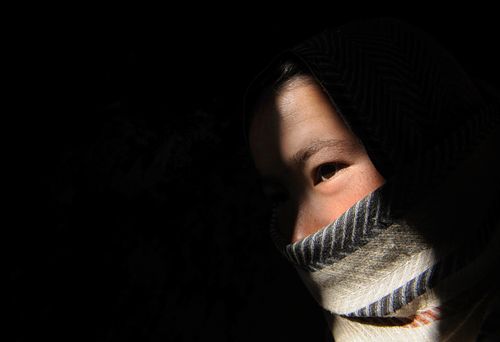
AfghanWomanShahMaraiGetty2
An Afghan woman sits in her cave early in the morning in Bamiyan on November 10, 2009. The cave dwellers here are all Hazara, who are religiously and ethnically distinct and survivors of intense persecution by the Taliban. Bamiyan, some 200 km (124 miles) northwest of Kabul, stands in a deep green and lush valley stretching 100 km through central Afghanistan, on the former Silk Road that once linked China with Central Asia and beyond. The town was home to two nearly 2,000-year-old Buddha statues before they were destroyed by the Taliban, months before their regime was toppled in a US-led invasion in late 2001. By Shah Marai/Getty.

The Church In The Castro, Ctd

A reader writes:

(Small correction; it's "Most Holy Redeemer.")  I was a member there and sang in the choir for several years when William Levada, who is now Prefect of the Congregation for the Doctrine of the Faith in the Vatican, was archbishop.  The church was absolutely full every week, thanks to the visionary priest assigned there in the early '80's to close it down due to poor numbers but who instead roamed the Castro is his clerical garb engaging disaffected former Catholics in conversation and asking them to "just show up" and see if there wasn't some way the Church and they could find a middle ground.

The parish never had any trouble making its obligatory payments to the archdiocese, so our reactionary archbishop kept his distance and let us do our thing, which was to worship and pray as both faithful & questioning Catholics.  The pastor and his assisting priest, a remarkable older man assigned from the Oblates of Mary Immaculate (OMI) order and who was the finest homilist I'd ever heard, were terrific.  I said then and still do that MHR is an excellent model of what the Catholic church can and should be in practice.  I'm afraid what the Catholic Church is currently doing instead right now is sowing the seeds of its ultimate demise in generations to come, which is too bad.  Vatican II and John XXIII showed the world in one shining moment that it really has so much more to offer, and rare parishes such as MHR continue to be the living proof.

Another writes:

Your post on Most Holy Redeemer Church brought a tear to my eye because both my Irish Catholic grandmother and my Italian Catholic grandfather spent their last days in hospice care at Most Holy Redeemer.  When they died (of cancer in 1989 and 1991, respectively), the AIDS epidemic had caused widespread devastation in San Francisco particularly.  As you can imagine, many of the other people in hospice were gay men at last yielding to a disease which had no cure and (at the time) very limited treatment options.  At least here these men dying of AIDS were surrounded by love and compassion from their friends and caregivers. 

As my mother and her sisters prepared to mourn their parents, these men were mourning their friends and lovers.  United by death, they were also embraced by a respect for life.  Like many Catholics, my family experienced the cultural upheavals of the 1960s and Vatican II, with many family members leaving the fold and others staying, and I still have conflicted feelings about the Church's medieval attitudes towards women and gays.  But in San Francisco, at least, in what many regard as the most tolerant city in the country, we found a refuge when we needed it. 

There's clearly much work to be done in bringing people together and resolving conflicts, but I'm glad to see that such an inclusive place still exists 20 years after we said goodbye to my grandparents.

Another:

When I find myself struggling with love, I reread I Corinthians: 13.

Reefer Sanity, Ctd

DiA makes some good points:

I never quite processed the fact until I read this article, on the AMA recommending renewed study of the medical utility of cannabis, that the federal government actually restricts marijuana more severely than cocaine or morphine. Marijuana is a Schedule I drug, meaning it's illegal and has no medical uses. Cocaine and morphine are controlled substances that do have some medical uses and can be prescribed. So even though coke is physically addictive while marijuana isn't, and morphine can kill you while marijuana can't, they're Schedule II. That's kind of nuts, and it puts into perspective the reason why people want to get it scientifically established that marijuana really does have some medical applications, particularly in fighting pain and nausea for cancer patients; the medical-marijuana movement is not purely a stalking horse for people who want to legalise and tax it like alcohol. (Though it is that, too.)

A $100 Million Conflict Of Interest

Greenwald trains his fire on Peter Galbraith:

What Galbraith kept completely concealed all these years — as he traipsed around advocating for Kurdish autonomy — was that a company he formed in 2004 came to acquire a large stake in a Kurdish oil field whereby, as the NYT put it, he "stands to earn perhaps a hundred million or more dollars."  In other words, he had a direct — and vast — financial stake in the very policies which he was publicly advocating in The New York Times, The Washington Post, and countless other American media outlets, where he was presented as an independent expert on the region.

The lack of disclosure is shocking.

It’s Only Really About Abortion, Ctd

A reader writes:

It's this very thing that sent me into the arms of the Anglicans.  I added premature twins to my family of two other children.  My mother was unable to come help me, and suggested I ask the church for help.  I was sure they wouldn't help me, but she called, and they said they couldn't help.  She then called the long distance operator and explained her plight, and they helped her connect with a home-help service to send a nice woman to help me until I got back on my feet.  She got more help in a crisis concerning newborn babies from the PHONE COMPANY than from the Catholic Church. 

Then when I took all my children to mass, the priest would go on and on about the sanctity of life and choosing life, even though when I needed someone to help me after choosing life, they weren't there.  I'd sit in the pew steaming, thinking that this man, who had no idea what it was like to give birth to and take care of one, never mind two, new babies, could tell me what I should do, and then go home to the quiet house, bigger than mine, which I helped pay for, and get an uninterrupted night's sleep, while I was awakened every two hours by my "Gifts from God." 

Make no mistake, I'm deeply grateful for my darling twins and all my children, but when you tell a woman who hasn't had a good night's sleep in months or years, that she should "just choose life", and then go home to a quiet, empty rectory, well, rage is a good word.  My husband suggested that if I was just going to go to church and steam in the pew every week, that maybe this wasn't the best plan.  Going to Protestant churches with married and female ministers who have actually dealt with the difficulties of raising children, instead of the romantic "Choose life and it will all work out", gave me the support I needed to do a good job with my darling children, and I bolted.

Incidentally, that priest had to leave the priesthood.  The young man he was dallying with was (barely) over 18, so he didn't go to prison, like the other priest from the same parish, whose chosen one was younger.