Another Day, Another Memo

Redacted

Daphne Eviatar sorts through the documents released on Friday:

The most recently released memos have not gotten much attention, as torture fatigue sets in and the Bush torture program becomes old news. But the FBI memo is important because it adds to the growing body of evidence that senior defense department and CIA officials deliberately ignored the opinions of the best trained and most experienced people in the government about interrogations that abusive interrogations would not work and were not legal. Add that to the rest of the evidence that senior Bush administration officials did not act in good faith in relying on the Office of Legal Counsel memos that justified the techniques the Defense Department and CIA were using, and this latest declassified memo adds weight to the argument that something fishy was going on at the highest ranks of government that demands further investigation.

(Heavily redacted page from an interrogation document released last year.)
The Bishops And Health Insurance Reform, Ctd

A reader writes:

As your earlier reader noted in passing, the Catholic Bishops refused to accept the "segregation" of federal funds from abortion dollars.  Under that scheme, health insurance companies would separate federal money from private money and require abortion payments to come from the private pot. 

The New York Times reported today that the Catholic Bishops rejected the segregation plan as an accounting gimmick.  They have a point.  The private pot of money can be easily subsidized by the federal pot of money.  The federal pot of money will buy items that the private pot would have bought, thereby subsidizing the private pot of money.

This is the same method that is used when tax dollars go to parochial schools, many of which are Catholic.  Tax money can buy pencils and desks, but not Bibles.  Catholic schools do not have to spend money on books because the taxpayer chips in for those.  This leaves more money to spend on religious activities.

I wonder if the Catholic Bishops even considered this point when slamming the abortion-segregation device as an accounting gimmick.

On Schedule

Marc Lynch puts the new Iraq election law in context:

[T]he deal getting done is clearly good news — and demonstrates that overall Obama’s Iraqi strategy is going well even if it doesn’t get much attention. The election law deal has obvious implications for Obama’s commitment to withdraw combat forces. The American withdrawal timeline was long ago pegged to the elections, with force levels kept relatively high in order to provide for security during the elections and in the immediate aftermath. If the elections had been postponed, it would have posed a major problem for the withdrawal planning. So from that narrow perspective, getting the elections done in January under any laws was really important – and Obama today affirmed that the deal keeps the withdrawal on schedule. Getting a law which seems to include most of what the U.S. wanted substantively is a bonus.

Scanning Middle-Eastern Headlines

At War explains how the Ft. Hood shooting is playing in the Arab press:

While the American press has largely been consumed by the mass killings at Fort Hood on Thursday, Arabic-language news outlets have put far less emphasis on the story. Moreover, the ethnic and religious identity of the suspect, Maj. Nidal Malik Hasan, which has been addressed in the American media as a possible part of his motivation in killing 13 people and injuring at least 30 others, is imbued with much less meaning in articles on several Arabic news Web sites…

[T]he headlines alongside the article on the Al Jazeera site are of other crime stories, including the discovery of eleven bodies in the home of a convicted rapist in Ohio and recent the murder of a priest in New Jersey. This signals that the killings at Fort Hood are seen less as part of the ongoing conflict between America and the Muslim world, or the wars in Iraq and Afghanistan, and more as part of a larger context of violent crime in the United States.

Face Of The Day

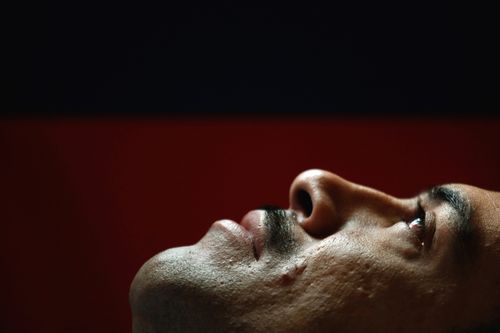
MiguelLopezGetty
Miguel Lopez, largely paralyzed from the chest down, lies in his bed at home on November 9, 2009 in Denver, Colorado. Lopez, a Mexican immigrant whose three children were born in the United States and are American citizens, broke his neck last summer while playing with his daughters on a backyard trampolene. Formerly a construction worker, Lopez had no health insurance when the accident occurred. He receives home health care visits from Dominican Sisters Home Health Agency, a non-profit that performs some 25,000 home visits each year in the Denver area. It provides free home nursing care to patients with chronic diseases, helps them to better manage their disabling illnesses and provides custodial services with the aim of keeping patients in their homes and out of more expensive nursing home care. By John Moore/Getty.

Slogging Towards 2013

One of Josh Marshall's readers notes that many parts of the health care bill, should it pass, won't be implemented until after 2012. Josh worries:

[F]ew of the structural changes go into effect before the 2012 election. Bans on denial of coverage for pre-existing conditions, dropping people as soon as they get sick ("recision") will go into effect earlier, basically new regs cracking down insurance companies' behavior. And those should be popular for a lot of people. But the stuff that really tackles cost and other aspects of availability won't go into effect during this presidential term. That's problematic politically for the Democrats. And I think it also raises the real prospect that the insurance companies will start pulling various pricing shenanigans in advance of 2013, hoping they can create the political climate for repeal before those parts of the legislation come into effect.

Can The Prisons Be Reformed?

David Cole wonders:

[T]he prison boom has high costs for all of us. A new prison opens somewhere in the United States every week. Imprisoning a human being in this country costs a minimum of $20,000 a year, far more than tuition at any of our state universities. National spending on prisons and jails was $7 billion in 1980; it is $60 billion today. Several states now spend more on state prisons than state colleges. We literally cannot afford our political addiction to incarceration.

Moreover, the incarceration boom means that there is also now a boom in prisoners being released. In 2008, approximately 700,000 prisoners were released. At current rates of recidivism, 469,000 of them will be rearrested within three years. We all have an interest in helping this at-risk population avoid a return to a life of crime.

Von Hoffmann Award Nominee

"Q: Mr. Secretary, on Iraq, how much money do you think the Department of Defense would need to pay for a war with Iraq?

Rumsfeld: Well, the Office of Management and Budget, has come up come up with a number that's something under $50 billion for the cost. How much of that would be the U.S. burden, and how much would be other countries, is an open question. I think the way to put it into perspective is that the estimates as to what September 11th cost the United States of America ranges high up into the hundreds of billions of dollars. Now, another event in the United States that was like September 11th, and which cost thousands of lives, but one that involved a — for example, a biological weapon, would be — have a cost in human life, as well as in billions, hundreds of billions of dollars, that would be vastly greater," – January 19, 2003.