Karoubi Speaks To The West

by Chris Bodenner

In a rare interview with a foreign broadcaster, opposition leader Mehdi Karoubi tells the BBC that Ahmadi's days are numbered:

"The government's response, the crackdown, has not calmed things down at all. In fact, it's just made the chanting louder. It's just increased the people's demands." He stood by his allegations that opposition activists have been raped in detention – a charge vehemently denied by authorities. He said he was not afraid of being prosecuted over the claims as threatened by several government officials.

Watch the interview here.

The Politics Of It

by Patrick Appel

Matt Welch counters Brooks:

Here's a cost-saving reform I've heard of, that's not in there, because the president rejected it at the very beginning of this process: Place individuals on equal tax footing as employers when it comes to purchasing health insurance plans, so that we can transition from the post-WWII Company Man artifact of health-insurance-as-reward-for-employment, to a competition-spurring, cost-reducing model of individuals owning and shopping around for their own policies. In other words, markets, not mandates.

From the article Welch links to:

The employer-based health insurance system must be dismantled, and the money spent by employers for insurance should be converted to additional income. This would immediately inject cost consciousness into health insurance decisions.

As a matter of policy, this is exactly correct. But ending employer coverage would expose Americans to true health care costs for the first time. These expenses are currently sheltered from view because employers pay the bulk of them. Even though delinking coverage and employment would be offset by higher wages, there would be a lag between ending employer benefits and wage increases. And Americans do not typically understand the that benefits come out of wages. The public would react like a massive financial burden had been created regardless of reality.

As If It Weren’t Obvious Already…

by Conor Friedersdorf

If you're one of the Americans who thinks that controlling our southern border is a must — that the potential for smuggling terrorists or their weapons imperils our national security — perhaps you should join me in diagnosing everyone who wants to keep waging the War on Drugs as part of the problem.

Cue a New York Times story that answers the question, "What happens when you create a hugely lucrative black market in illicit substances?"

The answer:

Mexican traffickers — facing beefed-up security on the border that now includes miles of new fencing, floodlights, drones, motion sensors and cameras — have stepped up their efforts to corrupt the border police.

They research potential targets, anticorruption investigators said, exploiting the cross-border clans and relationships that define the region, offering money, sex, whatever it takes. But, with the border police in the midst of a hiring boom, law enforcement officers believe that traffickers are pulling out the stops, even soliciting some of their own operatives to apply for jobs.

“In some ways,” said Keith Slotter, the agent in charge of the F.B.I.’s San Diego office, “it’s like the old spy game between the old Soviet Union and the U.S. — trying to compromise each other’s spies.”

James Tomsheck, the assistant commissioner for internal affairs at Customs and Border Protection, and other investigators said they had seen many signs that the drug organizations were making a concerted effort to infiltrate the ranks.

“We are very concerned,” Mr. Tomsheck said. “There have been verifiable instances where people were directed to C.B.P. to apply for positions only for the purpose of enhancing the goals of criminal organizations. They had been selected because they had no criminal record; a background investigation would not develop derogatory information.”

Perhaps it isn't worth keeping drugs illegal if the cost is the corruption of our border agents, murderous turf wars in our cities, billions of dollars spent jailing non-violent offenders, children of non-violent offenders growing up without their parents, the rise of paramilitary drug cartels destabilizing multiple Latin American countries and capable at any moment of using their smuggling channels to help terrorists, no-knock raids in American neighborhoods that regularly terrify innocents and sometimes kill them, and addicts who overdose more than they would if dosage and quality were controlled.

Gary Johnson, it's time to run for president.

Counterfactual: the tough-love bank bailout of 2008-2009

by Andrew Sprung

When I read assertions that the financial crisis has been "wasted," that is, not used to create a less risky, more accountable, more sustainable banking system, I usually think, "let's see how financial reform legislation turns out before we judge."

When I read that the bailouts of 2008 and 2009 created massive moral hazard and thus made the financial system riskier than ever, I wonder, "should the government have liquidated megabanks that appear not have been insolvent? Would the systemic risk have been worth it?"

John Gapper, writing in the FT, has an answer.  The bailouts may have been necessary. But they should have been much tougher on the banks.

Tarp may have achieved its financial aims but, in terms of systemic risk, it has failed. By propping up banks indiscriminately, on soft terms, Tarp not only outraged voters but also magnified moral hazard in the financial system and made effective reform harder.

"Given the severity of the crisis, the government had no choice but to intervene, but there were not enough strings attached and the moral hazard problem has worsened," says Matthew Richardson, a professor at New York University.

There was not much detail in the rest of the piece as to what kinds of strings should have been attached. I asked Gapper by email how the bailouts could have been handled differently, establishing along the way that a) he was not suggesting that any given bailed out bank should necessarily have been liquidated, and b) it would not do in the U.S. to break up bailed out banks by fiat, without new regulations mandating separation of banking functions (which he recommended in a prior piece). From Gapper's response:

…bondholders did not suffer at all. Could have been a haircut – In particular could have bailed out AIG CDS at less than par. Could have stopped dividend payments on equity. Could have insisted on shareholders co-investing as price for stopping institutions going bust. I don't think these would have solved moral hazard problem but the problem of giving everyone a 100 per cent bailout might have been eased a bit.

Gapper further referred me to the NYU White Papers Project. There,Viral V. Acharya and Rangarajan Sundaram elaborate on a criticism that Gapper mentioned in brief – that "Mr. Paulson lumped Goldman Sachs and Citigroup together."  Addressing whether the bailout terms were fair to the taxpayer, they make these points:

  1. By adopting a one-size-fits-all pricing scheme that is set at too low a level relative to the market, the US loan-guarantee scheme represents a transfer of between $13 billion and $70 billion of taxpayer wealth to the banks. In contrast, the UK scheme, which uses a market-based fee structure, appears to price the guarantee fairly.
  2. By offering very little in terms of optionality in participation, the US loan guarantee scheme is effectively forced on all banks, giving rise to a pooling outcome. The UK scheme, in comparison, provides considerable optionality in participation, which, combined with its pricing structure, has induced a separating equilibrium where healthy banks have not availed of government guarantees but weaker banks have. Implicitly, the US scheme encourages a system where banks are likely to remain (and to want to remain) on government guarantees until the crisis abates, whereas the UK scheme has paved the way for a smooth transition to market-based outcomes.
  3. The US recapitalization scheme has also provided little in terms of participation optionality for the large banks, but it too is otherwise generous to the banks in that it imposes little direct discipline in the form of replacement of top management or curbs on executive pay, and secures no voting rights for the government.

Simon Johnson, in  written testimony to the Congressional Oversight Panel on TARP last month, puts additional meat on the bones as to how to do a tougher bailout:

The money used to recapitalize (buy shares in) banks was provided on terms that were grossly favorable to the banks. For example, Warren Buffett put new capital into Goldman Sachs just weeks before the Treasury Department invested in nine major banks. Buffett got a higher interest rate on his investment and a much better deal on his options to buy Goldman shares in the future.

As the crisis deepened and financial institutions needed more assistance, the government got more and more creative in figuring out ways to provide subsidies that were too complex for the general public to understand. The first AIG bailout, which was on relatively good terms for the taxpayer, was renegotiated to make it even more friendly to AIG. The second Citigroup and Bank of America bailouts included complex asset guarantees that essentially provided nontransparent insurance to those banks at well below-market rates. The third Citigroup bailout, in late February 2009, converted preferred stock to common stock at a conversion price that was significantly higher than the market price – a subsidy that probably even most Wall Street Journal readers would miss on first reading. And the convertible preferred shares that will be provided under the new Financial Stability Plan give the conversion option to the bank in question, not the government – basically giving the bank a valuable option for free.

Note that this strategy is not internally illogical: if you believe that asset prices will recover by themselves (or by providing sufficient liquidity), then it makes sense to continue propping up weak banks with injections of capital. However, our main concern is that it underestimates the magnitude of the problem and could lead to years of partial measures, none of which creates a healthy banking system.

Obama may have been right that the Treasury's first principle was rightly "do no harm," and that we are better off for not having precipitously nationalized banks that were not clearly insolvent. But "do no harm" does not mean "inflict a minimum of pain."

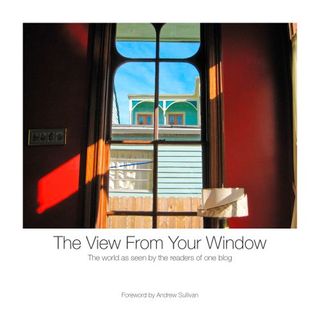
“The View From Your Window”: Not Just For The Holidays!

by Chris Bodenner

Reviews of the book are still trickling in. A reader writes:

I've been a regular reader since sometime in 2002 or 2003. I've written a few times, but nothing that made the blog. I've always really enjoyed the "View From My Window" feature Window-coverand ordered a couple copies of the book for holiday gifts – one for my wife and one for my  mother in law. After receiving my order of the books (but before opening them, since they're gifts), I decided to submit a picture from my window, which I did a couple of days ago. So tonight, I gave my wife the book as a Chanukah present. In the process of explaining what the book was and how it came about, I mentioned that I'd submitted a picture but didn't expect to ever see it on the blog, given how many submissions you folks get. We both looked through the book and loved it.

And then, while I was leafing through it, she's looking at her iphone and exclaims, "Look, West Chester, Pennsylvania – that's us, that's you!". And sure enough, at the very moment we were having this discussion, just a few minutes after opening her gift, she looks at the blog for probably the first time and our picture is at the top of the page.  A small magical moment enabled by the Daily Dish!  Thank you for that.

Thanks to you! Another writes:

I've been having a more interesting experience with the VFYW book than I expected.  Normally when I see the views on the website, I use it as a moment to breathe deeply and feel some contentment.  I suppose, in theory, seeing all the views at once could lead me to hyperventillation or pure zen, but mostly I've been entertained by the choices.

Chris B. did a bang up job of editing the window views.  I check each set of facing views for what they have in common – whether it's framing, an element of the view like electrical wires or a lake, or the first letter of the country name.  Some are more opposites, but even with the constraint of time of day order, I've found a little something to tie together almost every set of pictures I've pondered.  Just an amazing job.  Thanks!

I bought several copies – one for myself and the most important for my grandmother.  Grandma is in a long term care facility and spends a lot of her day looking out a window on a Amesiowa110pm2 cornfield in the midwest, not unlike the Ames, IA view.  I figured a few more windows to look out of at her own pace might be something she'd appreciate.  I really hope so; she has all her faculties, she just doesn't spend much time thinking about new things during each day so is out of practice with quick processing.  Maybe she will be able to enjoy it just a few pages a day when the view out her window isn't as entertaining.

But it also occurred to me that it would be a great children's book as well – and the older the children the more they could do with it.  Younger kids could find things they know and things they don't know, name colors, etc. Older kids could mapquest or google search the locations and plot them on a larger map, or read a wikipedia or chamber of commerce blurb about the town.  Not that you're having problems selling the book, but if someone needs more motivation, there are my ideas for how to sell it.

Again, thanks to Andrew for the feature, the readers for sending in views, and youse guys in the background for doing the dirty work to make it all pretty for us viewers.

Another writes:

I received my first three copies of The View From Your Window.  They have been wrapped as gifts.  The book is perfect for that "hard to buy for" person.  Alas!  I realized I did not have a copy of my own.  I immediately ordered three more copies.  One is mine and the others are future gifts. The books are superb.  The whole ordering process was brilliant.  The price was a delight.  The delivery was quick.  "Bravo" to Blurb for a job done exceedingly well.

Despite the higher price (which we still do not make any profit on), we are selling about a dozen a day. Preview the entire book here. Buy it here. Unfortunately it's too late to arrive for Christmas, but, in my opinion, gifts are best when they are received unexpectedly!

In regards to the reader who mentioned photo placement, I just want to say how enjoyable and challenging a process that was.  Although the photos were largely predetermined within the dawn-to-dusk chronology, there were several ways to inject our own creative influence. First of all, we started with a large pool of preselected photos – about 350 – and parred them down to 200 based on how certain photos juxtaposed with others.  And because there were multiple photos taken at specific times of the day – chiefly 12 pm – we could manipulate the order of photos with the same time stamp. The whole process was a fascinating interplay between creative control and pure luck (such as the lining up of the bleak Baghdad shot and the patriotic suburban shot from San Gabriel, taken just minutes apart). Even the subtle cropping of photos – a necessary way to standardize size and shape – allowed for a great deal of connection and flow between the adjacent images.

Update: Blurb just informed me that they have extended their Next Day Air deadline (for Continental U.S. addresses only) to this Sunday. So, if you place an order by Sunday, 12:00pm PST, you can still receive your order by December 24th.

My All Time Favorite Joke

by Conor Friedersdorf

A man walks into a bar.

He wears a charcoal gray suit, a charcoal hat, charcoal socks, black leather shoes, and a silver Porsche watch on the wrist of the hand that carries a rather large briefcase, which he carefully sets down before straddling a stool and addressing the bartender.

"A Knob Creek Manhattan, up," the man says.

"Sure thing, buddy."

As the bartender turns his back to mix the drink, the contents of the briefcase are emptied, and when he returns, serving the drink on a square napkin, he sees spread out on the shiny wooden bar top a miniature piano, a tiny piano stool to scale, and atop it a little man, 12 inches tall, playing faint music that sounds like Brahms' Piano Concerto 2 in B flat major.

"Well I'll be damned," the bartender says. "Where did you get a little guy like that?" He hunches over to scrutinize the musician more closely. "Look at those long, tiny fingers!"

The man, having gulped half his drink, says nothing, but the bartender presses him, and finally he erupts. "It's a long story," the man says. "But it all started with this magic lamp." At this he reaches back into the briefcase, produces in his diminutive hands a small, golden lamp, and shoves it toward the bartender, who yanks the towel from his waist and begins polishing.

POOOF!

When the smoke clears, a genie is revealed hovering in the air between the man and the bartender. "You've got one wish," the genie demands. "Use it or lose it."

The bartender stammers. "I'll be," he says, feeling rushed. "Well I guess I wish for… I wish for… I wish for $10 million bucks!"

POOOF!

The genie is gone.

The bar is quiet, except for the faint sound of Brahms rising from the bar top, and the bartender, regaining his composure, starts to worry.

"Hey, what about my wish," he says. "Nothing happened."

But that very moment, over at the open door, a fluttering is heard, and then a quack, and in waddles a duck, followed by a second duck, and a third — and soon the bar is filling with a badelynge, a bunch, a brace, a grouse, a whole flock of quacking mallards. They stream in without end.

"Now wait just a minute," the bartender cries. "I see what's happening here! I didn't wish for a million ducks! I wished for a million bucks!"

The man, world weary, sighs knowingly.

"Do you think," he said, "that I wished for a twelve inch pianist?"
Ideological Faultlines, Ctd

by Patrick Appel

Reihan counters Ed Kilgore:

[It] is entirely possible for both sets of critics to be correct. The concern from the right isn't that the Obama approach will literally nationalize for-profit health insurers. Rather, it is that for-profit health insurers will continue evolving into heavily subsidized firms that function as public utilities, and that seek advantage by gaming the political process. Profits, including profits governed by medical loss ratios, can and will then be cycled into political action, which leads to the anxiety concerning a "corporate takeover of the public sector." Again, progressives don't literally believe that such a takeover is happening. Instead, they believe, rightly, that subsidies without effective cost containment represent a massive windfall for the private insurance sector, including non-profit insurers that generate salaries for large numbers of politically active middle and upper middle class professionals..

So yes, Obama does not intend to nationalize the private insurance industry and then turn around and auction off the new nationalized health agency to Rupert Murdoch or Monsanto. But the anxieties of critics on the left and right are, to italicize for a moment, perfectly compatible.