
by Conor Friedersdorf
Seen in stereotypes, the East Coast is where America’s elite is centered, the South is romanticized and denigrated, the West Coast is where Hollywood reigns and laid back people live, and the Midwest – well, the Midwest is forgotten, or else dismissed as flyover country. The City of Chicago aside, it isn’t a destination for vacation seekers or business travelers relative to other parts of the country, and its geography and aesthetic are hazy to most people who’ve never lived there, probably because it is seldom portrayed in television or movies, or shown on the news, or described in literature, though there are notable exceptions.
Last spring I drove across the Midwest, moved by an impulse to see it. Two distinct things inspired that impulse: the regional accents heard on This American Life and a notion I had during the 2008 presidential election that I hadn’t seen so much of this country, despite having traveled widely in others. I’d have loved to take a month or two to collect audiotape, edit it into something special, and persuade Ira Glass to give me my big radio break. Unfortunately I hadn’t the time for that, nor was I able to articulate as much about the Midwest as I’ve done after traveling to other places – I certainly formed a sense of the place, but found it unusually confounding to express it.
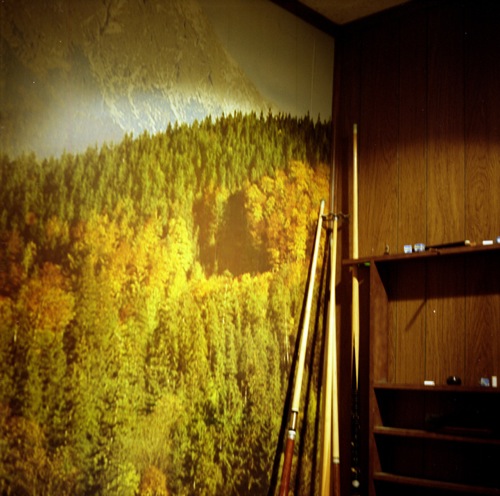
Last week, I traveled briefly to Kansas City, to visit a dear friend who I met a couple of years ago in Washington DC when she worked for National Geographic. The photographer, Lara Shipley, has since moved back to her home state of Missouri, embarking on a more informed effort to capture what I sought to learn about – the essence of the Midwest at this particular moment. The photo above is hers, as are those that follow – given how long it takes to accumulate a portfolio in art photography, and the poor remuneration in that field these days, I am indebted to her for permission to use images here that capture what I’m unable to say in words. Like me, she is always eager for feedback on her work – one of her photos was actually featured at The Dish once before – and also gladly accommodates offers to buy prints, so the least I can do is tell you is that she can be reached at lara.shipley@gmail.com, and that I expect her work to garner much more of a premium in future years.
The single aspect of the Midwest that one cannot help but notice is its emptiness—something due not only to the wide open spaces between cities, but to the decline of formerly booming cities less populated than they once were. In a region where real estate prices are far cheaper than on the coasts, land sometimes sits unused for long stretches, and isn’t subject to the constant regeneration seen in locales where space is at a premium.

As if to heighten one’s curiosity about what this place was like in its prime, it boasts thrift stores and estate sales that are the envy of folks who are into that sort of thing, often in houses whose aesthetic belongs to decades past.
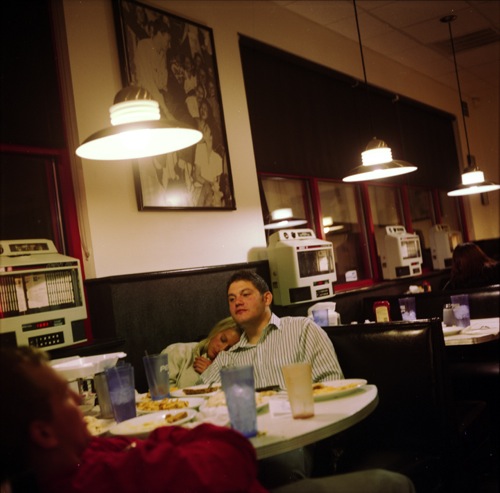
One weird aspect of the country’s present cultural moment is the divide between ironic America and earnest America – having lived in Brooklyn, where the Williamsburg hipster set fawns over Pabst Blue Ribbon and wears second hand tee shirts from Great Plains high schools they didn’t attend, I am always conscious of seeing something that would in New York City be celebrated ironically, but that hangs in Kansas City earnestly.

The upside to a place that doesn’t do irony is that it can excel at a classic aesthetic – this photo portrays folks enjoying a diner during that time when the bars have closed and the night is winding down. “This kind of place connects the Midwest to rest of the country,” Ms. Shipley notes. “An all night diner is such an American scene, and the young people of Kansas City are just as much part of it as anyone.”
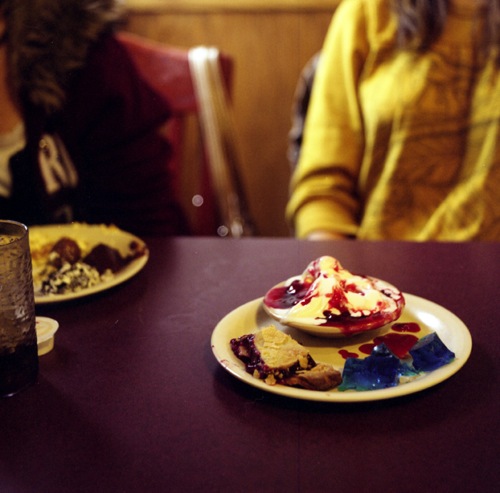
Though I ate quite well in Kansas City, especially at Arthur Bryant’s barbecue, I must concur that this patriotic desert distills a regional mainstay. As Ms. Shipley put it, “What buffet meal would be complete without blue jello, vanilla soft serve, and…red stuff. I salute!”
Though it is common to think of the Midwest as America’s white-bred middle, it is increasingly home to immigrant enclaves, and you see hints of their presence even outside them.
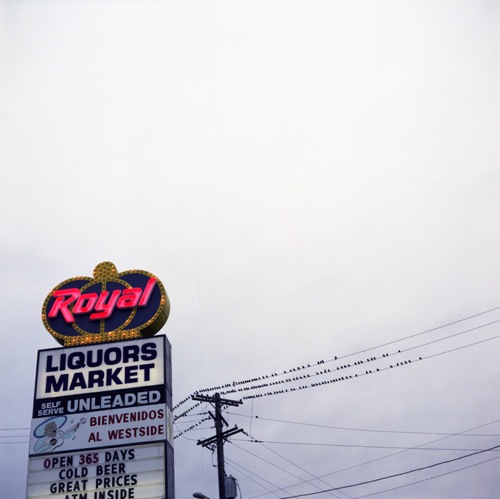
It is also common to associate it with salt-of-the-earth Jesus loving folk.
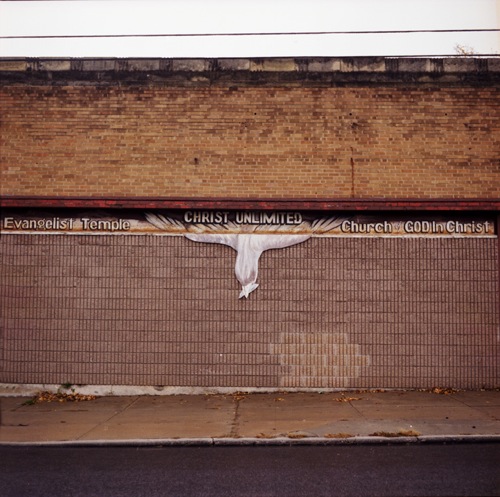
Stereotypes to the contrary, however, cosmopolitan cities are hardly the only places where sins of the flesh are indulged.

Ms. Shipley’s ability to generously but unflinchingly capture people has always been a feature of her work I’ve particularly appreciated. Let’s close with some characters she’s found in Missouri.
An elderly woman whose pants contrast nicely with a gray winter day.

There is Libby, a bar owner in Northland.

Richard:

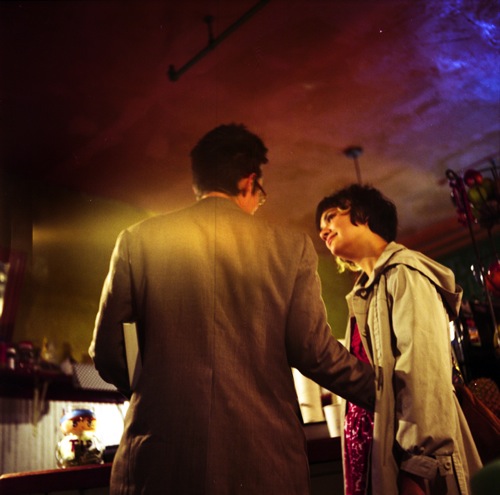
And a couple, Shawn and Sienna, at an all night café featured in a photo that is my favorite for reasons I can’t quite figure out. Sienna works at YJ’s, where she is pictured. It is a popular gathering spot in a part of Kansas City that artists are transforming, taking advantage of the cheap cost of living and underused 1920s era industrial buildings that they’re reclaiming as lofts and studios.
 The Dish