How Soon We Forget?

Larison analyzes a new poll:

Ben Smith notes that 44% now say they would prefer to have Bush as President according to a recent PPP poll. At first, that seems startling because of the tremendous improvement in Bush’s approval numbers that this represents, but it is more interesting as evidence of how quickly people forget their complaints against an earlier government and how ready they are to edit their memories of that time selectively to make them seem much better than the present. It is also a product of a partisan reflex for people to insist that the President from their party was better.

Taxing Oil Imports, Ctd

Free Exchange has a few questions for Daniel Gros who supports a carbon tariff:

I'd really like to know whether Mr Gros and others perceive that there is any risk in advocating carbon tariffs at a time when global trade has collapsed, and when unemployment levels around the developed world are at or near postwar highs. Isn't there just the slightest possibility of abuse?

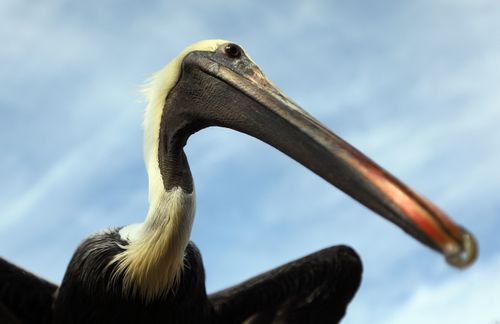
Face Of The Day

PelicanJoeRaedleGettyImage
A pelican is seen at the Florida Keys Wild Bird Rehabilitation Center on December 8, 2009 in Tavernier, Florida. The center which cares for sick and injured birds came close to shutting down because of the lack of donations due to the economic downturn this summer, but recently donations have come through due to publicity about the plight of the center. The center continues to need donations to operate the place that founder Laura Quinn, a retired teacher, began almost 20 years ago. They treat and release about 700 birds a year and permanently care for about 90 birds as well as having daily feedings for wild birds in the area. By Joe Raedle/Getty Images.

On Funding Wars, Ctd

A reader writes:

Palin comments about the glories of the "Greatest Generation" continue the well-worn theme of a nation of self-sacrificing volunteers to duty. The fact is, about two thirds of the soldiers who fought in WW2 were drafted. While there were those who rushed to volunteer after Pearl Harbor, to say "American men enlisted in droves" is to deny the complexity of enlistment and conscription before and during the war.

For one thing, many soldiers had already been drafted before Pearl Harbor in a deeply unpopular (and politically risky) draft put forward by Roosevelt in 1940. The original 12 month term of service was extended in the summer of 1941 in a bill so unpopular it passed in the House by one vote. Angry draftees responded to the extension with threats to desert when they reached their original twelve month service.

Most American men did not volunteer. They registered for the draft (the scope of which broadened by age and category several times during the war) and waited to be called. The US Military even preferred that men wait to be called up as that allowed them to better regulate the flow of troops into training camps. Most men chose to go to college or work as they waited to serve, hoping to mitigate the impact their was service would have on their regular lives.

Millions of American men went to war when they were called and served with honor. But to portray the "Greatest Generation" as a mass of volunteers for the war effort is not accurate.

Ag And Rx

Atul Gawande compares controlling health care costs to controlling food costs at the start of the 20th century. The parallel is, by nature, inexact but this paragraph leapt out at me: 

Much like farming, medicine involves hundreds of thousands of local entities across the country—hospitals, clinics, pharmacies, home-health agencies, drug and device suppliers. They provide complex services for the thousands of diseases, conditions, and injuries that afflict us. They want to provide good care, but they also measure their success by the amount of revenue they take in, and, as each pursues its individual interests, the net result has been disastrous.

Our fee-for-service system, doling out separate payments for everything and everyone involved in a patient’s care, has all the wrong incentives: it rewards doing more over doing right, it increases paperwork and the duplication of efforts, and it discourages clinicians from working together for the best possible results. Knowledge diffuses too slowly. Our information systems are primitive. The malpractice system is wasteful and counterproductive. And the best way to fix all this is—well, plenty of people have plenty of ideas. It’s just that nobody knows for sure.

The history of American agriculture suggests that you can have transformation without a master plan, without knowing all the answers up front. Government has a crucial role to play here—not running the system but guiding it, by looking for the best strategies and practices and finding ways to get them adopted, county by county.

(Hat tip: 3QD)
Missing The Terrorists For The Osama

Marc Lynch worries that the new Af-Pak strategy places too much emphasis on Al Quada Central and not enough on the broader network of loosely affiliated terrorist organizations:

For Bruce Hoffmann and other "Centralists," al Qaeda Central continues to play an extremely important role in guiding, shaping, arming, and directing the seemingly inchoate network of jihadists. They point to evidence of contacts between the perpetrators of well-known cases and AQC affiliated people in Pakistan or elsewhere. They point to the deluge of AQ propaganda still pouring out of al-Sahab and other jihadist media outlets. On the other side, Marc Sageman and other "bunch of guys" analysts see the threat as primarily one of a very loosely affiliated network of like-minded individuals and organizations who neither need nor want direction from AQC. If AQC was needed as a spark to light the fire, it is no longer needed to keep the fires burning or new fires from breaking out when local conditions come together.

Lynch fears that our current strategy "could end up strengthening the strategic threat of violent extremism even if it weakens al Qaeda Central."