"What greater misfortune for a state can be conceived then that honourable men should be sent like criminals into exile, because they hold diverse opinions which they cannot disguise? What, I say, can be more hurtful than that men who have committed no crime or wickedness should, simply because they are enlightened, be treated as enemies and put to death, and that the scaffold, the terror of evil-doers, should become the arena where the highest examples of tolerance and virtue are displayed to the people with all the marks of ignominy that authority can devise? ….
For when people try to take freedom of expression away, and bring to trial, not only the acts which alone are capable of offending, but also the opinions of mankind, they only succeed in surrounding their victims with an appearance of martyrdom, and raise feelings of pity and revenge rather than of terror. Uprightness and good faith are thus corrupted, flatterers and traitors are encouraged, and sectarians triumph, inasmuch as concessions have been made to their animosity, and they have gained the state sanction for the doctrines of which they are the interpreters.
Hence they arrogate to themselves the state authority and rights, and do not scruple to assert that they have been directly chosen by God, and that their laws are Divine, whereas the laws of the state are human, and should therefore yield obedience to the laws of GOD—in other words, to their own laws. Everyone must see that this is not a state of affairs conducive to public welfare. Wherefore, the safest way for a state is to lay down the rule that religion is comprised solely in the exercise of charity and justice, and that the rights of rulers in sacred, no less than in secular matters, should merely have to do with actions, but that every man should think what he likes and say what he thinks" – Baruch Spinoza, A Theologico-Political Treatise, 1670.
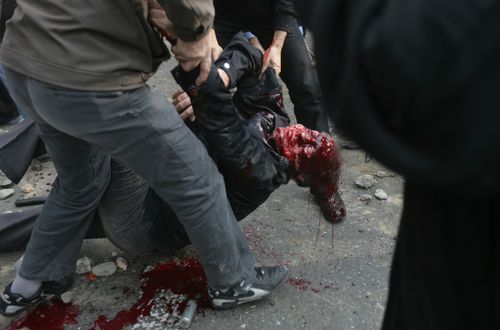
(Photo: a victim of the Khamenei junta, Ahura 2009, by AFP/Getty.)
 The Dish