Lieberman And DADT

Ambinder analyzes:

Not only is Sen. Joe Lieberman going to lead the Senate's attempt to repeal Don't Ask, Don't Tell, but the White House asked him to do it. Why, oh why, would the White House reward the man whose health care dithering they came to hate?  Simple: this works for everyone. Lieberman can work on Republicans he respects, like  Sen. Lindsay Graham, he can regain some credibility with liberals (I said some credibility), he actually does believe that DADT should be repealed, and he now owes the White House a favor.

Meep meep.

This Era’s ‘Hiroshima’ Reax II

6a00d83451c45669e20120a8ac40af970b-500wi

Now let's look at those who found techniques such as the above completely acceptable and favored much, much worse. Over the weekend, Andy McCarthy put up a letter from former Attorney General Mukasey and former Deputy Attorney General Filip critiquing the OPR. Powerline:

This approach should serve as the Justice Department's guide going forward. Attack bad legal analysis, but be very, very hesitant to attack the motives or the professional competence of those you believe have committed it.

Bill Burck and Dana Perino:

This is bad news for Holder and certain other Obama appointees at Justice — it undermines the story they’ve been telling for years that the lawyers who found the CIA program lawful were sadistic criminals committed to torturing poor souls such as Khalid Sheik Muhammad — but it is a vindication of an important principle that, prior to the Holder reign, had been adhered to across administrations: honestly held legal and policy opinions are not cause for prosecution or professional discipline.

Greenwald, in a must-read, fisks Burck and Perino. The WSJ:

So after five years of investigation, partisan accusations and unethical media leaks, the Justice Department's senior ethicist has concluded that Bush Administration lawyers John Yoo and Jay Bybee committed no professional misconduct. The issue now is whether the protégés of Attorney General Eric Holder who led this exercise at Justice's Office of Professional Responsibility (OPR) should themselves be in the dock.

Jennifer Rubin:

The editors rightly note that Margolis seemed compelled at the very end of the report to throw in some gratuitous jabs at Yoo. (”This is a matter of opinion—akin to writing an op-ed piece—unrelated to the question of whether they behaved unethically, and it is precisely the kind of judgment that Mr. Margolis says earlier in the report that he will not render.”) But as inappropriate as those swipes may have been, let’s give some credit where credit is due. Margolis prevented a grave miscarriage of justice and in the process revealed how biased and incompetent his colleagues are. That is no easy task. The question remains as to what Eric Holder is going to do about those whose work has now been revealed to be so lacking in merit and so bereft of careful analysis. A bar referral? Well, at least a housecleaning seems to be in order.

“Well, I Don’t Really Want To Shake Your Hand, You’re Intrinsically Evil” Ctd

A reader writes:

Years ago, I had a dust-up with Ryan Sorba in my school's newspaper.  Ryan made all kinds of nasty statements regarding gays by using Paul Cameron's research.  The article should not have been published, and the newspaper editor apologized later about it, but I wrote a response that really angered Ryan Sorba.  He started a series of emails, but he was completely ignorant and chose to use any "fact" that he felt supported his position.  It did not matter who the fact came from or if it was false.  I had to eventually shut off communication with Ryan.

He put up a series of posters around the school that were incorrect and cruel (like how gay men ate feces).  He tried to take over the College Republicans and refuse gay people (and his attempts were very public).  He also tried to create a list of "liberal" professors to avoid. 

He was a nuisance and everyone was happy when he left because he was very homophobic and nasty.  Every few years I hear about Ryan and his antics, which always seem to be about self-promotion (his speech at CPAC had him saying how much he loved people opposing him).

About a year ago, out of the blue he calls a fellow employee (at a different school) and leaves a voice mail message.  I had not seen or talked to Ryan for years.  He says that I need to quit attacking him and that I cannot talk about him, even though I had not talked about him at all to anyone.  He then says I need to be fired and that he is going to get me.  This peer is completely shocked about this because the peer has nothing to do with me and did not understand why Ryan Sorba called him.

There is something wrong with Ryan Sorba.  His anger and irrational behavior is over the top, and I can't understand why CPAC would allow him to even speak in the first place. 

Another writes:

Sorba's book is online. You are described in it as "pro-sodomy journalist Andrew Sullivan." Stonewall was an act of "terrorism as a means to achieve power."

Obama’s Health Care Plan, Ctd

Ezra Klein sizes up the politics:

[If] the changes to the underlying policies are modest, the impact on the politics will be tremendous. It might even be, as Olympic announcer Ed Olcyzk said about the Canada/U.S. hockey game, "tremendously tremendous." The release of this plan marks the end of the Scott Brown election and the resumption of the health-care process.

Obama’s Health Care Plan

The summary of the White House healthcare plan is here (pdf). More material here. Cohn helps makes sense of it:

There aren’t too many new wrinkles. Probably the most interesting is a proposal, first reported last night, that would give the federal government more authority to regulate premiums on policies sold directly to individuals. Otherwise, the proposed compromises do more or less what everybody expected: They eliminate the most egregious legislative deals; they improve the coverage, consumer protection, and affordability provisions to make the Senate bill look more like the House option; and they raise a bit more money, again borrowing from the House bill.

Taken as a whole, health care reform as Obama now envisions it would still pay for itself. It would spend a little more but it would also raise a little more, in the form of taxes on offsetting savings.

This Era’s ‘Hiroshima’ Ctd: Your Analysis

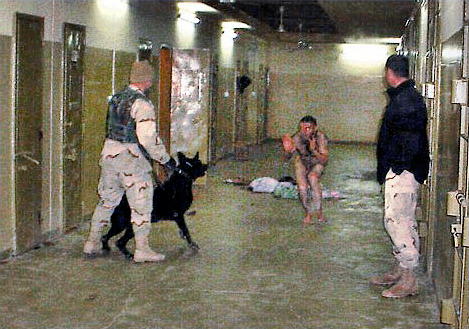
Abughraib13

A reader writes:

I'm a law student at Duke and I studied the torture memos last term with a former federal prosecutor. I just started to dive into the OPR report which you so kindly posted and I thought I might be able to help those of your readers without extensive legal backgrounds analyze the arguments. I think it's easy to get bogged down in such a report, so I thought I would try to explain what we should be looking at in determining what the standards for professional misconduct are at OLC and whether Yoo/Bybee violated them.

Start with pages 18-21. Here, the OPR outlines their analytical framework for determining whether an attorney has engaged in professional misconduct.

The first thing to understand about criminal law generally (and although this analysis may not be a "crime" per se, the analytical framework used is largely the same) is that culpability is dependent upon a finding that the accused performed a prohibited act (referred to as the "actus reus") and did so with the requisite mental state ("mens rea"). Here, the OPR says that the required mens rea for a finding of professional misconduct is either "intent" or "recklessness" (note that under the common law these are legal terms of art but, as per footnote 19, the OLC has it's own definition for what constitutes intentional or reckless behavior in this context).

For the sake of simplicity, I will leave "intent" out of the discussion, since a finding of recklessness is sufficient to find Yoo and Bybee culpable (and if you can't prove recklessness, then you can't prove intent).

The OPR defines "recklessness" in this context using a three part test. In order to be reckless, one must (1) "know or should know" of the professional obligation or standard, (2) "know or should know" that his/her conduct "involves a substantial likelihood" that he/she will violate the standard or obligation, and (3) nevertheless "engages in the conduct, which is objectively unreasonable under the circumstances."

The "actus reus" required for professional misconduct includes violation of "any known, unambiguous obligation imposed by law, rule of professional conduct, or Department regulation or policy."

Summarization: If Yoo and/or Bybee knew or should have known of a professional standard or obligation imposed by law, professional standard, or Departmental policy and knew or should have known that their conduct violated it, but they nevertheless engaged in said conduct, then they have engaged in professional misconduct.

Note that this standard does not even require that Yoo or Bybee knew of their obligations or that their conduct violated those obligations, but ONLY requires that, given their experience and the "unambiguous nature" of the obligation, they SHOULD HAVE known about it.

So that's what we should be thinking about as we read the discussion and analysis of the memos and the obligations of attorney's at the OLC.

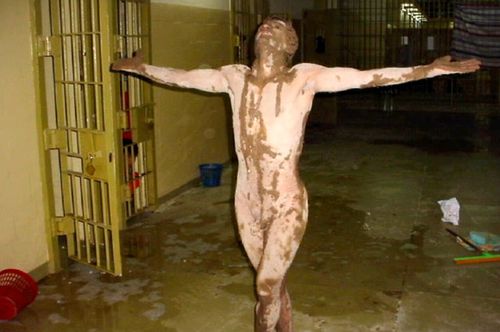
(Photo: a victim of a stress position, combined with violence, at Abu Ghraib prison under Cheney's rather than Saddam's ultimate control.)

This Era’s ‘Hiroshima’ Reax

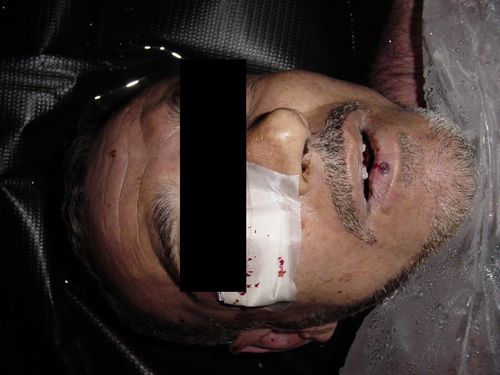
Abughraib1

We will be posting on the OPR report throughout the day. The opponents and defenders of the Bush administration's torture policies could not have more different readings of the OPR report. Marcy Wheeler is going line by line through the report. She compares the first and second drafts of the OPR memo here. Julian Ku:

Does this mean the end of the war over the “torture memos”?  Uh, hardly. Congress is going to go over these memos again.  But it is the beginning of the end. The chance of a criminal prosecution of the Bush attorneys in the U.S. is now, effectively, zero. (I argued this point in this essay here and I am glad that I will be proven right)  Civil suits are going to face some serious problems, if the analysis in these documents is accepted.  Even international prosecutions are going to have to take seriously the fairminded analysis in the Margolis memo, which drew tough but persuasive distinctions between good faith legal analysis and professional misconduct.  It would be odd for something that wouldn’t even qualify as an ethics violation in the U.S. to be the basis for criminal liability under a theory of universal jurisdiction.  But then again, I’m not Judge Garzon.

Andrew Cohen:

The moving parts here– the White House, the Justice Department, the OLC and the OPR– all have great incentives to leave muddy the definition of what constitutes "professional misconduct" on the part of government lawyers. No one in power knows for sure if and when they'll want or need their own government lawyer to cheat the rule of law in the future to achieve a political, diplomatic or military goal. So much of official Washington– the biggest client in the country– is naturally delighted and relieved to be able to fall back on Margolis' rationale. This is so even though the takeaway from the OPR report is really just an old judge's trick in disguise: you criticize the substance of the act while exonerating the accused based upon some procedural defect.

Brian Tamanaha:

What's odd about Margolis's conclusion is that it implicitly relies upon a necessary assumption that he elsewhere explicitly contradicts. Early in the memo he notes that Yoo is a distinguished lawyer with sterling credentials (SCOTUS law clerk, Berkeley professor). But Margolis's conclusion makes sense only if we assume that Yoo is an incompetent lawyer…Given the patent weakness of his legal analysis, there are two possible alternatives: Yoo is an incompetent lawyer or he intentionally or recklessly distorted the law. Margolis makes two pivotal assertions–that Yoo is a highly qualified lawyer and that Yoo is an ideologue with extreme views…

Daphne Eviatar:

Whether John Yoo and Jay Bybee face professional sanctions (that's now up to their respective state bars) is far less important than whether we get to the bottom of what really happened at the Bush White House: who ordered these lawyers to come up with legal reasoning to justify torture? The OPR report suggests that David Addington, Chief of Staff to Vice President Dick Cheney, played a significant role. Who was he getting his orders from?

Adam Serwer compares the Bush administration to al Qaeda:

The theological justification for al Qaeda's wholesale slaughter of civilians was provided by Sayyid Imam al-Sharif, also known as Dr. Fadl, one of the founding fathers of al Qaeda. Because the murder of innocents is forbidden in Islam and the murder of Muslims in particular, Ayman al-Zawahiri and Osama bin Laden required some sort of theological framework for justifying terrorism. This was provided by al-Sharif, who essentially argued in his book, "The Compendium of the Pursuit of Divine Knowledge," that apostates could be murdered, and that approach, takfir (which has come to be known as takfirism) allowed al Qaeda to, for all intents and purposes, kill anyone they wanted without violating the laws of Islam by declaring them to be apostates. In other words, Dr. Fadl helped provided a theological justification for something that everyone involved knew was wrong.

The legal memos justifying torture aren't very different in terms of reasoning–it's clear that John Yoo and his cohorts in the Office of Legal Counsel saw their job not as binding the president to the rule of law, but to declare legal any tactic that the executive branch believed necessary to fight terrorism.

This Era’s ‘Hiroshima’ Ctd

A Fallows reader – in another must-read post – makes a powerful point:

"You wrote about "the Dick Cheney view, the 24 view, which equates the torture memos with Abraham Lincoln's imposition of martial law." "Dick Cheney is not merely arguing to suspend the writ of habeas corpus, but is also arguing to torture people held under that standard, and he's advocating it whether or not there's an imminent threat of attack.

Lincoln was shot down by the Court when he held would-be saboteurs in Indiana in 1864 because Indiana was not facing an immediate threat. The Court found martial law illegal in Hawaii in 1944 because the state was not under an immediate threat of attack.

I think both of those examples are fairly analogous to the threat posed by terrorism today. There was certainly the chance of a surprise attack against Hawaii at that time or sabotage in either Indiana or Hawaii at either time. There's a chance that a terrorist affiliated with a terrorist suspect in our custody can attack at any time, anywhere. So, Cheney's matching Lincoln and going further than Lincoln in two ways…

Cheney's position is equivalent to saying that, since Hiroshima was necessary, the atom bomb should be our first resort in any international conflict."

[My italics]. Eventually, I think, the radicalness of Dick Cheney's attack on America will come to seem exactly what it was.