The Weekend Wrap

This weekend on the Dish, Andrew reacted to the release of the OPR report and asked your help in deciphering it. Fallows compared it to John Hersey's Hiroshima. Andrew also got around to analyzing Joe Stack's terrorist manifesto. Reax here.

In continued coverage of CPAC, Pawlenty let his Christianist flag fly, Ryan Sorba reveled in his obsessive homophobia, and Ron Paul displayed a glimmer of hope. E.D. Kain took on Thiessen, Andrew targeted him and Hiatt, Hitchens hated on the Olympics, and William Cane shared his kissing expertise.

In Sunday coverage, Dreher tried to make sense of his sister's cancer, Esquire profiled Roger Ebert's struggle with the disease, and readers shared their thoughts on the conflict between the Church and gays. The Dish is in the process of publishing an updated print version of Andrew and Sam Harris' debate on religion. Express your interest here: samandandrewdialogue@gmail.com

— C.B.

Imaginary Drugs

Darragh McManus runs through his favorites:

[I'd not] mind sampling some melange/spice from Frank Herbert's Dune (long life, heightened awareness and possible extrasensory properties, cool blue eyeballs); septus from Iain Banks's Transition (the ability to flit between parallel worlds and inhabit others' bodies); Dylar from Don DeLillo's White Noise (no more fear of death); the various hallucinogens drunk with the old moloko in A Clockwork Orange (a nice quiet horrorshow starring Bog and all his angels); Can-D in Philip K Dick's The Three Stigmata of Palmer Eldritch (allows you to participate in a group hallucination). I also quite like the sound of the Pan Galactic Gargle Blaster in Hitchhikers' Guide to the Galaxy, described as "like having your brains smashed out by a slice of lemon wrapped round a large gold brick". Well, it beats aspirin and sniffing exhaust pipes.

Bad Ideas

Bruce Bartlett harshes on some of the latest job creation proposals:

An employment tax credit for new jobs is…not a new idea. One was enacted during the Carter administration, revised by the Reagan administration and ultimately abolished by the George W. Bush administration. In practice it turned out to be very difficult to figure out what a new job was or prevent employers from gaming the system–firing a worker one day, rehiring him the next and claiming that a new job was created. Another problem was that many businesses, such as new startups, had no tax liability against which to apply the credit. Businesses also found the paperwork involved with claiming the credit to be more trouble than it was worth. Finally, a lot of tax credits ended up being claimed by businesses that just happened to be expanding employment for reasons unrelated to the credit. In effect, they were rewarded for something they would have done anyway.

Insta-Fool, Ctd

Glenn Reynolds responds to Bruce Bartlett's devastating rebuttal to another cockamamie idea yanked glibly from the air:

Well, I was hoping for a thoughtful email from an expert, but instead I got a typically intemperate blog post from Bruce Bartlett. Bruce, I’m not trying to turn the United States into Zimbabwe. That would be the guy in the White House, whom you seem surprisingly anxious to defend.

Ah, yes, Obama is trying to create Zimbabwean levels of inflation and collapse, a year after inheriting a massive debt, trillions in unfunded Bush-created liabilities, and a recession deeper than anything in decades.

When Bush was in the White House, all Reynolds was interested in was cutting pork to "balance" the budget. Bartlett updates:

Mark Thoma thinks I am taking Reynolds too seriously. He's probably right that Reynolds himself was not serious in his suggestion. But I have heard the same idea advanced seriously on numerous occasions among conservatives.

As a longtime readers of this partisan hack, let me merely advise anyone: whatever you do, don't take Glenn Reynolds too seriously.

Spooks R Us

David P. Goldman casts a skeptical eye on Stratfor:

How would you like to tap into an exclusive private intelligence service staffed by ex-CIA analysts who glean exclusive information from shadowy sources, cross-grid raw intel to detect relevant patterns, and alert you by email when the product requires your attention? Membership in this elite club will cost you just $349 a year, and you’ll also get a free book that predicts the next 100 years of human history. … In a crowded market where The New York Times can’t successfully charge for premium content, Friedman’s thriving business targets a key market niche: corporate types with geopolitical exposure who are too busy or too ill-informed to use Google.

I don’t subscribe, but I do occasionally read the free stuff. I take it as as seriously as, say, a really good spy novel. But every now and again, they’re dead-on.

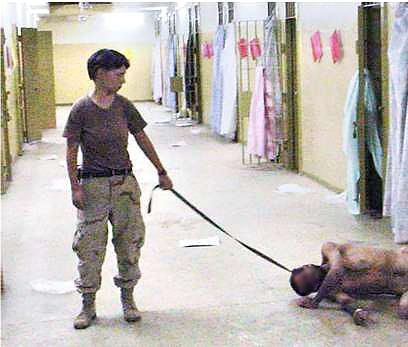
This Era’s “Hiroshima”

Abu-ghraib-leash

Fallows has a must-read on the OPR report:

The report is available as a 10MB, 289-page PDF download here. Seriously, this is a document that informed Americans should be familiar with, as a basis for any future discussion about the costs and consequences of a "global war on terror" and about the maintenance of American "values" in the world.

Through American history, there have been episodes of brutality and abuse that, in hindsight, span a very wide range of moral acceptability. There is no way to "understand" lynchings that makes them other than abominations. But — to use the extreme case — America's use of the atomic bomb in Hiroshima and Nagasaki will always be the subject of first-order moral debate, about whether any "larger good" (forcing an end to the war) could justify the immediate suffering, the decades-long aftereffects, and the crossing of the "first use" frontier that this decision represented.

My point now is not to go through the A-bomb debate. It is to say that anyone who is serious in endorsing the A-bomb decision has to have fully faced the consequences. This is why John

Hersey's Hiroshima was requisite basic knowledge for anyone arguing for or against the use of the bomb. The OPR report is essentially this era's Hiroshima. As Hersey's book does, it makes us confront what was done in our name — "our" meaning the citizens of the United States.

If you want to argue that "whatever" happened in the "war on terror" was necessary because of the magnitude and novelty of the threat, then you had better be willing to face what the "whatever" entailed. Which is what this report brings out. And if you believe — as I do, and have argued through the years — that what happened included excessive, abusive, lawless, immoral, and self-defeating acts done wrongly in the name of American "security," then this is a basic text as well.

To conclude the logical sequence, if not to resolve this issue (which will be debated past the time any of us are around), you should then read the recent memo by David Margolis, of the Justice Department, overruling the OPR's recommendation that Yoo and Bybee should be punished further. It is available as a 69-page PDF here. Margolis is a widely-esteemed voice of probity and professional excellence inside the Department. What is most striking to me as a lay reader is how much of his argument rests not on strictly legal judgments but rather on a historical/political assertion.
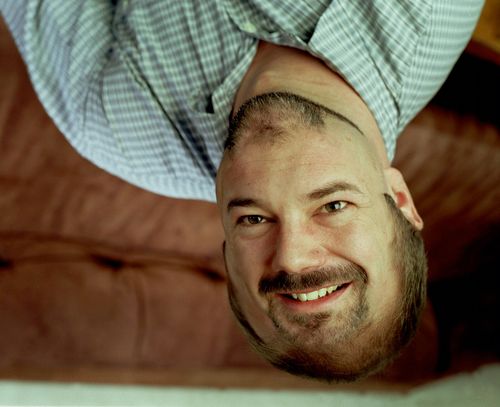
The WaPo’s Hiring Of A Third Rate Writer And Defender Of War Crimes

Laura Rozen asks the obvious question. I'd really like to know the answer. The first obvious disqualification is that Thiessen was integral to the team of war criminals in the last administration that tore up the Geneva Conventions and authorized torture throughout every theater of war.

It cannot be about writing talent – there are a few thousand people on the right more talented than this third-rater. It cannot be intellect: anyone with even a passing knowledge of just war theory can see he knows nothing about it. It cannot be about representing the Bush administration: the WaPo already has an intellectually mediocre Bush speech-writer on its op-ed page, Mark Gerson.

Dan Froomkin, whom they fired, had more talent and gumption and reporting skills in his little finger than this prep school product who spent his early years as speech-writer and "senior policy advisor" working for Jesse Helms. His entire career has been in the right-wing welfare state, beginning with the lobbying firm, Black, Manafort, Stone & Kelly.

I really cannot fathom it. Ask Fred Hiatt, the neoconservative fanatic who runs the page and ran 27 editorials urging war against Iraq. His email is here.

GOP Consistency Watch

Sprung captures a beaut:

Boehner and Cantor, 2/8;

If the President intends to present any kind of legislative proposal at this discussion, will he make it available to members of Congress and the American people at least 72 hours beforehand? Our ability to move forward in a bipartisan way through this discussion rests on openness and transparency.

McConnell, today:

Appearing on Fox News Sunday, Senate Minority Leader Mitch McConnell (R-KY) criticized the White House's plan to post a health care reform proposal online, just days before the upcoming health care summit.

"You know, apparently we're going to be there most of the day and have an opportunity to have a lot of discussion," said McConnell. "But if they're going lay out the plan they want to pass four days in advance, then why are — what are we discussing on Thursday?"

They'll say anything, won't they?