Famous For Being Famous

Prof. Bainbridge believes that politicians like Sarah Palin and Scott Brown are indicative of a larger social shift:

I think it says something bad about our culture that people like the Hiltons and Kardashians can vault into celebrity status without having accomplished anything.

But I think it says something even worse about our culture that we are starting to pick our leaders this way. We face serious problems and a growing list of serious threats. We need leaders who are serious people. Not leaders who are famous for being famous.
Not Guilty

Radley Balko attempts to calculate how often we send an innocent person to prison:

The Innocence Project cites a study by Seton Hall's D. Michael Risinger that puts the percentage of innocents in prison at 3 to 5 percent. But that study looked only at capital crimes, and there's yet more debate over whether data gleaned from those accused of crimes that are eligible for the death penalty would translate into higher or lower wrongful conviction rates for those accused of lesser crimes. (Those who argue that it would be higher note that there's more pressure on prosecutors and jurors to hold someone accountable in murder cases. On the other hand, defendants tend to have better representation in capital cases.) But even dropping below the study's floor, using the 2008 prison population, a 2 percent wrongful conviction rate would mean about 46,000 people incarcerated for crimes they didn't commit.

Bayh’s Value

[E]lecting someone slightly to the left of center is usually a win for the liberal party in a slightly-to-the-right-of-center jurisdiction. (Democrats may have gotten somewhat spoiled by the elections of 2006 and 2008, during which they were winning virtually every competitive seat, but that environment no longer holds.) Although Democrats have every reason to continue to fight for Indiana, the odds in the current environment are that a Republican will prevail in the race to replace Bayh and Democrats will go from having an uncertain vote for their agenda to one who almost never aligns with them.

Liberaltarianism, RIP?

Ed Kilgore declares the liberal and libertarian flirtation dead. Matt Welch, who writes that he "wouldn't vote for Sarah Palin at gunpoint," sighs:

What I do care about, regardless of who's president, is human freedom and prosperity. And I strongly and consistently suspect that when the government accumulates more power, I and everyone else (except those wielding it) have less of which I seek. Republicans diss libertarians when they're in power, and Democrats diss libertarians when they're in power. Their changing attitudes toward our little (albeit growing) tribe is mildly interesting, but it's about as newsworthy (and painful) as a dog biting a chew toy.

Dissents Of The Day

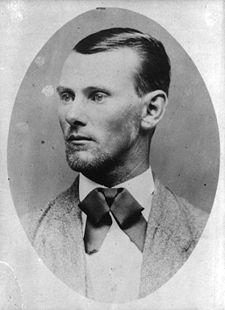
Jesse_james_portrait Tedbundy Oj

A reader writes:

The "Criminals Are Ugly" link prompted a note of "interesting" from the Dish, but what is also "interesting" is the history of that idea, which is not in any way new. Perhaps you guys haven't read your Mismeasure of Man in a while, but the physical appearance of criminals has attracted a lot of attention over the years, most famously from Cesare Lombroso. Maybe a suggestion for readers to Google "Cesare Lombroso" or "atavistic stigmata" would prompt some reading as "interesting" as a glib note about a topic with a truly "ugly" history.

Another writes:

Yep, Jeffery Dahmer was real ugly.  And Paul Bernardo. You know it reminds me of what they said about homosexuals in sex ed back when I was in grade nine: ALL homosexuals were ugly with low self esteem and had pock marked faces … that is what they told us!!

(Photos of Jesse James, Ted Bundy, and OJ Simpson)

Paging Sen. Snowe

Karen Tumulty:

AP reports that insurance companies in at least four states are raising their premiums for individual insurance policies (those that people have to buy themselves, because they don't get coverage from an employer) by 15% or more. To give you a sense of what we are talking about if these rates go into effect, a family of four in Maine (which is a relatively poor state) can expect to pay $1,876 a month–about $22,500 a year–for health insurance, starting in July.