Action, Not Apologies

Barbara Blain, of Survivors Network of those Abused by Priests (SNAP), waves off the pope's letter:

The church’s first priority, however, should not be “repentance, healing and renewal,” as the Pope maintains:  Child safety comes first. Wounded adults can heal themselves, with or without the Pope’s help. Vulnerable kids, however, can’t protect themselves without the Pope’s help. That help must involve action, not words. No apologies or explanations or letters or excuses or promises. So far, the Vatican has only talked, not acted. That must change.

Map Of The Day

AmericaChristian
Via Richard Florida, Floating Sheep has mapped Christianity globally and nationally:

Catholics are most visible in much of the Northeast and Canada, with Lutherans taking the Midwest, Baptists the Southeast, and Mormons unsurprisingly taking much of the mountain states. Methodists, interestingly, seem to primarily be most visible in a thin red line between the Southern Baptists and everyone else.

Click to enlarge.

Ten Books

Tyler Cowen lists the books that have influenced him most and encourages other bloggers to do the same. Several bloggers play along. To be meta, here is a list selecting revealing books from other bloggers' lists.  Cowen:

John Stuart Mill, Autobiography.  This got me thinking about how one's ideas change, and should change, over the course of a lifetime.  Plus Mill is a brilliant thinker and writer more generally.

Matt Steinglass:

Nietzsche, On the Genealogy of Morals. Everybody’s citing it, but you know, that’s the kind of book it is. I remember sitting in a waiting lounge at Dulles International Airport reading this and feeling like I was being personally eviscerated. I was in love for the first time and she was still somewhat involved with her previous boyfriend, who was a lot taller and more athletic than me; that may have had something to do with it. But the idea of examining the value of values, looking at them skeptically as things that had evolved historically for often brute-fact instrumental reasons (i.e. because a certain value was useful to the claims on power of a certain interest group), was incredibly compelling and ruthless. Once you’ve recognized this, you can’t — or shouldn’t — ever be able to uncritically embrace any kind of “first principles”, ever again, without thinking about who those “first principles” serve and whom they enslave.

Will Wilkinson:

Dune by Frank Herbert. The Dune books connected with me deeply as a teenager. They appealed, I think, to the sense that people have profound untapped powers that discipline can draw out; e.g., Mentats, Bene Gesserit. Also, it appealed to the fantasy that I might have special awesome hidden powers, like Paul Atreides, and that they might just sort of come to me, as a gift of fate, without the hassle of all that discipline. I think this book is why I was slightly crushed when I turned 18 and realized that not only was I not a prodigy, but I wasn’t amazingly good at anything. I sometimes still chant the  Litany against Fear when I’m especially nervous or panicking about something.

Suderman:

Batman: The Dark Knight Returns — Frank Miller: I got my first copy of this at nine or ten years old, and I literally read and reread it until it fell apart (for a while I held it together with duct tape, but eventually I lost so many pages that it was no longer worth saving). Miller’s fusion of gruff noir sentiment and comic book action helped define the way I think about pop art and genre storytelling; sure, it’s low culture — frequently crude and base — but it’s executed with such verve that it somehow makes it into the upper middlebrow (or near enough) anyway.

Jenny Davidson:

Orwell's essays. I first read them my senior year of high school, and fell absolutely in love with the voice and the mode of analysis. This has never worn off. I associate bits of Thucydides' History of the Peloponnesian Wars with this period of reading, and both are things I continue to come back to in my reading, teaching and research.

Arnold Kling:

Amity Shlaes, The Forgotten Man. Folks on the left scorn this book, and it is not without its flaws. But ultimately, I think the left hates Shlaes not for what she gets wrong but what she gets right. What she gets right pokes huge holes in the high school book narrative of the Depression (Herbert Hoover sat back and did nothing, Roosevelt saved the economy). My takeaway from this book is the importance of the battle over historical narrative. We see that today in the determination of the left to blame the financial crisis entirely on "free-market ideology," even though that narrative is not such a good fit for the facts.

Yglesias:

Daniel Dennett, Consciousness Explained: The precise content of Dennett’s ideas about human consciousness aren’t that important to me (though I agree with him), but the practical methods at work are. I’m drawn to Wittgeinstein’s thing about how you need to “show the fly the way out of the flybottle” rather than “solve” these timeless dilemmas, but I find Wittgeinstein almost impossible to read and didn’t understand what he was saying at all when I tried. Dennett I think gave me an example of the shewing.

The Nazareth Principle

KerouacProfileGinsbergBaja

Paul Zahl:

Our son Simeon says that faith is summed up in something he calls the "Nazareth principle". This refers to the question in the New Testament where someone scoffs at Jesus the carpenter by asking, "Can anything good come out of Nazareth?"

The idea was that Nazareth was a city, in the region of Galilee, which was known for its "mixed-blood" and therefore suspect practice of Judaism. Because the carpenter/prophet came from Nazareth, didn't that disqualify him from being the real thing?

Yet as Simeon says, in life — time after time — the best things come from the unlikeliest places. And this "Nazareth principle" extends to the fact that out of trouble and wounds, disappointments and closed doors, come often the actual breakthroughs of personal life.

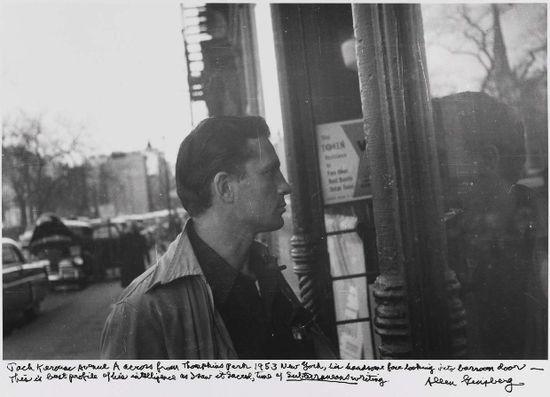
I'm just becoming aware that Jack Kerouac had a Catholic Buddhist phase. Nazareth Principle indeed.

Accepting Ex-Gays

Jason Kuznicki refuses to rank inner experiences:

If ex-gays live up to the change that they declare has happened, and if they are happy with themselves, then I have no business doubting. The world is a big, complicated place, full of strangeness and wonder. It confronts me every day with things that I can scarcely imagine, including this. That’s just how it works. I accept you, ex-gays, as sincere.

Me too. The second chapter of "Love Undetectable" is an exploration of the psychoanalytic arguments about the origins of homosexual and heterosexual orientation. A caveat:

What about those ex-gays who say that everyone is “really” heterosexual, and that no genuine gay identity exists at all? They’re disqualified, because they’re not playing by the rules. In making these claims, they speak not only about their own internal state (“I was never really gay.”) but also about others’ internal states (“Therefore no one else is really gay, either”). That’s neither consistent nor fair, because it privileges one set of internal experiences over another.

Worshipping In Peace

Bob Wright argues that proselytizing is increasing the tension between Muslims and Christians:

Depending on the country, Christian proselytizers may be of various nationalities and use various methods. But whatever form the recruiting takes, it is often perceived by Muslims as cultural aggression — unprovoked aggression, since they’re not generally inclined to proselytize, and serious aggression, since in many Muslim cultures it’s a grave thing for a believer to stray from the fold. And even when American Christians aren’t doing the proselytizing, they’re often supporting it via money that flows from American churches — especially evangelical ones — to outreach programs abroad.

Sheer Buddhism

Lagoon

Mark Vernon reviews Confession of a Buddhist Atheist by Stephen Batchelor:

Reincarnation and karma are rejected as Indian accretions: his study of the historical Siddhartha Gautama – one element in the new book – suggests the Buddha himself was probably indifferent to these doctrines. What Batchelor believes the Buddha did preach were four essentials. First, the conditioned nature of existence, which is to say everything continually comes and goes. Second, the practice of mindfulness, as the way to be awake to what is and what is not. Third, the tasks of knowing suffering, letting go of craving, experiencing cessation and the "noble path". Fourth, the self-reliance of the individual, so that nothing is taken on authority, and everything is found through experience.

(Hat tip: 3QD)