
Chisinau, Moldova, 12 pm
Chisinau, Moldova, 12 pm
Mead argues that the history of the American and Israeli relationship isn't exceptional:
[In] the end the United States applied its general principles to Israel’s unique situation. If Israel stayed generally ‘on side’ and did its part for its own security, the United States would offer help on something like the same basis that it supported other countries around the world. Israel, surrounded by hostile states in a region that didn’t accept its existence, might need more help than other countries. On the other hand, it fulfilled its part of the bargain much better than most. That political complications and costs came with the alliance was true; but Israel was not unique in this way. Just as the United States straddled the gaps between hostile countries elsewhere in its alliance system (not only Turkey and Greece but Britain and Argentina, Germany and France in the early days, Saudi Arabia and Iran through 1979, India and Pakistan today, and so forth), it would straddle the Arab-Israeli divide, working for peace and managing the conflicts.
But since the Cold War, and the ongoing war with Islamism and the need to reach out to moderate Muslims to defuse the threat to the US, the equation of interests has shifted. And when Israel is also straining US relations with the EU and Turkey and Arab allies, the equation shifts some more.
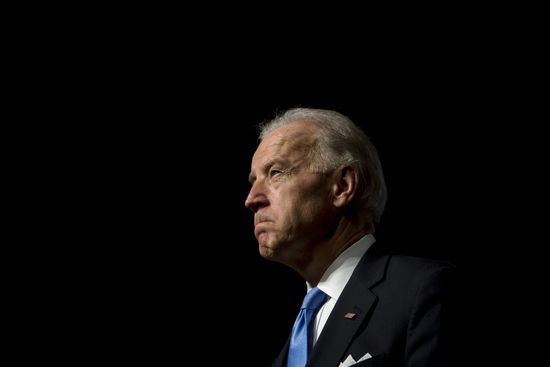
Daniel Levy on Biden's visit to Israel:
Many very smart Israeli analysts, commentators, and practitioners are in denial themselves (for example, Amos Harel here, putting this latest spat down to incompetence). It is all too easy to blame the Shas minister directly responsible, Eli Yishai, or Netanyahu's poor management, or coalition intrigues.
Of all the words Israeli officials have uttered in walking back this episode, one has been conspicuously missing – that it was "wrong". Netanyahu is reported to have said the following in yesterday's cabinet meeting, "Approving that plan when the vice president of the United States is visiting here is first-rate insensitivity… We will continue to build in Jerusalem." Aye, there's the rub…
Under the U.N. partition plan of 1947, a Jewish national home was to be accorded 55% of Mandatory Palestine. After its war of independence, Israel was in possession of 78% of that territory. Many in Israel apparently see no reason why 78% cannot become 80% or 85% or 100%. The pragmatic, state-building and solidifying variety of Zionism is now in a life or death struggle with its maximalist, expansionist and sometimes messianic twin brother, and the latter
is winning almost without breaking sweat.
And don't forget the role of the Christianist right in all this. One of the key strategies of many neoconservatives was to create a majority in America for greater Israel. They couldn't do that with sympathetic goyim who wanted Israel's security but balked at permanent annexation of the West Bank or pre-emptive wars against Iran. They couldn't do that with American Jewish voters who kept voting Democrat and wanted peace. But if they allied themselves with evangelical End-Timers, they could have a massive voting bloc they could use to protect Israel while it seized the West Bank for ever. Any namby-pamby critics could be smeared as anti-Semites.
Recall Sarah Palin's words – a politician who, at a Tea Party summit of all places – wore a joint US-Israeli flag-pin and had only one foreign flag in her governor's office, Israel's:
PALIN: I believe that the Jewish settlements should be allowed to be expanded upon, because that population of Israel is, is going to grow. More and more Jewish people will be flocking to Israel in the days and weeks and months ahead. And I don’t think that the Obama administration has any right to tell Israel that the Jewish settlements cannot expand.
WALTERS: Even if it’s [in] Palestinian areas?
PALIN: I believe that the Jewish settlements should be allowed to be expand.
Now see WSJ contributing editor Seth Lipsky's orgasm in response to Palin's words:
When I read her reply, I thought that it was wonderful. In the two generations in which I’ve been covering the Middle East debate, it was one of the few times a public figure gave in response to a question about the settlements an answer that I would call ideal.
It seemed to me courageous, in that Palin was going against not only the administration but many in her own party and the gods of political correctness. There was no shilly-shallying about the Oslo process and the Quartet and the United Nations. Palin didn’t seem particularly worried one way or another about how she might be perceived. She is just on Israel’s side.
(Photo: David Furst/Getty.)
Adam Serwer sums up the decision on sentencing reform:
The compromise was that Durbin would accept Sessions' amendment to change the disparity from 100 to 1 to 20 to 1. In return, Sessions offered to withdraw his amendments that would have narrowed the circumstances under which a judge could reduce penalties for offenders who acted with "fear, impulse or affection," and would have imposed a 10-year mandatory maximum for simple possession rather than eliminating the five-year mandatory minimum for simple possession entirely.
Instead of eliminating the crack/powder disparity, which practically everyone in the committee acknowledged disproportionately affects black Americans, the senators opted to make the law one-fifth as racist as it used to be. The senators on the committee spent the rest of the markup complimenting each other on all they had achieved with their bipartisanship.
TNC sighs:
It's progress, I guess.
Howard Gleckman studies "Obama's proposal to boost the Medicare tax is a key element of the compromise health bill that looks increasingly as if it is going to become law." The tax would fall almost exclusively on the top one percent of earners:
Converting this chunk of Medicare funding to a progressive income tax, rather than a regressive payroll levy, is an interesting idea. But doing it in this ad hoc way, and only for the very wealthiest taxpayers, seems pretty clumsy. But the worst part is that it will force me to stop calling the Medicare levy a payroll tax. If this bill passes, it will henceforth have to be known simply as the Medicare tax.
The NYT says that the Iraqi election is very close. Michael Hanna has more on the contest:
Within Iraq’s parliamentary structure, the presidency was conceived as a largely ceremonial role, and its clearly-delineated substantive powers were transitory in nature. With the expiration of the tripartite Presidency Council, which is composed currently of a Kurd, a Shiite and a Sunni, and its legislative veto, the role of the presidency might take on even greater substantive powers due to the murky constitutional guidance on the actual powers of the presidency. With no upper house of parliament in place resulting in an unchecked parliament, the incoming president will almost certainly test the bounds of his power to review and potentially veto legislation. In this sense, it is hard yet to know how significant the new president will be.
I recently gave a speech at Princeton University, which has become, because of Robbie George, the intellectual center for the “new natural law” which wants to deny gay relationships any civil recognition at all. I was challenged civilly by a young orthodox Catholic on an earlier part of the speech on what I believe and have argued are the inherent contradictions of natural law on the question of homosexuality.
Anyway, it’s a rare moment of civil, honest and Catholic dialogue on this question. We need more of them. I am grateful for the young man who challenged me so intelligently and respectfully. And for Princeton for hosting the speech. I hope to post segments of the whole speech over the coming days.
Doug Schoen and Pat Caddell use Rasmussen's polling three times to make the political case against passage of healthcare reform. They use no other pollster on this question – just a generic CNN poll on attitudes toward government. I'm not surprised Fred Hiatt's latest anti-Obama gambit is to run this guff – Schoen just co-authored an op-ed with, yes, Republican Rasmussen, in the Wall Street Journal, and the WaPo's op-ed page is now essentially the WSJ's a few days' later, with a few torture believers thrown in as regular op-ed writers for good measure.
But the polling they cite is misleading. Rasmussen's current gap between opposition and support is some 13 points. The average of every other poll is 0.9 percent. Even including Rasmussen among every other polls shows that the gap is now 4.4 percent. And Megan thinks this places Rasmussen "in the middle of the pack". This is simply propaganda. It is untrue. And approval of Obama's handling of the issue is growing every day:
Friedersdorf exposes Mark Levin.
Yglesias zooms out:
[N]obody lasts in office forever, no congressional majority lasts forever, and no party controls the White House forever. But the measure of a political coalition isn’t how long it lasted, but what it achieved. From the tone of a lot of present-day political commentary you’d think that the big mistake Lyndon Johnson made during his tenure in the White House was that by passing the Civil Rights Act he wound up damaging the Democratic Party politically by opening the South up to the GOP.
Back on planet normal, that’s the crowning achievement of his presidency.
That's one of the great weaknesses of our cable-news sports-journalism today. It's all saplings, no forest. They have the perspective of someone with ADD watching a NASCAR race.
 The Dish