Believe it or not, those who have been hating on NYC in the blogosphere recently, and those who have tried to defend NYC, have a lot more in common than they know: Both groups think that Manhattan is the only part of NYC that matters. This could not be further from the truth.
New York is a city of 8.3 million people and five – not one – separate boroughs. Only 1.6 million of those people live in Manhattan – the rest live in Brooklyn, Queens, The Bronx, and Staten Island. Eighty percent of New Yorkers lives outside of Manhattan, yet you would never know it because the rest of the world shares a Manhattan-centric view. Did you know that Brooklyn would be the 3rd (!) largest city in the United States if it were independent? (And some experts say that 1/5 Americans can trace their roots back to Brooklyn, someway somehow!) Did you know that Queens is considered the most diverse county in the United States, with over 140 languages spoken in the borough!? Did you know that the Bronx is home to one of the greatest inner city resurgences in the country? Or that Staten Island is the birthplace of celebrities such as Christina Aguilera, Buster Poindexter, and the Wu-Tang Clan?
Criticize Manhattan all you want. I think some of the criticisms you have aired on the Dish have some validity – Manhattanites can be smug and obnoxious, cold and unfriendly, self-centered and self-absorbed. But the rest of our great city isn’t like that, and it’s time people stop lumping the rest of the city in with Manhattan.
The email from your female reader who identifies as straight but is in her first relationship with a woman reminds me of this scene from Chasing Amy. In it, Holden has just expressed his love for Alyssa, who is a lesbian, and the scene cuts off right before she runs into his arms to consummate their love. Though the two situations are reversed – the straight reader makes an exception for one woman while the gay Alysssa makes an exception for one man – I think they both hold the same insights over the complexity and uniqueness of sexual identity. Perhaps Kagan's is just as, if not more, complex.
Yglesias joins the fray in defense of Greenwald's and my position:
This strikes me as part of a broader set of questions where I tend to see older straight liberals seeing things one way and gays and younger straight liberals seeing it differently.
When you think about it, the whole reason these “it’s none of your business” situations arise is precisely because facts about your sexual orientation aren’t considered on a par with questions about one’s sex life. Straight people don’t normally discuss our sex lives with casual acquaintances or unknown readers, but we’re expected to over time bring dates to events or make passing reference to current or former partners. It’s when someone doesn’t do that stuff that people begin to wonder if the person is gay. Failing to mention one’s past experience or lack thereof with threesomes doesn’t lead anyone to inferences of any kind, it’s just normal social behavior.
I think it's also generationally true of conservatives as well, with many of the younger types finding the whole thing a non-issue. But I'll tell you someone who gets it more than anyone I know in the Obama administration: good old right-winger Ted Olson. Noah Millman, who argued earlier that I should ask Kagan about her sexuality in person, also weighs in:
If Andrew had said, “you know, lots of people I know are gossiping about whether so-and-so is gay, but I have no evidence she is, and she’s never said she is, so if she is then she’s a closet case – and all I want to say is that I don’t want a closet case on the Court; in fact, in this day and age, I think it should be an automatic disqualifier” – if he’d said that, and left it at that, he’d have been making a clear, direct point, and one that could be debated as a matter of principle by, well, even by the nominee herself, without forcing anyone to give the lie direct.
Much virtue in if.
Well I really don't think I've strayed far from that, except for wanting some clarity on the empirical question in the first hours after her confirmation when the issue could and should have been laid to rest from the get-go. As to Noah's suggestion that I should ask her myself, I'd love to but somehow doubt the Obama administration would be willing to provide access.
And, yes, Noah, it can be rude in a private – and some public – context. But the reason I'd happily ask her to her face is because this case is not a private context. It's about as public a context as you can imagine.
If you agree to be a SCOTUS nominee, you enter a public zone. You don't have to agree to that. But if you do, deal with something this obvious simply and quickly. And no one is going through her old porn tapes and coke cans, ok?
In other news, Pakistan pouted about some people putting images of Mohammed online and Reason orchestrated a bunch of drawings. Bruce Bartlett warned us about the debt and the GOP in Chris Christie continued to balk at raising taxes to help solve it. Iraq update here. Andrew lauded the Cameron-Clegg coalition, its new foreign minister sanctioned an investigation into torture, and Greenwald praised the new government on civil liberties. The Onion reported on Palin.
The Beinart-led debate on Israel continued here, here, here, and here. More on the complexity of the closet here and here. Another drunk history lesson here, an incredible impression of Ian McKellen here, unearthed footage of Crystal Bowersox here, end of gay culture watch here, and cool ad here.
(By Athit Perawongmetha/Getty Images)
Thursday on the Dish, Andrew gave a qualified defense of Rand Paul and his controversial comments on the Civil Rights Act. Weigel joined him, TNC wasn't as forgiving (and praised Maddow's approach), Ezra grilled the GOP nominee, a reader piled on, and Paul started to panic. Friedersdorf still thought he'd make a good addition to the Senate. Andrew Gelman downplayed Tuesday's elections.
In other commentary, readers tore into another reader over the drug war, others teared up over the bus driver's birthday, another responded to the Cannabis Closet, and yet another gawked at Beinart's support for denying rights to Arab Israelis. Bible study here and here. We also read the spiritual reflections of a hospice nurse. David Simon joined readers in slamming NYC and Friedersdorf started in on DC.
Brain orgy here – something Nicolas Cage would have no appetite for.
Wednesday on the Dish, we rounded up reaction to Rand Paul's big win in Kentucky. Packer feared his influence, Larison added two cents, and he also warned the GOP against nationalizing House races. Bloggers reacted to the sudden sanctions plan against Iran, the gay couple in Malawi was convicted, and some unsettling details emerged over Rekers. Palin's lying again.
Andrew addressed the politics of questioning Kagan's orientation and delved deep into the deception of living in the closet. More fallout from the Beinart piece on Zionism here, here, and here. Walter Frost questioned military spending, Kinsley got cute over Kagan, Andrew saw some cultural progress in American Idol, Joe Carter went after atheism, a reader grieved for Adam Bellow, another dissented over our drug coverage, and we were introduced to a utterly unique face in politics. More on NYC's alleged tyranny here and here.
TNR dodged a fabulist, a bus driver got the best birthday ever, and a head of state got owned by a wreath. Cool ad here and trippy MHB here.
In assorted commentary, Larison gave props to Rand Paul, Reihan was bullish on a conservative comeback, Douthat revised his case for decentralization, Ezra prodded him, Aravosis examined Obama's record on gay rights, Gary Wills conversed over his Catholicism, and Dave Barry talked about his craft. More on the Zionist crisis here and here.
Readers continued the "Treme" thread and bloggers did so for NYC's alleged tyranny. More life-and-death musings here, here, here, and here. A dispatch from the Cannabis Closet here. Cool ads here, here, and here. Stoner-and-bear blogging here.
Monday on the Dish, Iran announced a deal over nuclear fuel and Portugal went for gay marriage. Peter Beinart provoked a new wave of commentary over the Zionist crisis, manifested here and here. More evidence to bolster his position here and here.
Andrew tackled Solmonese over the big Kagan question, Bernstein scolded his stance on ambition, and Donna Brazile backed her. Steve Coll showed the lack of sunlight between the Labour and Tory on foreign policy, Lisa Margonelli took in the implications of the oil spill, Balko vented over the drug war to Vice, and Steven Taylor illustrated the futility of the war. Get your Palin fix here.
Elsewhere, Andrew Rice looked at the growing addiction to SEO and pageviews, Suzanne Lenzer sold us on eating alone, and Scott Adams thought about thinking. More life and death talk here, here, here, and here. More NYC debate here and here. Porn follow-up here, insanely sexy CPR here, hathos alert here, and a baby sloth bonanza here.
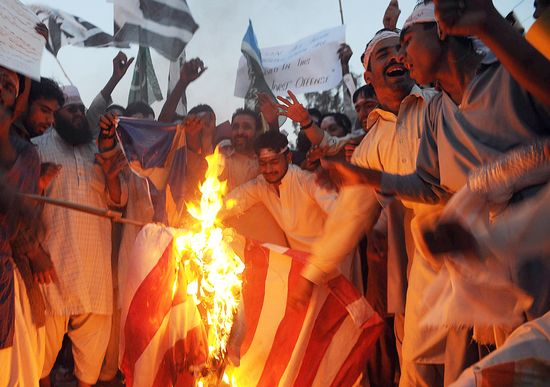
The Pakistani government blocked Facebook because of the "Everybody Draw Muhammad" page on the social networking site. Touchy much? Global voices has a round-up of opinion from within Pakistan. Adil Najam at Pakistaniat understands the consequences, to some degree:
I am offended by the idea that page purports and the goals it seeks to achieve. So, why should I dignify it by a visit? Why should I publicize it? Why should I give it the attention it was created to seek. Yet, all of us (now me included, which is why writing this is uncomfortable) are doing exactly that. And that is what pains me.
They simply could not have done this without us. The only people who have turned this from nothingness into a huge issue is us. I am sure that those who set up the page are jumping up and down and thanking us for making their page such a huge success! And that is what pains me.
Judging from tweets I'm reading, and reports like this, the vibe among a relatively wide swath of Pakistani digerati seems to be: all the ambient anti-Muslim sentiment is annoying, but the state censorship is really bad news.
(Image: Activists of Pakistani coalition of Islamic groups, including Jamaat-ud Dawa, torch a US national flag during a protest in Lahore on May 21, 2010, against the published caricatures of Prophet Mohammed on Facebook. Pakistani protesters shouted 'Death to Facebook', 'Death to America' and burnt US flags, venting growing anger over 'sacrilegious' caricatures of the Prophet Mohammed on the Internet. A Facebook user organised an 'Everyone Draw Mohammed Day' competition to promote 'freedom of expression', inspired by an American woman cartoonist, but sparked a major backlash in the conservative Muslim country of 170 million. By Asif Hassan/AFP/Getty Images.)
Participants in an annual Wave-Gothic festival pose on May 21, 2010 in Leipzig, eastern Germany, where more than 20 000 people are expected to attend the festival attracting the friends of gothic romanticism. The festival offers a very special spectacle with a range of concerts, historical markets, theatre and cinema, gothic scene performances, exhibitions, readings and parties. By Sebastian Willnow/AFP/Getty Images.




 The Dish