Moving The City Around The People

The Economist looks at the work of six architectural practices that "have been asked to produce projects with a vision for 2030.":

Pretty much all of the presentations assumed that cars would be self-piloting within 20 years, and that their interiors would, to some extent, be transformed into extensions of living spaces… Another more radical step would be to question the notion of personal mobility itself. At the moment, people need such mobility because there are things they want to bring home as well as places they need to get to. Electronic networks may change that. It is not completely far-fetched to imagine charming, vast and dense cities in which most human movement takes place on foot while most movement of goods is by robot delivery systems.

Oh please God. The fewer cars the better.

Rude Britannia

My column last Sunday took on the 21st Century role of British immigrants in America:

The blunt Brit is now almost a stock figure. Last week saw the final American Idol featuring Simon Cowell as a judge. Cowell is better known in America than, say, the Supreme Court’s COWELLChrisJackson:Getty chief justice or three-quarters of Barack Obama’s cabinet. At some point in a distant Wildean past, a British musical judge might be expected to be wittier than his peers. Cowell is witless, inexpert, inarticulate and touchy. He just possesses a series of ugly prejudices and crude hunches and the ability to tell someone to their face that they’re rubbish. In Britain, who really cares? In America he’s a legend.

Or contrast Gordon Ramsay’s restaurant reality show in America with the British version. In the US, he’s far ruder and the recipients of his bile much less socially prepared for it. And so the Brits have found a niche in fostering embarrassment among Americans by saying things Americans in general are far too polite to bring up.

Christopher Hitchens cannot be reduced to this. His first common identity in America was leftism, just as mine was conservatism. He seems to have read everything and met everyone, as his addictive new memoir, Hitch-22, proves. His prose is almost as enjoyable as his company. But he only reached his apotheosis in American culture by attacking the one thing Americans have historically shied from attacking: God. Mother Teresa, Pope John Paul II and Princess Diana were not enough. He needed the Big One to become the Loved One.

More here.

(Photo: Simon Cowell attends the Collars and Cuffs Ball at the Royal Opera House on September 17, 2009 in London, England. By Chris Jackson/Getty Images).

Epistemic Closure Watch

A reader writes:

Check out this report (pdf) on tort liability by the Pacific Research Institute. Sarah Palin is now writing the forewords for "think tank" studies?  Bruce Bartlett could not be more right about how intellectual void these organizations have become.  At the very least, it just shows how relevant she is in the current Republican party.  Please keep up the good fight!

The Real Issue: The Embargo, Ctd

Yaacov Lozowick wants Bibi to make a speech about the purpose of the Gaza blockade:

There are some fights Israel can win, others that are hopeless – and there may be a very small group that seem hopeless but are so crucial we'll have to fight for them no matter what. The malignant idea that dividing Jerusalem will bring peace may be one of those.

The blockade of Gaza, however, isn't. To the best of my knowledge no Israeli government since the onset of the blockade in early 2006 has clearly stated what it's for, what it's intended to achieve, and what benchmarks are in use to determine its extent, duration, and eventual lifting. It started, I think, as a response to the electoral victory of Hamas; it was strengthened, if memory serves, after the kidnapping of Gilad Shalit; it has been tightened or loosened in some form of correspondence to the rocket fire from Gaza. At one point Ehud Olmert, then prime minister, said clearly that the blockade would be lifted when Shalit came home; if that's the policy still then it isn't about smuggling weapons – but perhaps the policy has changed. I honestly don't think it has ever been publicly discussed.

And what does that tell you about Israel's long-term strategy? Or total lack of one?

Nate’s Deal vs Ezra’s

Taegan Goddard notes:

What's most interesting about Nate's deal with the New York Times (to me, at least) is that he was not really "hired." Instead, it's a license deal where he continues to own and control the content and everything reverts back to him if he doesn't renew. It's the same deal you cut with Atlantic Media and I cut with CQ-Roll Call.

From a business sense, this is very different than the Washington Post hiring Ezra Klein and Dave Weigel. It could be a new model for bloggers that mimics television production.

BP’s Damage Control

Bp-ad1

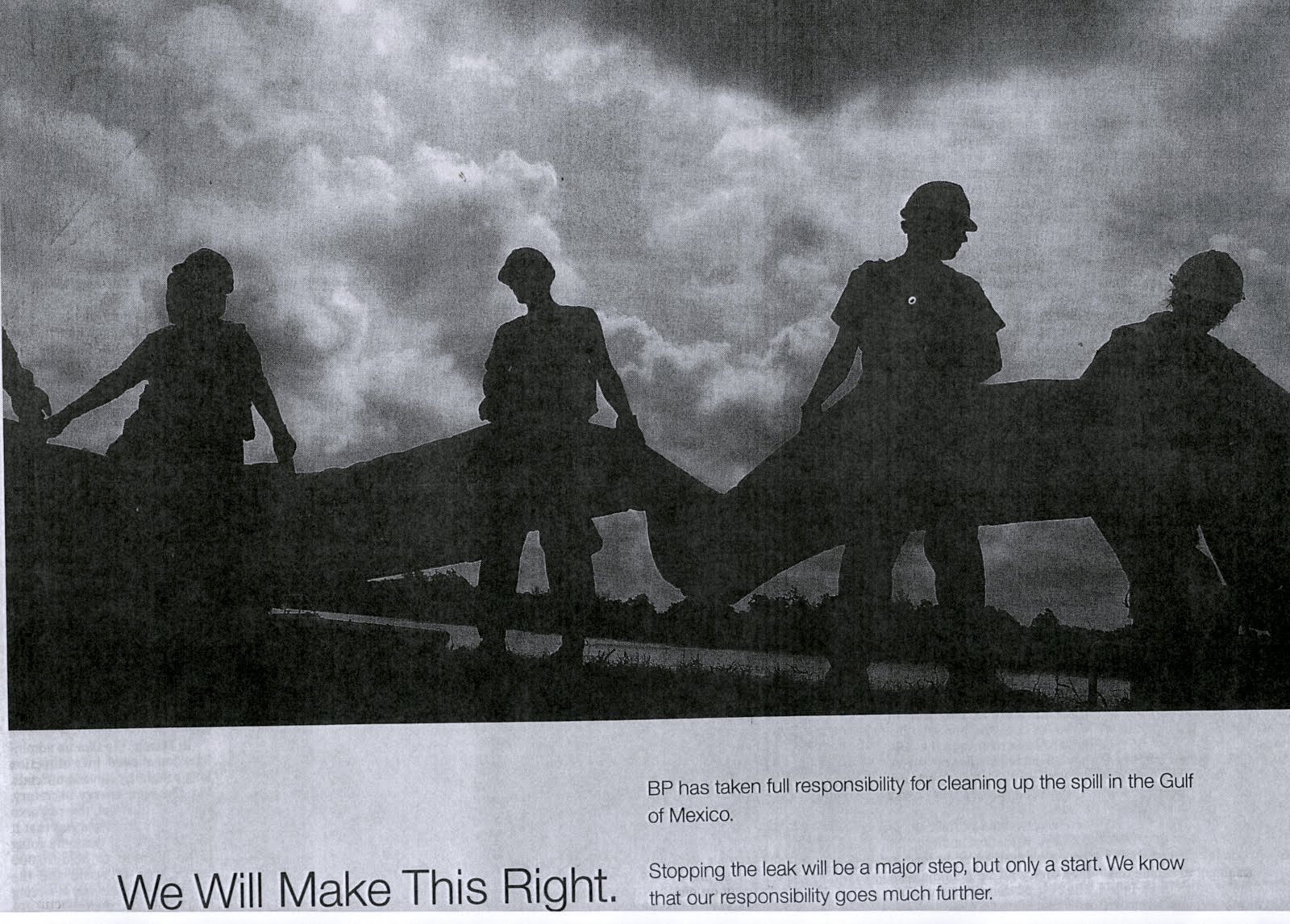
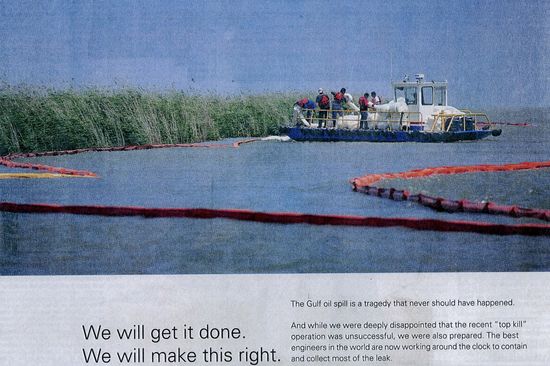
Copyranter tears out two newspaper ads – one from the NYT (above) and another from the WSJ:

We will make this right? Sorry Beyond Petroleum, but that shrimp boat has already left the dock. Note the added "We will get it done" for the NYT ad. And the initial caps in the WSJ headline. It's obvious confusion is reigning in London about how to ad-spin the "spill." Not surprising! Knowing how the copy approval process works with large corporations, I can guess at the excruciating hemming and hawing that went on before these pathetic ads were sent to the pubs. They need more hemming and/or hawing. Cutesy logos, though, they got down PAT.

Video version of BP's campaign here. They're gonna have a tough time keeping up with Greenpeace UK's rebranding efforts. And, of course, the Internet's:

Enhanced-buzz-29209-1275423897-2