Global debt broken down nation-by-nation. Britain's is staggering, after the Blair-Brown splurge and the recession.
Month: June 2010
Von Hoffman Award Nominee, Ctd
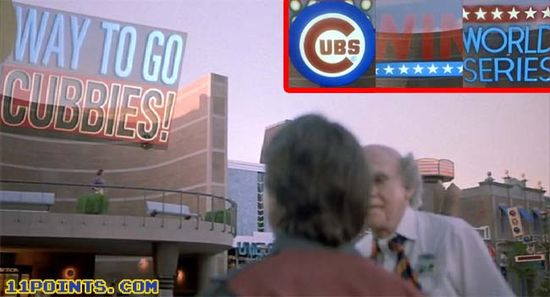
A reader writes:
These are a little old in internet years, but they dovetail nicely with this thread: 11 Predictions That Back to the Future Part II Got Right / Got Wrong
How Do We Spend Our Time?
Laura Vanderkam, who wrote a new book on time management, delights in the release of the American Time Use Survey (ATUS). Lots of interest at the link:
Nearly a quarter (24%) of employed persons did some or all of their work at home, and 84% did some or all of their work at a workplace. By my calculation that would mean that about 16% of workers are pretty exclusively operating out of the home-office (unless the ATUS found a huge contingent operating out of Starbucks!). Men and women are equally likely to work from home.
Less Liberal Than You Think
Hmm:
This paper suggests that there are consistent patterns in how different groups of individuals perceive their relative ideological position..for example, the more educated on average believe themselves to be more left wing than their actual beliefs on a substantive issue might suggest.
The Daily Wrap
Today on the Dish, Andrew continued to wring his hands over the post-McChrystal situation in Afghanistan. He also sparred with a dissenting reader. More analysis from Fred Kaplan, Reihan, and two readers in the military. In other news, police raided an archbishop's home, polls showed that the American public is divided over the flotilla, KIPP charter schools saw some success, and Conan got the last laugh. Team USA update here and coverage of the North Koreans here, here, and here.
In assorted commentary, Josh Green found that Americans actually want an angry black man to lead, Dylan Matthews assailed agricultural subsidies, Tom Schaller laid out the demographic crisis for the GOP, Karl Smith added on, Mark Oppenheimer opined on debate team, and Drezner dreamed of zombies. Zach Anner made a push to become the first major host with palsy. A reader contributed a recession view, another shared a story about real-life Team America, and another talked Marty McFly and hoverboards.
Bristol earned some hathos here, gay/guido coverage here, and beard-blogging here. More viral vids here and here. An especially good MHB here, VFYW here, and FOTD here. And what everyone was surely waiting for: an update on animal masturbation.
— C.B.
Fearing The Ego
A reader writes:
I am writing from Afghanistan as a Special Forces operator. I have a staff job at the moment, so I’m working a desk that has allowed me to follow the fallout from the McChrystal article. I have to say, this whole thing has been absolutely baffling. It is all everyone – and I mean everyone – is talking about here. I read your initial response, and although I know you are blogging in the heat of the moment, I think your initial reaction – in particular the extrapolation of a larger “real vs. fake” argument from the “real soldier” quote given by one of my colleagues – is not quite as seamless as you make it sound.
There are two separate issues here from my vantage point: the dynamic issue of Afghanistan and the static issue of power versus ego. With regard to Afghanistan, every morning I sit in briefs and listen to the latest sitreps, and while I’m focused on executing whatever task is immediately in front of me, I always seem to have two thoughts in the back of my mind: 1) I can’t believe how absolutely, ridiculously complex, and multi-faceted, this whole operation is, and 2) even with that knowledge, there’s always going to be another hundred variables I haven’t thought of.
This is the context for the second issue, which I think is more relevant: this whole thing is more about power and ego than it is Afghanistan.
Anyone who has gotten as far as General McChrystal in any field – but particularly those that wield power in the public eye – is invariably going to have an huge amount of self-confidence, to the point where the specter of self-delusion looms. I’m not saying the General is delusional, but it seems like the same ego that gives people the determination to succeed, excel, and desire high-ranking positions is the same ego that leads them to believe that their worldview is undoubtedly correct, that their beliefs are so accurate and necessary that things like articles in Rolling Stone are beyond a good idea – they are a window into righteousness. It’s the same thing that went on in Secretary Clinton’s campaign, and Palin's.
The problem here doesn’t seem to me to be that General McChrystal, a man of undoubted talent, has the wrong view of Afghanistan necessarily. It's that he felt his worldview was so correct that it didn’t matter if he let his aides mouth off, it didn’t matter if he slandered his chain of command, and it doesn’t matter if the other bureaucrats are pissed off, because his beliefs are the correct ones, and therefore the only ones that matter. Does his formative experience in the military, and more specifically SpecOps, contribute to this? Probably. But you don’t have to search hard to find other people in public positions of power to find similar traits.
One thing that has impressed me about President Obama is that he seems to be very aware of this problem. He undoubtedly has a massive ego, but also appears, at least from a distance, to have a healthy fear of this ego. Hence, we see his constant desire for consensus, his reliance on experts who may not be popular with the public, and his pursuit of the best ideas wherever they may come from. In short, he believes that his ideas are not infallible. Seems a conservative notion, eh?
(Image: Hiroko Masuike/Getty Images. )
How Powerful Is The President? Ctd
Yglesias joins the fray:
The White House’s failure to engage in a maximum, 100 percent push for each item on the Obama agenda doesn’t demonstrate that it’s a White House that’s time and again betrayed progressive values. It demonstrates that even though in each case you can always do more, you tend to decide to leave some arrows in the quiver because there are so many legislative fights and you can’t just be going nuclear thirty times a year.
Now it is true that I think one problem with this system is that it allows the White House to be deliberately ambiguous about what positions it supports, secure in the knowledge that “the votes aren’t there” for certain things and therefore saying you support them is a freebie. That’s a bad thing, but it doesn’t change the fact that this option is usually available precisely when it’s true that the votes aren’t there.
“The Death Valley Of Housing”

Now that the homebuyer tax credit has run out, housing has fallen off a cliff. Howard Gleckman reflects:
The hardest bit to swallow is not so much that the homebuyer tax credit is a boondoggle. It is that it was a totally predictable waste of money. Economists warned Congress in 2008 that the credit would do little more than shift timing decisions by a few months. But lawmakers ignored the advice again and again. Remarkably, the Senate may be about to give buyers still more time to close on homes they put contracts on before April 30. That way, they can squeeze the last few dollars out of a failed credit.
Calculated Risk has been on top of this from the start.
The GOP’s Expiration Date Nears? Ctd
Karl Smith is in the same ballpark as Teixeira:
Michael Steele says he wants to bring the GOP to a “hip-hop urban-suburban” audience. However, suburban doesn’t look like its going to cut it. The country is urbanizing. Whether its “re” urbanizing or continuing a long run trend towards density is a matter of debate. I tend to think this is a new phenomena but that’s an argument for another day.
Urbanites clearly see government in more favorable lights than suburban and rural dwellers for the simple reason that proximity breeds externality. Spillovers of all sorts positive and negative are more likely in the city and demands for a government capable of handling negative spillovers will increase.
So yes, this is perhaps a fundamental problem for the GOP.
“Do Intelligent Arguments Make A Difference?” Ctd
Sprung pipes up:
Momentous events may ultimately settle arguments, for instance by discrediting Hooverian retrenchment in the face of Depression. Successful politicians articulate what's not working, and why — though sometimes, for sure, cleverly packaged nostrums win the day, short-term. "The gravitational pull of mounting social change" is shaped gradually by event and argument – as in the spectacle of Martin Luther King's peaceful demonstrators being beaten and having debris heaped on them — and also eventually captured by effective argument, as in the California court these recent weeks on gay marriage (Judge: whom does it hurt, and how? No answer…).
 The Dish