I was raised Jewish in Tulsa, Oklahoma and I've been thinking about this notion of Jewish "persecutionism" for quite a while.
I spent my early years in Sunday school –like every other Jew I know– being force fed a diet of Jewish persecution stories. We were either getting kicked out of one country or massacred in another or being forced into hiding somewhere else…and that's not to mention the hours and hours we spent learning about the Holocaust. Endless films of emaciated Jews and readings of the Diary of Anne Frank and statistics from before and after the war and etc. Plus there were the many wars Israel fought in, the many times they were attacked by their neighbors during holy-days or asleep in their beds.
My entire self-concept as a Jew was based around the idea that Jews are simply not safe anywhere and must maintain perpetual militaristic vigilance both personally and culturally. It's like some kind of cultural post-traumatic stress disorder. Hopefully soon Jews will stop indoctrinating their children to perpetually look over their shoulders for the next Hitler (or Torquemada), but I wouldn't be surprised if it doesn't take some time and until then self-pity and paranoia will continue to define the Jewish experience, for both Jews and non-Jews around the world.
Netanyahu said, if we open up the blockade, Gaza will become a port for Iran. But it’s completely possible to maintain a ban on weapons just by inspecting what’s coming into the country without shutting out everything. Unfortunately, among the materials they consider dangerous are building supplies, which might be used, the Israeli authorities say, for constructing weapons. For instance, in the handmade missiles that were such a feature of the Hamas artillery, cement was used as ballast. On the other hand, people’s homes are destroyed, they are living in tents or under cardboard shelters, there’s a desperate humanitarian need to provide shelter, which is why cement and other building supplies are so urgently needed. As long as people are forced to live outside in handmade shelters with minimum daily calories and no work to do, radicalism will flourish.
Today on the Dish, Andrew tookstock of a week of commentary he characterized as “Israeli derangement syndrome” – a fiery take here and a cooler, more considered take here. Reader responses here, here, and here. Beinart challenged Gaza supporters to stick up for Israel’s captive soldier, Greg Sargent was aghast at Harry Reid’s response to the flotilla, Yousef Munayyer zoomed in on the blockade, Ackerman addressed Israel’s unprecedented unilateralism, Greenwald vented over liberal progressives who make an exception for Israel, and Exum shared an unsettling anecdote. Ugliness here, here,here, and here.
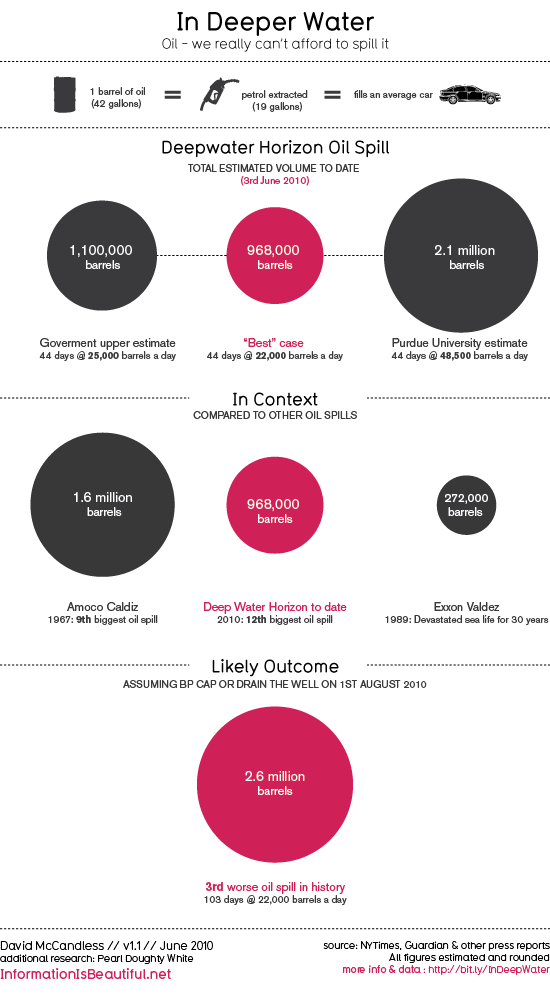
In Gulf coverage, the first effed-up images of oil-covered birds emerged. More visuals here and here. Rob Young doubted Jindal’s berm strategy, Niraj Chokshi looked at the downsides of not drilling, and Ryan Avent anguished over the inability of politicians to even talk about a gas tax. Gabe crapped on James Cameron’s role while a reader came to his defense. Car talk here and here.
New employment reports here and here. Iran updates here and here. Uganda update here. An unhealthy dose of Palin here and here. Andrew discussed the Dish brand, TNC had some parting words for Artur Davis, and Joshua Alston described Facebook’s power of outing. More on the career counselor thread here and here. Creepy ad here and coolness here. MHB here, VFYW here, and FOTD here.
Andrew’s on Bill Maher tonight.
Thursday on the Dish we discovered that an American died on the flotilla and that Israel backpedaled on its claims of an Al Qaeda connection. Yaacov Lozowick called on Bibi to make the case for the blockade and Wieseltier responded to the row. Dissent of the day here. Andrew despaired over the Church’s decision to target gays in the workplace. Bush said he’d torture again.
In Gulf coverage, Michael Coren wondered if BP’s gonna pay up, John Calfree explained the downside of investigating them, Dickerson and Lehrer thought about thinking about the spill, and Copyranter went to town on the company’s PR campaign. Palin penned the foreword for a think tank study, the Wasilla paper apologized to McGinniss, and Sarah haunted Andrew’s dreams.
In assorted commentary, Douthat delved into the finer points of empathy, Andrew and Dreher discussed tradition and culture, Andrew addressed the rudeness of Brits in pop culture, Virginia Postrel processed Obama’s glamor, Steinglass studied the shifts in Western conservatism, Liz Halloran tallied up the new women running in the GOP, and the Economistimagined car-less cities. Nate Silver made a deal with the NYT and Taegan Goddard shared his thoughts. The Dish recognized the Green Movement’s birthday.
Malkin awards here and here. More retirement talk here. Readers kept the job-hunting talk going and Drum chimed in. Another serving of crack and cleavage here and another dose of Dishness here. MHB here, VFYW from Israel here, and FOTD here. Feel-good video here. And one of Andrew getting tackled by his beagles here.
Wednesday on the Dish we learned that BP has been criminally culpable for years and that Palin has more chutzpah than we thought. With the help of Noah Millman, Andrew took a long look at the Israel dilemma. Readers dissented en masse. We also heard from a friend of the young American who lost her eye protesting the flotilla, we learned how harmless its cargo was, and we watched some right-wingers rub it in. Larison laid into Israel for blockading Gaza, Jim Henley clarified his point about Israel “winning,” Thomas P.M. Barnett turned the klieg light on Turkey, and Pareene parodied Palin.
In other coverage, Phillip Smith saw some good signs for legalization in California, an NRO contributor gave props to Obama for his drone policy, and we rounded up some racial commentary on Artur Davis’ loss in Alabama. Maureen Dowd demanded that Obama be more like daddy, Reihan rolled his eyes at the call for an oil spill czar, Leonhardt looked at worst case scenarios, Bernstein balked at majority rule, and Andrew agreed that we should prune benefits for senior citizens. David Runciman examined the UK’s unraveling and ITN reported on a rampaging gunman.
Paul Bloom discussed our attachment to fictional characters, P.J. O’Rourke recommeded live obituaries, and Michelangelo sketched brains on God. Steve Jobs dissed blogging, Steve Coll had some parting words on the medium, Nick Carr criticized links, and Dave Coverly drew an accurate conclusion. Ken Layne spotted manbearpig. Beard sighting here. Cracks and cleavage here. Recession view here and cool ad here. MHB here, VFYW here, and FOTD here. Holy shit! moment here.
Oil leak updates here, here, and here. Joyner assessed the latest death of al-Qaeda’s No. 3, Exum protested over the perception of drone kills in Pakistan, Joel Wing saw some signs of optimism in Iraq, and Michael Yon was not hopeful about Afghanistan. The Malawi couple was pardoned but still in peril. Al and Tipper split.
Jesse Zwick gushed over Jindal, Greenwald went after Ron Paul’s critics, and rapper M.I.A. went to war with a journalist. A reader shared some expertise on job hunting. This photo of a sinkhole in Guatemala City is unbelievable. Malkin Award here, epic SATC2 review here, MHB here, and incredible stunt here. More Dishness here and a dose of Ptown here.
Lake Anna, Virginia, 12 pm
Monday on the Dish, the holiday weekend erupted with the attack of Israeli commandos on a flotilla of aid activists bound for Gaza. Dramatic footage here. Israeli version of events here, a foreboding sign from Turkey here, and an unconfirmed report of a blinded American here. Gideon Levy compared the incident to the 2008 assault on Gaza, Goldblog responded with angst, and Andrew posed a counterfactual. Readers reacted here. Before the incident, a reader reflected on how Israel responds to its enemies and Timetold us what really happened during that supposedly contentious meeting between Barack and Bibi.
In other news, the Guardian reported on the resurgence of the far right in Britain, Joel Wing worried about Iraqi refugees, and Graeme Wood investigated the widespread use of witch trials in Africa. Joe McGinniss broke his silence to Weigel, TNC tackled Lanny Davis, and Andrew criticized George Will’s reasoning over Obama and the spill. He also examined the latest victim of the closet.
In spiritual coverage, John P. Meier explained the Jewishness of Jesus, a Protestant reader discussed death and faith, another reader enriched the debate over Christ’s divinity, another delved into the deeper meanings of Frost, an Orthodox Christian tried to apply original sin to bonobo apes, and atheist David Sloan Wilson went after Dawkins. Olivia Judson looked at man-made DNA, Bailey defended man-made organisms, and Ryan Sager summed up some studies on happiness.
In assorted coverage, Nick Carr kept up his crusade to save our attention spans, a reader countered, Mike Konczal critiqued online education, and Kottke came up with a great use for the iPad. Swimming pigs made it into an MHB and a few readers provided parting words for Ralph. Cool ad here, cool map here, and a heartbreaking map here. Lots of amazing images of animals here. And the Dishness was strong with this reader.
I think the thing that is so galling about networking for many people is that it takes a very unpleasant situation – being unemployed – and demands that it permeate every aspect of your life. Are you at your friend's wedding and having a casual conversation with someone you haven't seen in years? Make sure to mention that you're unemployed, try to discretely probe them about their job and if there's any open positions, find a way to rebuff their suggestions that there's only some entry level stuff that you're probably overqualified for?
Really, make sure they understand how desperate you are. Or watch them squirm as they try to find a way to tell you that they don't think you're qualified, or that they don't really relish the idea of seeing you every day at the water cooler. If you're lucky, it may get to the point where you're handing this casual acquaintance your resume, which they will invariably read and comment on. And because they have a job and you don't, you'll have to take their advice humbly and gratefully, even if it is your good for nothing brother-in-law or that guy who dated your wife before you. And then, their company won't hire you.
Another writes:
I do some of the hiring at my law firm. I would say that about 85% of the applications were rejected before I ever read
the resume. I don't need marketing and branding – how about just a little common sense!?
There shouldn't be any typos in your cover letter. It should be addressed to the appropriate person. It should be well written – I assume when reading every cover letter this is the absolute best letter you can write. You've had all the time in the world to work on it, the opportunity to have friends, family, colleagues, career counselors, etc. review and critique it. So, if it's not perfect I am not going to interview you. I am not even going to read your resume. Why should I? If you can't get this most important to you letter perfect, what makes me think the work you do for me will even be passable?
When you do come in for an interview, be polite. Show up on time or a little early. Don't show up too early. 5-10 minutes early and I know you are a punctual person. 1/2 hour to 1 hour early and you are now a nuisance. I have to find a place to put you. I have to rearrange my schedule or make you wait. If you are that early, go get a cup of coffee around the corner. If you show up late, I'm not even going to bother interviewing you.
Another:
I used to be a receptionist for a large investment firm. When people would come in to fill out an application, they would come to me. If they asked me to borrow a pen, I'd lend it to them – but then I'd throw their application away as soon as they left. My boss wanted nothing to do with anyone who couldn't come prepared from the get go. Sometimes the smallest details count.
Another:
I do much of the hiring for a non-profit organization, and when we advertise positions, the first weeding out occurs with people who can’t follow instructions. If a cover letter is not included, or if it is misspelled or badly punctuated, it goes to the bottom of the pile or gets thrown out altogether. We are too busy and produce too many reports for me to have to clean up after someone who might be a brilliant analyst but doesn’t know the basics of subject-verb agreement. And I read so many resumes that I can pick up on BS and padding nine times out of ten. So don’t tell me you’re an expert in a highly specific software package that you’ve probably never even heard of, judging from your actual work experience.
On the other hand, for a recent position, an applicant applied and then hand-delivered her resume. She caught me at the very beginning of my work day, when I was checking my email and making my tea (in other words, excellent timing), and I looked her resume over. We were able to schedule an interview, and it was clear in the interview that she was the kind of personality that would fit well here (we do hire intending to train, so qualifications are not as important as work ethic and). She starts the week after next. The clincher was the handwritten thank-you note.
I’ve been on search committees for higher positions than this (department and division heads) whose applicants weren’t this proactive and courteous. But she really wanted this job – it was a perfect fit for her education and ambitions – and she managed to convey that desire without coming across as pushy or aggressive. And, no, she was not recommended, nor did she know anyone here, so no networking was involved, although it certainly is helpful if a current employee can recommend someone whose skill set fits what we’re looking for regarding internships, and those internships can turn into offers of permanent positions.
A German soldier of the 2nd Infantery Company plays a game with a friend as he waits to depart on a mission on May 25, 2010 at the PRT in Kunduz, Afghanistan. Germany has more than 4,500 military forces in Afghanistan as part of the US-led International Security Assistance Force. Amid growing public resentment towards the prolonged mission in Afghanistan, the German parliament, the Bundestag, voted in February for extension of Germany's military mission in Afghanistan and the deployment of additional 859 troops. By Miguel Villagran/Getty Images.
Supreme Leader Ayatollah Ali Khamenei pardoned 81 of some 530 political prisoners jailed in the wake of the 2009 presidential election….Speculation still surrounds today’s pardons with the Associated Press writing that “the pardons were seen as a gesture of good will by Iran’s leaders just days before the anniversary of the June 12 election.” However, some remain skeptical finding it hard to believe that Khamenei would have been motivated by a sudden change of heart to express good will towards a group of people he has spent the last year repressing. A far more likely explanation would be that the pardons are part of an effort to shift domestic and international attention away from the regime’s many human rights violations in the days nearing the anniversary of the 2009 election.
Social-networking sites like Facebook and Twitter simply don't allow for compartmentalization. A buddy once told me that his gay friends and his straight friends are like light and dark liquor—ideally, they shouldn't be mixed. But social networking forces you to shuffle your decks; friends, family, drunken hookups, and co-workers all get equal treatment—equal weight in a news feed or stream. Presenting a partial portrait of who you are becomes tricky.
That's not to say staying in the closet on Facebook can't be done. It's possible, as long as you're willing to work it like a full-time job.
Keeping an eagle eye on tagged photos, pushing Facebook's customizable privacy options to their capacity, swooping in to delete unapproved comments and wall posts, refraining from posting the new Beyoncé video even though it's so fabulous—all in a day's work. But whereas in the recent past, being in the closet wasn't that much work once you were out of your parents' house, now it requires real effort. Closeted people can't just watch their own behavior anymore: they have to monitor and somehow orchestrate the behavior of others, 24 hours a day, in real time.
Even if you can manage that, you still have to look out for Project Gaydar.



 The Dish