The Slow Death Of Cap-And-Trade, Ctd

Plumer thinks the EPA will step in to fill the void:

Note that this is all likely to be costlier than a cap-and-trade system devised by Congress. There's not the same flexibility. One tool at the EPA's disposal, for instance, is the ability to require new power plants to adopt what's called "Best Available Control Technology" for pollution. But having the EPA pick and choose technologies is a lot less flexible and efficient than putting a price on carbon and letting the market sort out the cheapest, easiest ways to make cuts. That's one reason why polluters may start lobbying more heavily for congressional legislation once they see that the Obama administration is serious about wielding EPA authority.

Quote For The Day

IMG_4861

"In Dwight's "Travels in New England" it is stated that the inhabitants of Truro were formerly regularly warned under the authority of law in the month of April yearly, to plant beach-grass, as elsewhere they are warned to repair the highways…. In this way, for instance, they built up again that part of the Cape between Truro and Provincetown where the sea broke over in the last century…. Thus Cape Cod is anchored to the heavens, as it were, by a myriad little cables of beach-grass, and, if they should fail, would become a total wreck, and ere long go to the bottom." – Henry David Thoreau.

(Photo: Thursday afternoon, at the end of the Cape.)

A Poem For Sunday

Was America ever the world

we grew up with? Didn't it stop being that somewhere in the fifties – after Truman?
Hasn't it stopped having the windy day idea, the refugee, the glamour girl, the gangster
the whisky-driven dice down the plains, the new deal, the public love, the
wheat, the music of wheat, Robert Flaherty, James Agee, Dorothea Lange?

Or just before: the American parades clashing down two avenues
when Charles Ives would stand somewhere in the middle so he could
listen to two different kinds of music steep into the same sky because they were both his life.

– by Michael Klein, in his new collection, "then, we were still living."

Poz Face

DSCN0065

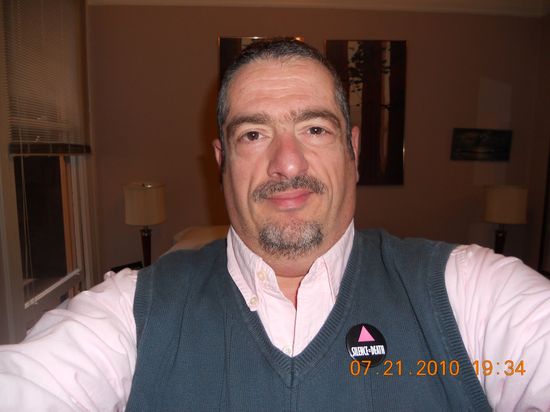
Michael Petrelis chronicles the impact of long term retroviral therapy on the faces of those who have survived HIV a long time -  by boldly posting his own above. I am lucky not to have been too affected by this, but some loss of fat in the face and accumulation of fat on my back or deep in my gut – the "elephant hump" and "protease paunch" – is something I've learned to live with (and counter with the only drug that seems to work, the prohibitively expensive serostim).

Michael notes how some of this happens to all of us: old faces always lose fat. Plenty of older men have paunches. But there is a distinctive look of pozzy survival. Michael deploys the same tactic toward it that many of us learned to adopt as a survival mechanism with the virus itself: own the condition, be public with it – and, if necessary, tackle it head-on. Of course, I see nothing wrong with a little infusion of fake fat to prevent a gaunt look – but there is something characteristically stark about Petrelis's bravado.

I wonder sometimes if this long-term fight with what was once a terminal, terrifying disease has shaped me in ways I do not fully appreciate. The knowledge that my virus, with the HIV ban in force for almost all my HIV life-span, could literally expel me at any moment from the country I love and the husband who supports me and the friends who keep me going must have instilled in me a deep and constant sense of insecurity, of guardedness, of fear. The illness itself compressed my sense of mortality in ways that started young. In grappling with this bit by bit, year by year, I have shifted back and forth from a kind of prudent defensive crouch (I have seen far, far less of my family than I would have without the travel ban) to a brazen, angry candor.

Perhaps the instinct to say things outright, to vent all and any questions on my mind, to hide little, to cast aside politesse, to vent to the whole world every day what's on my mind, is related to this. Once you leave the gay closet and the HIV closet, all closets, all silences, all evasions seem threatening. As Michael still has it on his little button, Silence = Death.

It literally meant death for so long. But it can also mean a silent death of the spirit and soul, a deadening of the eyes, a surrender to shame or social expectations imposed from the outside against the human life-instinct within. Through the death of others, and the the fear of my own, I guess I have come to see the defense of that life-instinct as a core part of self-preservation – and find nature (especially the sublime beauty of Cape Cod) the only true salve. And blogging, the rawest, roughest, most candid form of writing came naturally to me perhaps as part of this survival mechanism, as a way to keep opening doors and windows, to ensure that the light coming in could overwhelm the darkness I always felt, and still, feel advancing behind my back. Something must have kept pushing me forward every day for ten years now.

Perhaps I still speak for fear I will otherwise die – somewhere, somehow within.

How many still live in fear and shame? How many still die inside long before their body gives up? And how can our honesty – sometimes to the point of masochism – help them? Or bring them back from the dead?


How Money Can Make Us Unhappy

Jonah Lehrer reflects on a new study over at his new blog:

The Liege psychologists propose that, because money allows us to enjoy the best things in life – we can stay at expensive hotels and eat exquisite sushi and buy the nicest gadgets – we actually decrease our ability to enjoy the mundane joys of everyday life.

But the more I have stayed in expensive hotels, the more I long for my own bed. And the fancier food I eat, the more I yearn for a burger and fries. And nothing beats Nabisco Ginger Snaps. Or Skittles.

The Language Of Faith

Thornton Wilder once wrote these prophetic words:

“The revival in religion will be a rhetorical problem — new persuasive words for defaced or degraded ones.”

This seems to me to be a much more potent problem than many of us believers grasp. Sometimes, I think of faith as like looking at an old and famous painting for so long that it becomes impossible to see it any more. By see it, I mean see it with eyes fresh to its core meaning, open to its ambiguities and associations, and prepared to be shocked by its audacity.

I think of the term “incarnation” – a word that has come to seem like tired dogma. But what can it possibly mean that God became man? How is that different from God infusing all of us with love and hope and sometimes such overwhelming power that we lose all sense of ourselves? What made Jesus so different, so more remarkable than all the rest of us sons and daughters of God? To non-believers I know this must seem just insane; for those of us trying to get past the staleness of our faith, it’s a pressing challenge.

Mockingbird blog touts Paul Zahl, mentioned on the Dish before, as someone engaged with this issue. The video above speaks for itself. There are more here.

Facts Infused With Morality

Edge held a seminar on morality. Here's Joshua Knobe:

Over the past few years, a series of recent experimental studies have reexamined the ways in which people answer seemingly ordinary questions about human behavior. Did this person act intentionally? What did her actions cause? Did she make people happy or unhappy? It had long been assumed that people’s answers to these questions somehow preceded all moral thinking, but the latest research has been moving in a radically different direction. It is beginning to appear that people’s whole way of making sense of the world might be suffused with moral judgment, so that people’s moral beliefs can actually transform their most basic understanding of what is happening in a situation.

David Brooks' illuminating column on this topic covered the same ground:

Paul Bloom of Yale noted that this moral sense can be observed early in life. Bloom and his colleagues conducted an experiment in which they showed babies a scene featuring one figure struggling to climb a hill, another figure trying to help it, and a third trying to hinder it.

At as early as six months, the babies showed a preference for the helper over the hinderer. In some plays, there is a second act. The hindering figure is either punished or rewarded. In this case, 8-month-olds preferred a character who was punishing the hinderer over ones being nice to it.

This illustrates, Bloom says, that people have a rudimentary sense of justice from a very early age. This doesn’t make people naturally good. If you give a 3-year-old two pieces of candy and ask him if he wants to share one of them, he will almost certainly say no. It’s not until age 7 or 8 that even half the children are willing to share. But it does mean that social norms fall upon prepared ground. We come equipped to learn fairness and other virtues.

Advantage Locke over Hobbes.

The Evolutionary Case Against Monogamy, Ctd

Jessa Crispin reviews Sex At Dawn. She found it lacking:

If there’s something to take from Sex at Dawn, it is simply that there are thousands of ways to be sexual creatures, as well as the reminder that societal norms flux with time for a reason. Did agriculture (and monogamy) come with some baggage? Absolutely. But did it also make us literate and productive, technologically advanced and romantic? Hell yes. It is possible that this particular mode of being no longer serves us, but neither will getting starry-eyed about better days long since past. There’s nothing progressive about this totally old-fashioned idea that women’s sexuality is the victim of, and secondary to, men’s sexuality. You can unpack the baggage from agriculture, and hunting-gathering, to figure out a new way to move forward with relations between men and women. But only if you’re honest about the contents — good and bad.