Negev: More Context

This helps:

The dispute today is over land ownership. Bedouin families around Arakib say they own about 4,600 acres of the desert, insisting that they paid taxes during the Ottoman period and British Empire. Gravestones in the cemetery show some families have inhabited the area for at least 140 years.

In 1951, Bedouin leaders say, they were forced by Israel's military into settlements along the West Bank border. "They told us we could come back in six months," said Nori Uqbi, a community activist who is suing the government to regain control of what he says is his family's land. "But it was all a lie."

Instead, he said, the villagers were never allowed to return and have been prevented from cultivating the land.

And here:

It doesn't matter that el-Arakiv was in the Negev before Israel was founded.

It doesn't matter that the state has moved the el-Arakiv bedouin from place to place over and over again.

What probably DID matter was what Prime Minister Benjamin Netanyahu said just the day before, when he publicly announced that the Bedouins are a threat to Israel. Netanyahu warned of a situation in which "various elements will demand nationality and rights within Israel, in the Negev for example, if a region is created without a Jewish majority. This occurred in the Balkans and this is a real threat."

"If a region is created without a Jewish majority"? So there is now a policy of forced internal migrations within Israel to prevent any single region having a demographic imbalance on racial terms? More background on the government's plan to populate Negev here.

Rules Based On Fear

Mandatory sentences for crack have been 100 times those for cocaine since the 80s. Congress has just reduced the ratio to 18 to 1.  Steven Taylor draws lessons:

I would not recommend crack cocaine usage and there were (and are) still social costs of some significance associated with its usage.  The problem with the reaction in the 1980s was that, like much of our drug laws, we overreact and make rules based on fear and the drama of the moment rather than rational consideration of the problem.  We paint each new drug as practically the end of the world and react accordingly (the current drug of fear is meth-in the past it was heroin).  Again:  all of these are substances that cause substantial harm, but we tend to lack a sense of proportion in dealing with them.

Is A Good Kindergarden Teacher Really Worth $320,000?

John Cassidy complicates the study Leonhardt touts:

Yes, good teaching is important. But the key policy issue is raising average teaching standards throughout the education system, not simply seeking out and rewarding exceptional kindergartens. In affluent areas of New York City, parents’ efforts to capture every possible educational advantage for their young children have already reached absurd levels. If this new research is accepted as gospel, I can already see admissions officers at snooty private schools waving it in the air and saying to parents: ‘Look, I told you our $30,000 fees were justified. Where else can you find a kindergarten teacher with a Princeton Ph.D. in Victorian literature?”

Basil Marceaux For Governor, Ctd

Wonkette calls his campaign site "indescribably perfect." Money quote:

VOTE FOR ME AND IF I WIN I WILL IMMUNE YOU FROM ALL STATE CRIMES FOR THE REST OF YOU LIFE!

Chattanooga Times Free Press snags an interview:

“I always knew it would (attention) happen because I’m sure everyone feels like me. It just takes guts,” the one-time Marine said. Voters “like my gun views,” he said. “I want everyone to have a gun. If I think that someone doesn’t have one, maybe I’ll fine them $10.”

How Bad Is Nevada?

Daniel Indiviglio takes a look:

It's sort of staggering to think about how many foreclosures are occurring in Las Vegas. First, there's the awful one in 15 homes statistic. That accounts for an amazing 6.60% of all housing units in the metro area. And remember, this was just over a six-month period. The glimmer of hope is that this actually isn't the worst the city has seen. In fact, foreclosures are down 14.73% compared to the prior half, and 8.80% lower than the same period in 2009.

Ryan Grim and Arthur Delaney tell the story behind those statistics:

So many homes in Las Vegas have been foreclosed upon that banks rarely bother to hang a "For Sale" sign on the front lawn anymore. Instead, visitors identify bank-owned properties by the brown grass and the 8.5 x 11-inch sheet of paper taped to the front door or the garage.

What About The Afghans?

Andrew Exum has one final criticism of Wikileaks:

It does seem as if measures have been taken by Wikileaks to protect U.S. and allied personnel whose lives might be endangered by the leaks. The same cannot be said for the Afghans. A cursory search of the Wikileaks documents by the consistently excellent Afghanistan-based journalist Tom Coughlan revealed hundreds of Afghan lives to have been put at risk by these leaked documents. The mentions of Afghans — either because they have confounding, non-Western names or because they simply are not considered of importance — do not seem to have been considered by Mr. Assange and Wikileaks when they decided to dump these documents into the public sphere. I don't know whether Mr. Assange simply did not understand enough about Afghanistan to realize what he was doing when he leaked these documents or just doesn't care, so myopic is his focus on the governments of the United States and Europe.

Good News, Everyone, Ctd

Josh Green goes to bat for Elizabeth Warren:

Warren is regarded skeptically by some in the Obama administration for her tendency to be outspoken, which is precisely why consumers trust her. The tendency of Obama officials, especially the economic team, is to speak in the bland jargon of technocrats. But with an election looming, the White House needs someone who can explain its policies and convince voters that it is working in their interest. That may be why the administration seemed to soften its tone toward Warren this week. "I think she would be a very strong leader of this organization,'' Treasury Secretary Tim Geithner said. Warren's reputation would help not just the consumer agency, but the White House, too. And that could be key to holding power.

CJR laughs at Wall Street's fear of Warren.

Beneath The Waves, Ctd

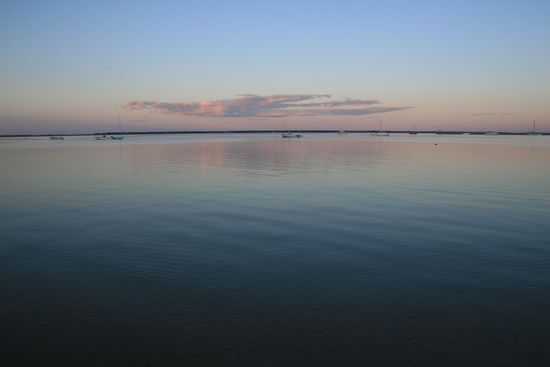
Ocean

Contra Susan Shaw et al, Michael Grunwald says the BP spill isn't as bad as it has been made out to be:

The scientists I spoke with cite four basic reasons the initial eco-fears seem overblown. First, the Deepwater Horizon oil, unlike the black glop from the Valdez, is comparatively light and degradable, which is why the slick in the Gulf is dissolving surprisingly rapidly now that the gusher has been capped. Second, the Gulf of Mexico, unlike Prince William Sound, is balmy at more than 85 degrees, which also helps bacteria break down oil. Third, heavy flows of Mississippi River water helped keep the oil away from the coast, where it can do much more damage. Finally, Mother Nature can be incredibly resilient.

But taking the long view, maybe not:

When Worm and colleagues combined the satellite data, the early shipboard records, and direct measurements of chlorophyll made from the 1950s onward, they found that the recent dip in phytoplankton wasn't a passing phase. It had been happening in most parts of the ocean for more than a century. On average, the planet has lost 1% of its phytoplankton every year since 1900, the team reports in the 29 July issue of Nature.

"You compound that over a century, this becomes a huge, huge decline," says Paul Falkowski, an oceanographer at Rutgers University in New Brunswick, New Jersey, who was not part of the study. Indeed, Worm's team estimates that phytoplankton numbers have plummeted 40% since 1950.

What's more, the team found that phytoplankton numbers were more likely to dwindle in areas of the ocean that were warming, suggesting that climate change is responsible for the drop.

Actual paper here. This is one of the feedback loops that has some of us deeply worried that the cost of climate change may be far worse than we now imagine:

The ocean absorbs 40% of the CO2 humans emit. Phytoplankton, in turn, convert that CO2 into oxygen or die and bury it at the bottom of the ocean. If the phytoplankton are disappearing, Richardson says, "the ocean as a carbon sink is declining, and what that means is ultimately more CO2 will stay in the atmosphere instead of being dissolved in the ocean." That will translate into a warmer world, which will wipe out even more phytoplankton.