Bloggers for Sale

by Conor Friedersdorf

The Daily Caller has the story

“It’s standard operating procedure” to pay bloggers for favorable coverage, says one Republican campaign operative. A GOP blogger-for-hire estimates that “at least half the bloggers that are out there” on the Republican side “are getting remuneration in some way beyond ad sales.”

In California, where former eBay executive Meg Whitman beat businessman Steve Poizner in a bitterly fought primary battle in the campaign for governor, it sometimes seemed as if there was a bidding war for bloggers.

There isn't anything earth-shattering in the piece, but hopefully its author is opening up a line of reporting, and there will be more to come.

“I Am Speaking To You As An American”

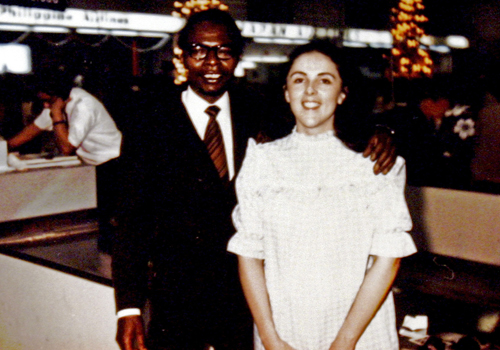
Obamamomanddad1

by Chris Bodenner

Drawing parallels to Woodrow Wilson's cowardice on women's suffrage, Richard Just finds Obama's record on marriage equality "illogical and cynical":

Obama argues that he is against gay marriage while also opposing efforts like Prop 8 that would ban it. He justifies this by saying that state constitutions should not be used to reduce rights. (His exact words: “I am not in favor of gay marriage, but when you’re playing around with constitutions, just to prohibit somebody who cares about another person, it just seems to me that that is not what America is about.”) Obama appears to be saying that it is fine to prohibit gay people from getting married, as long as the vehicle for doing so is not a constitution. Presumably, then, he supports the numerous states that have banned same-sex marriage through other means, without resorting to a constitutional amendment? If so, he might be the only person in the country to occupy this narrow, and frankly absurd, slice of intellectual terrain.

Obama has also said he favors civil unions rather than gay marriage because the question of where and how to apply the label “marriage” is a religious one. This argument makes even less sense than his stance on state constitutions, since marriage, for better or for worse, is very much a government matter.

More historical context: Barack Obama Sr. and Ann Dunham were married in 1961, six years before anti-miscegenation laws were struck down in 16 states.

Elites and the Tea Party

by Conor Friedersdorf

There is no single impulse that explains the Tea Party movement, but among its various catalysts, this one is noteworthy:

Our new meritocratic masters have been more conspicuously smart than wise. They know a lot, but don't know what they don't know. Their self-regard as the modern Americans who are the "natural aristocrats" Jefferson looked for has left them with an exaggerated sense of their own noblesse, and a deficient awareness of their corresponding oblige. Their expectation that the rest of us will be deferential to their expertise, like citizens of European nations that are social but not especially political democracies, has triggered the Tea Party backlash, and the resurgence of the "Don't Tread on Me" spirit.

As a result, eloquent promises about how government can be expanded to the benefit of all while taxes are increased only for a very few, and how ingenious new programs can make health care simultaneously more extensive and less expensive, are setting off alarms. These assurances—that when common sense tells us that something isn't possible while expert analysis tells us that it is, our common sense is the thing that needs to be adjusted—sound ominously familiar. Wasn't it just the other day that brainiacs with MBAs were telling us that, no, it was not dangerous for people with modest incomes to purchase expensive houses with zero-down, adjustable-rate mortgages? Since we didn't go to Wharton and weren't conversant with the esoteric innovations in financial derivatives and securitization that had taken the risk out of taking risks, we didn't know enough to set aside our unfounded fears that all this highly leveraged borrowing would end badly.

This critique ought to be extended. The rosier predictions regarding the Iraq war and the notion that we're always on the side of the Laffer curve that enables costless tax cuts are as much examples of smart meritocrats defying common sense.

William Voegeli goes on to write:

It's when the people running the country are both disrespectful and ineffectual that folks get angry.That anger will culminate in the replacement of America's "entire political establishment," Herbert Meyer, an intelligence official in the Reagan Administration, recently argued on the conservative website, American Thinker.

A lesser conservative writer would've stopped there, but Mr. Voegeli gives us this astute assessment of how difficult a project the Tea Party is actually taking on by his lights:

…it's not clear that America has a relief establishment warming up in the bullpen. The country's last establishment swap saw the replacement of what the journalist Nicholas Lemann called "the Episcopacy" with the meritocracy. It was, importantly, a revolution from above. "From the 1880s to the 1960s," in David Frum's useful summary, "the American governing elite was drawn from the distinguished families of New England and New York, promoted by friendships and family connections to the high offices of the land." The Episcopacy had a strong sense of its social obligations, which culminated in the realization that its aristocratic position in a democratic nation was anomalous and ultimately untenable. As recounted by Lemann in The Big Test (1999) and Geoffrey Kabaservice in The Guardians (2004), the Episcopacy's final public service was to commit mass-suicide. It intentionally transformed famous colleges from finishing schools for gentlemen into institutions that vetted bright, talented kids from throughout the social order, then equipped them with the training and, equally important, the self-assurance necessary to handle the country's highest responsibilities. As a result, writes Frum, today's "governing class is a meritocratic elite. For most members of this elite, the decisive event in their lives was the arrival in the mail of an acceptance packet from a great university."

If the Tea Party movement wants a new establishment to replace the Achievatrons, it's going to find that the current establishment, unlike the Episcopacy, is not the least bit conflicted about its right to run the country. As the late Christopher Lasch wrote in The Revolt of the Elites (1995), "Meritocracy is a parody of democracy…. Social mobility does not undermine the influence of elites; if anything, it helps to solidify their influence by supporting the illusion that it rests solely on merit." The Eternal Valedictorians don't suffer fools gladly, and are quick to conclude that anyone who disagrees with them is a fool. Questions about their judgments are challenges to their intelligence and expertise, which, in turn, form the entire basis for their vast self-regard and the privileged, powerful lives they lead…

Unlike the Episcopacy, then, the valedictocracy will not go quietly, and it will not groom its successor. Before settling on the convulsive course of evicting the Achievatrons from their positions of power, the Tea Party movement would be well-advised to continue reflecting on whether America's problem is this establishment or an establishment. An alternative reading of what the Tea Party movement does and should want is not a better establishment but a less autonomous establishment, subject to the checks and balances of a re-engaged citizenry and a re-invigorated Constitution that constrains its discretion.

There's a lot to grapple with there. Here's one succinct way to put the question to Tea Party leaders: if we're choosing our ruling class the wrong way now, what alternative do you recommend? I'd actually love to hear Helen Rittelmeyer weigh in on this question, as I know she's done a lot of deep thinking about it.

Anti-Muslim Activity At Ground Zero

by Chris Bodenner

This video, posted earlier, is an interesting contrast to this one:

A man walks through the crowd at the Ground Zero protest and is mistaken as a Muslim. The crowd turns on him and confronts him. The man in the blue hard hat calls him a coward and tries to fight him. The tall man who I think was one of the organizers tried to get between the two men. Later I caught up with the man who's name is Kenny. He is a Union carpenter who works at Ground Zero. We discussed what a scary moment that was for him. I told him that I hoped it did not ruin his day.

Question of the Week

by Conor Friedersdorf

Let's start out the week with another question: What widely accepted practice, custom or societal norm do you regard as irrational, absurd, offensive, silly, nonsensical, counterproductive, or morally wrong? 

Here's your chance to challenge the conventional wisdom. Anything that is already a matter of intense controversy, like abortion or the death penalty, doesn't count — that aside, however, take liberties with the question.

Answers should be sent to conor.friedersdorf@gmail.com with the subject line "everyone else is crazy."

People As Pack Leaders, Ctd

by Chris Bodenner

A reader writes:

Pretty much everything that is wrong with Cesar Millan's training techniques – or at least how they are understood among his fans – is summed up in this selection from your reader:

Positive reinforcement (i.e., using clickers or treats) basically "tricks" the dog into doing something for a reward.  Using Cesar's techniques, however, your dogs will do what you ask, not for a treat, but out of respect for you, their leader.

First of all, as I'm sure you know, positive reinforcement does not "trick" a dog into doing something for a reward; it teaches a dog to associate rewards with good behavior, just as punishment teaches them to associate displeasure or pain with bad behavior (but doesn't necessarily teach them what good behavior is). With time, dogs shown positive reinforcement will need the reward to continue the good behavior. Furthermore, if you're feeding and caring for a dog (as well as setting boundaries), *of course* you're  obviously their leader – what Patricia O'Connell calls a benevolent dictator.  Cesar's "corrections" don't make him the leader worthy of respect; they make him a bully.

Watch this video, particularly just before the 3:00 mark. The dog does something Cesar doesn't like, Cesar kicks (er, "corrects" it), and things escalate. If he had gotten hurt, it would have been his fault as far as I'm concerned.

Another writes:

While I have been aware of the anger/jealousy directed at Cesar Millan by professional dog trainers, I am also aware that my personal experience with Cesar's ideas has helped me very much and has changed me for the better.

Previously, I experienced great fear in the presence dogs in spite of being raised with and around them all my youth.  Into my late adulthood I experienced even more fear and at the same time had more situations where dogs were annoying or aggressive with me.  It seemed the more I withdrew, the more determined dogs seemed to be to push their way into my experience.  Eventually, I was bitten.  Then I feared even more.

Accidentally, I stumbled upon Cesar's television shows and began watching.  His ideas that dogs are not little humans but pack animals who need to be treated in their own way made sense.  I realized I was not owning the space I was standing in, as Cesar would say.  Neither did I project myself as a leader in much of the rest of my life, let alone with dogs. 

But, it was his explanation that dogs learn to interact with the world in this order – first, smell; second, hearing; lastly, eyesight – that made all kinds of bells ring in my head.  From then on, I began consciously not making eye contact with any dog I met, even those I had already come to know and tolerate.  Now, any dog that comes my way, I look steadily at the owner or if the dog is alone, at ANYTHING else.  I avoid eye contact completely and calmly.  Since making and implementing that one idea, dogs have started to leave me completely alone!  It's as if I'm not in their world somehow, if we don't connect through sight.   

Now, I have also made an effort to own my space more than before, especially when around a dog but really, not making eye contact with dogs has completely reversed my experience with them and I feel empowered around them now, just by choosing to look elsewhere.  Simple.  Thank you, Cesar!

Initial Thoughts on America and Its Elites

by Conor Friedersdorf

Over the weekend, I spoke with two people whose take on the Park51 mosque and community center, quite apart from the merits of their respective positions, can only be described as aggrieved. One argued that the mosque should be moved farther from Ground Zero, the other that a location two blocks removed presents no problem. But their upset sprang from a deeper place: a conviction, expressed more emotionally than anything, that their insights aren’t shared or even respected by those in “the other America.”

Said the man, a wealthy fifty-something executive, “Seventy percent sees what is wrong with this, yet we’re called bigots! If the people in charge don’t change their cosmopolitan attitudes we’re going to lose this country.”

The woman, a top tier business school student in her late twenties, insisted that if demagogues manage to mess up even this, “I’m seriously moving abroad. Ever since 9/11 I just don’t know what’s wrong with people.”

These laments aren’t exactly surprising.

The right generally lashes out by asserting that its ideological opponents are out of touch elites, disconnected from traditional American values and common sense. More common on the left is for aggrieved participants in the national debate to bemoan what they regard as the perversion of values being perpetrated. Opponents are cast as pawns being manipulated into irrational or even bigoted positions by powerful interests who benefit from the world that results.

What I found interesting is that these two people, who’ll both enjoy far more wealth, influence and power than the average American in the course of their lives, both earnestly conceived of others being in charge. The executive saw cosmopolitan liberal elites as exercising control, so much so that he feared the loss of what makes America exceptional; whereas the liberal business school student understood herself to be part of the elite, given her educational credentials, but felt that people who share her values haven’t been running the country since 9/11, making her complicit in policies that she abhors. Is the United States home to a liberal elite that basically runs things except when its power is checked or overruled by the larger population? That’s the way a lot of people talk on the right and the left, but I think it’s a misleading frame. In reality, there are a lot of different elites in America, ideology is but one factor that distinguishes them from one another, and ordering them to reflect their relative power is literally an impossible task.

In terms of who does more to shape the country and its future, try ranking Leon Panetta, Oprah Winfrey, Bill Gates, an exceptional high school English teacher, David Foster Wallace, Barbara Streisand, Rick Warren, a successful small business man, Lynn Cheney, Haley Barbour, the mayor of Omaha, Nancy Pelosi, Kobe Bryant, Ezra Klein, Bill Keller, Sarah Palin, Chick Hearn, the scientist most responsible for Lipitor, Rush Limbaugh, a federal circuit court judge, the CEO of the biggest employer in Cleveland, a veteran police officer on the streets of Chicago, the Governor of Nevada, Rupert Murdoch, Malcolm Gladwell, Donald Bren and L. Ron Hubbard.

Were there an objectively correct ordering known only by God, what percentage of humans would arrive at it? And this is but an insignificant fraction of elites from a few different categories (it includes a lot of journalists, despite the fact that I think Americans generally attribute more power to individuals in my profession than we actually possess.)

The beliefs Americans form about the forces that shape this country matter. It’s unhealthy for a polity when an increasing number of people are alienated from a prevailing order they feel powerless to influence. Over the course of this week, I hope to delve deeper into this question of America and its elites. As always, e-mail on the subject is welcome.