Do Prop 8 Proponents Have Standing To Appeal? Ctd

A reader writes:

Here are the key passages from the Perry v. Schwarzenegger Slip Opinion p 108-9

"The Due Process Clause provides that no “State [shall] deprive any person of life, liberty, or property, without due process of law.” US Const Amend XIV, § 1. Due process protects individuals against arbitrary governmental intrusion into life, liberty or property. See Washington v Glucksberg, 521 US 702, 719- 720 (1997). When legislation burdens the exercise of a right deemed to be fundamental, the government must show that the intrusion withstands strict scrutiny. Zablocki v Redhail, 434 US 374, 388 (1978). "

Id p 116 "Under strict scrutiny, the state bears the burden of producing evidence to show that Proposition 8 is narrowly tailored to a compelling government interest. Carey v Population Services International, 431 US 678, 686 (1977) … As explained in detail in the equal protection analysis, Proposition 8 cannot withstand rational basis review."

Strict scrutiny is the highest, and rational basis the lowest level of appellate review. As any 2nd year law student can tell you, the standard of review almost always dictates the outcome in constitutional questions. Rational basis review means that the strong odds are that the proponents of a restriction win, strict scrutiny means that long odds are they lose.

And yet, Judge Walker is saying that the evidence at trial didn't even pass rational basis review. To overturn this opinion, the court would essentially have to craft a new standard of review, lower even than rational basis, for laws impacting only gay people's civil rights: separate and explicitly unequal. Or they can always punt.

Do Prop 8 Proponents Have Standing To Appeal?

This seems to me the news in Judge Walker's decision to extend a stay on his ruling in favor of marriage rights for gay couples until August 18. I'm not a legal expert but this is from the NCLR's release:

Even though Judge Walker did not immediately let same-sex couples in California marry, the ruling provides important insight into the merits of the issues that the Ninth Circuit will consider on appeal. For example, in his ruling today, Judge Walker casts serious doubt on whether the proponents of Prop 8 even have "standing" to pursue an appeal because they do not speak for the state of California, and the official representatives of the state agree that Prop 8 is unconstitutional. Standing refers to whether a particular person has a legal right to bring an appeal. In his ruling today, Judge Walker said: “As it appears at least doubtful that proponents will be able to proceed with their appeal without a state defendant, it remains unclear whether the court of appeals will be able to reach the merits of proponents’ appeal. In light of those concerns, proponents may have little choice but to attempt to convince either the governor or the attorney general to file an appeal to ensure jurisdiction."

But the governor and attorney general favor marriage equality. So it will be up to Anthony Kennedy, if the appeal court denies standing to the Prop 8 proponents. But maybe not. A reader notes:

Appellate courts generally try to resolve cases on the narrowest grounds possible.  Since the question of whether the intervenors have standing to pursue the appeal is a procedural/jurisdictional issue, and not the merits of the case, an appellate court should look to that question first to see if the case can be resolved without addressing the merits.  If the court decides that the intervenors don't have standing to appeal, the court could resolve the case in favor of the plaintiffs without granting much room for the Supreme Court to take the case and reverse it. 

Fascinating.
 

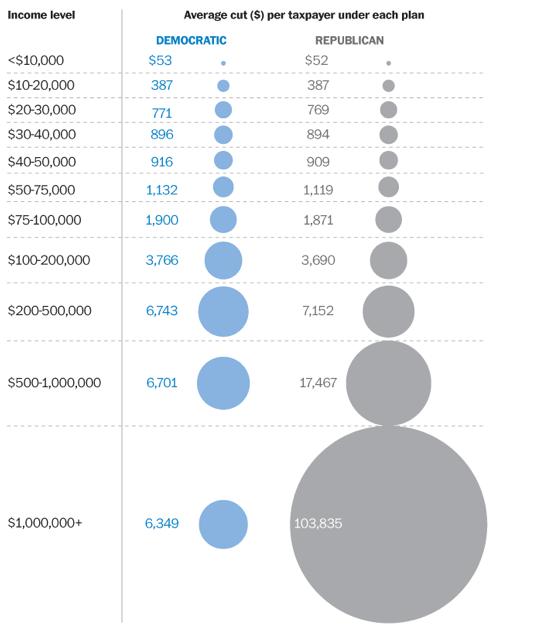
Chart Of The Day

GR2010081106717.gif (GIF Image, 624x814 pixels) - Scaled (77%)_1281632584499

Ezra illustrates the new findings of a congressional panel:

A Republican plan to extend tax cuts for the rich would add more than $36 billion to the federal deficit next year — and transfer the bulk of that cash into the pockets of the nation's millionaires, according to a [nonpartisan Joint Committee on Taxation] analysis released Wednesday.

Why They Torture

The woman spared from stoning for adultery in Iran now shows up on television confessing to complicity in her husband's death:

Sakineh Mohammadi-Ashtiani's lawyer told the Guardian on Thursday that his client, a 43-year-old mother of two, was forced to give the interview, which was recorded in Tabriz prison where she has been held for the past four years. "She was severely beaten up and tortured until she accepted to appear in front of camera. … The lawyer said he feared the Iranian authorities would act quickly to carry out the death sentence, which was reportedly commuted to hanging after an international outcry against her sentence last month.

Maybe Dick Cheney can explain to the Iranian opposition that repeatedly beating up a prisoner does not equate to torture, and her confession is perfectly reliable as evidence.

The Past And The Present

My bro just sent me a whole new disk of old family color photos that prompted my husband to note, "Holy shit. I married Harry Potter."

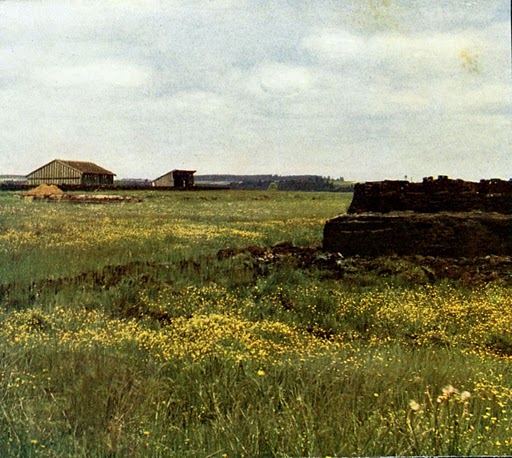
But the restoration of old color pictures of the early twentieth century really does help clear the historical air. I don't think we fully appreciate how black-and-white images always somehow distance the recent past from the present – so we see events like the Second World War or the First World War as further away than they really are in the sweep of human history. I thought of this when looking through this album of rare color photos from Michael Ryan Shaughnessy. They are of sleepy German locales from 1906, more than a century ago. I stopped short at this one:

Dachau2054

A bucolic, restful idyll – that would one day become something utterly different.

This is Dachau.

San Francisco’s Libertarian Dream

Human Transit reports that the city will soon have "the most aggressive free market parking policy in the nation."

The goal is to ensure that there's always a space available, so that people stop endlessly driving in circles looking for parking. People will be able to check online to find out the current parking cost in the place they intend to visit. Parking garages will have a better chance of undercutting on-street rates, so that those garages can fill. If you've ever driven in San Francisco, you know that it's hard to decide to use a garage because, well, if you just drive around the block once more, you might get lucky. Under SF Park, if you just drive around the block once more, you'll probably find a space, but it will cost more than a garage, especially if you'll be there for a while. So drivers are more likely to fill up the garages.

If the program fails, which I hope it doesn't, it will be as a result of being too timid. There will inevitably be pressure to set a maximum parking price, at which prices will stop rising, which means that space will fill up, which means that everyone will be driving around the block again. Andrew Price at Good asks: Could parking costs reach $10/hour? Conceivably yes, for a few high-demand hours, which are almost certainly also hours when transit is abundant. What's wrong with that?

Nothing.