Romneycare’s Shadow

Chait thinks Romney's Massachusetts healthcare reform has doomed his presidential campaign:

Romney's problem on this issue isn't with independents. It's with the GOP base.

I'd also be curious to hear from some conservatives about how they see this. In 2008, nearly all of them were fine with Romney's health care plan. (National Review endorsed Romney for president.) Now, to a man, nearly all of them believe the imposition of a regulate/subsidize/mandate scheme represents one of the worst catastrophes in American history. How do they account for their dramatic change of mind? Were conservatives all simply wrong and ignorant in 2008, and now they've opened their eyes? Or is something else at work?

Why California Leads The Way

Size:

[P]opulation is a major determinant of whether a state has various laws, and of the amount of detail state lawmakers provide in their statutes. States with a lot of people have a greater variety of situations that arise that might be addressed by lawmakers. We found that the large states tend to be the early adopters of new laws, with the smaller states following later.

Homosexuals As “Victim Souls”

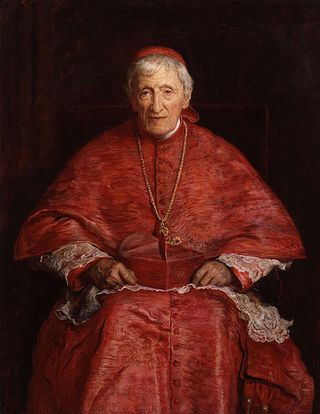
Here, at least, is an 463px-John_Henry_Newman_by_Sir_John_Everett_Millais,_1st_Bt And this video seems to go even further, intimating that gay people are in fact more beloved by God than straight people because they have been chosen to suffer more. They can, this preacher argues, bring many more souls to Christ.
There are many prior arguments about this that the Dish has long presented, and which are laid out in greater detail in "The Prohibitionists" chapter of Virtually Normal and "The Theoconservative Project" chapter in The Conservative Soul. But it does strike me as odd, then, that the church demands that gay people, and gay priests, remain closeted. If, through their unique life-long suffering, they are to bring others to Christ, and if there is nothing wrong per se about homosexual orientation, then why not have the closet door burst open – especially among the clergy?

More to the point, why not celebrate and honor openly gay celibate priests or openly gay celibate lay people, whose embrace of the cross of suffering allegedly marks them as examples that will bring so many other souls to Christ, as this preacher argues? Why not celebrate gay saints, such as Cardinal Newman, rather than insist, as the current Pope does, that such a statement is offensive or irrelevant. Why not hold up a man like Gerard Manley Hopkins as emblematic of homosexual gay holiness – made all the more holy because he was gay?

And how, for that matter, can this alleged love of homosexuals as somehow spiritually superior to most straight people because of the intensity of their isolated suffering be reconciled with such terms as "intrinsically disordered" toward an "objective evil," to use the words of the current pontiff, in order to describe gay people? Or to argue that they are so sick they cannot and should not be admitted to seminaries?

At some point, these tensions within the new orthodoxy will have to be resolved. Or abandoned in favor of something more humane, more in touch with reality, and more natural, in every sense of that word.
D’Souza Keeps Digging

This is as tough an interview as Kathryn Jean Lopez gives:

LOPEZ: Why does Barack Obama look so angry on the cover of your book?

D’SOUZA: Obama looks angry on the cover because he is angry. The cover image captures Obama’s suppressed rage and is true to the argument of the book.

LOPEZ: I know from listening to him that he’s condescending and annoyed at the fact that he has critics, but rage? What justifies use of that word? How has “rage” manifested itself in the Obama administration?

D’SOUZA: Some people consider Obama very serene because he talks about issues like equality and the poor in a very calm manner. He sounds like he is reading from his tax return. Some liberals are confused, and say that Obama must be a very cerebral guy. But there is an alternative explanation. He sounds bored about these issues because he doesn’t care about them. He isn’t motivated by poverty or inequality. He is motivated by hatred of the rich and the banks and the investment companies and the drug companies. Notice that when Obama speaks about these groups, his lip curls and his face darkens and he shows real passion. That’s when he wants to, in his words, “kick ass.” So there is a sublimated rage in Obama that is reminiscent of the rage of Barack Obama Sr., a man who often sat outside his hut and went into drunken rages against the West for denying him the fulfillment of his anti-colonial dreams.

Yes, how can we explain the bank bailouts and healthcare industry giveaways of the Obama administration without understanding the sublimated rage he feels for banks, investment companies, and drug companies? Whereas among Americans who don't have Kenyan roots, Wall Street, and health insurance companies are hugely popular.

The Enthusiasm Gap

HowEnthusiastic

Silver helps us understand it:

The enthusiasm gap has more to do with abnormally high levels of Republican interest in the election than with despondent Democrats. … stories that cite the enthusiasm gap as evidence of malaise among the Democratic base are probably miswritten. Such stories may conflate the priorities of certain subsections of the Democrats’ broad constituency — or of some especially vocal activists — with those of Democratic voters writ large, most of whom are focused on the poor economy and the government’s efforts to respond to it, as voters of all political persuasions are. Such analyses may also ignore the history of midterm elections, which suggest that Democrats usually do suffer from an “enthusiasm gap” of some kind. Finally, they may be burying the lead, which is the unprecedented level of political engagement by Republicans this year.

As The World Turns …

"When you can read an entire column by the Washington Post’s Howard Kurtz and never once feel the urge to cut out your own heart with a dull knife, you know that you no longer have the sense of outrage that is essential to reporting from our nation’s capital," – Ken Silverstein, Harper's.

"Washington Post media correspondent Howard Kurtz is making a fresh splash with news he will be joining The Daily Beast as Washington Bureau Chief, a move announced by Beast editor Tina Brown the day before the online magazine’s two-year birthday. 'Howie knows that today the interaction of media and politics is the story,” Brown said in a blog post announcing the move. “He combines integrity and rigorous reporting. He’s a tough and lively television presence, as I can attest, as can plenty of others,'" – Politerati.

No Margaret Thatcher

Matt Lewis interviews Thatcher biographer Claire Berlinski about the Iron Lady's alleged parallels with Sarah Palin:

Money quote from Berlinski:

[Palin is] obviously a talented politician … [T]here's something so ridiculous, however, about Sarah Palin as a serious candidate for the presidency. It's really a case, almost, of mass psychosis — that anyone could ever have been seriously considering this.

(Hat tip: Palingates)

Following The Money

Drum wonders how serious Republican health care repeal efforts are:

Republicans are loudly proclaiming right now that they want to eliminate the part of the law that forces everyone to buy insurance. But that's exactly the part of the law that insurance companies like. In fact, they want to see it strengthened. At the same time, they want to get rid of the popular parts of the law that keep insurance companies from figuring out ways to screw patients. But those are the provisions that Republicans say they'll keep if we turn over Congress to them.

And yet, the insurance companies are massively funding Republicans this cycle anyway. Why would that be? It's almost as if they're sure that Republicans are just blowing campaign smoke and will support their agenda once they're safely in office.

It almost is, isn't it? Ezra Klein has more.